











Last Watched

"Evolution"  Sort by

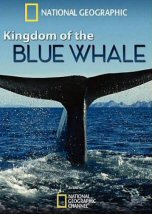
Kingdom of the Blue Whale

   2009    Nature
Blue whales are the largest animals to ever live on earth, yet they are difficult to find or track. Even some of the locations where they birth their young are great secrets. Join some of the world's eminent blue whale scientists as they embark on a revolutionary mission to identify and tag California blue whales as they migrate to a spot known as the Costa Rica Dome. This incredible voyage yields unforgettable new footage and insight into these amazing creatures' lives. Scientists use DNA analysis, recordings of whale songs, homing devices, and sea dives to shed light on the blue whale's breeding and birthing habits
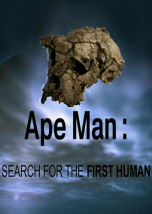
Ape Man: Search for the First Human

   2005    Science
After eight grueling years of hunting in the hot, wind-scoured desert of central Africa, an international team of researchers has uncovered one of the most sensational fossil finds in living memory: the well-preserved 7 million years old skull of a chimp-size animal, probably a male, that doesn't fit any known species. According to paleontologist Michel Brunet of the University of Poitiers in France, whose team reported the find in Nature last week, there is no way it could have been an ape of any kind. It was almost certainly a hominid — a member of a subdivision of the primate family whose only living representative is modern man.

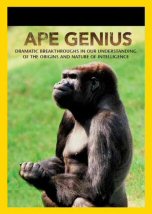
Ape Genius

   2008    Science
The great apes which include chimps, orangutans, gorillas and bonobos, seem to have rich emotional lives similar to our own. But just how smart are these animals? A new generation of investigators are converging on an explanation for why the non-human great apes never made the breakthrough into an accelerating human-style culture that builds on the achievements of previous generations.

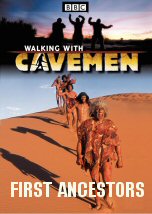
Walking with Cavemen: First Ancestors

   2003    History
It's 3.5 million years ago and in East Africa a remarkable species of ape roams the land. Australopithecus afarensis has taken the first tentative steps towards humanity by standing and walking on two legs. The rift valley was forming, and the rain forests dying as Africa dried out - turning the landscape into a mosaic of scattered trees and grass. In this new environment afarensis found it more efficient to move about on two legs rather than four.
Series: Walking with Cavemen

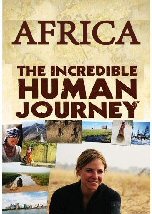
The Incredible Human Journey: Africa

   2009    History
Dr Alice Roberts re-traces the greatest ever journey taken by our ancestors. Thousands of years ago one small group of our species, Homo sapiens, crossed out of Africa and into the unknown. Their descendants faced baking deserts, sweat-soaked jungles and frozen wildernesses and risked everything on the vast empty ocean. Within 60,000 years they colonised the whole world... How did they do it? Why do we, their descendants all look so different?
Series: The Incredible Human Journey

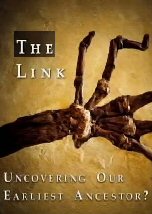
Uncovering Our Earliest Ancestor

   2009    Science
The BBC has made an extraordinary new documentary, presented by Sir David Attenborough, which will reveal the discovery of a fossilised skeleton that may be a vital ‘missing link’ in human evolution. The centrepiece of the programme is the unveiling of the first-ever complete skeleton of an extinct animal called an adapid