

Last Watched

"Om"  Sort by

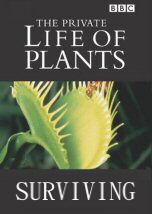
Surviving

   1995    Nature
the final episode deals with plants that live in hostile environments. Attenborough visits Ellesmere Island, north of the Arctic Circle, to demonstrate that even in a place that is unconducive to life, it can be found. Algae and lichens grow in or on rock, and during summer, when the ice melts, flowers are much more apparent. However, they must remain close to the ground to stay out of the chilling wind. In the Tasmanian mountains, plants conserve heat by growing into 'cushions' that act as solar panels, with as many as a million individual shoots grouped together as one. Others, such as the lobelia in Mount Kenya, have a 'fur coat' of dense hairs on their leaves. The saguaro cactus in the Sonoran Desert flourishes because of its ability to retain vast amounts of water, which can't be lost through leaves because it has none. Many desert dwellers benefit from an accelerated life cycle, blooming rapidly within weeks after rainfall. Conversely, Mount Roraima is one of the wettest places on Earth. It is a huge sandstone plateau with high waterfalls and nutrients are continuously washed away, so plants have to adapt their diet if they are to survive. A bladderwort is shown invading a bromeliad. Inhabitants of lakes have other problems to contend with: those that dominate the surface will proliferate, and the Amazon water lily provides an apt illustration. Attenborough ends the series with an entreaty for the conservation of plant species.
Series: The Private Life of Plants
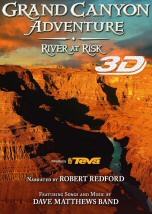
Grand Canyon Adventure

   2008    Nature    3D    HD
Anthropologist Wade Davis and river advocate Robert F. Kennedy Jr journey down the Colorado River on a two-week expedition to highlight water conservation issues. Traveling by rafts, kayaks and wooden dories, they are accompanied by their daughters and guided by Shana Watahomigie, a Native American National Park ranger. Filmed with a 350-pound 3D camera, it involved the cooperation of three Indian nations, the National Park Service, film sponsor Teva’s team of kayakers and more than a dozen experienced river guides. The film explores America's drought and freshwater shortages, the impact on the river of damming, and human water supply needs. Grand Canyon Adventure: River at Risk was directed by Greg MacGillivray and narrated by Robert Redford.

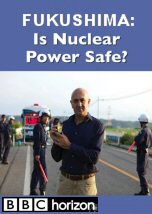
Fukushima Is Nuclear Power Safe

   2011    Technology
Professor Jim Al-Khalili sets out to discover whether nuclear power is safe. He begins in Japan, at the former Fukushima nuclear plant, where he meets some of the tens of thousands of people who have been evacuated from the exclusion zone. He travels to an abandoned village just outside the zone to witness a nuclear clean-up operation. Jim draws on the latest scientific findings from Japan and from the previous explosion at Chernobyl to understand how dangerous the release of radiation is likely to be and what that means for our trust in nuclear power.

The story of Energy

   2012    Science
Professor Jim Al-Khalili discovers the intriguing story of how we discovered the rules that drive the universe. Energy is vital to us all, but what exactly is energy? In attempting to answer this question Jim investigates a strange set of laws that link together everything from engines to humans to stars. It turns out that energy, so critical to daily existence, actually helps us make sense of the entire universe.
Series: Order and Disorder

Cooked: Fire

   2016    Culture
As he tries his hand at baking, brewing and braising, acclaimed food writer Michael Pollan explores how cooking transforms food and shapes our world. In the first espisode, with help from Aboriginal hunters and a barbecue pit master, Pollan shows how fire shaped human gastronomy, and weighs our duty to the animals we eat.
Series: Cooked

One Life on the Limit

   2013    Culture
One Life on the Limit is an action documentary showcasing the glamour, speed, danger and excitement of Formula One Grand Prix racing. Narrated by Michael Fassbender, the film tells the story of the golden age of Formula 1, when the sport became terrifyingly dangerous. In the late 1960s, Formula 1 cars doubled their engine size and sprouted wings, making them incredibly quick, but even more hazardous. With money pouring in from sponsorship and a new worldwide television audience, superstar drivers were born, thrown like gladiators into the ring. The drivers were legendary with charisma and raw talent, but many of them paid the ultimate price. Follow the story of the drivers who raced on the edge and those who stood up to change the sport forever. It is about the greatest show on earth, Formula 1.
History of the Eagles

History of the Eagles

2013  History
Top Gear

Top Gear

2012  Technology
Clarkson Farm

Clarkson Farm

2021  Nature
Desert War

Desert War

  History
Leaving Neverland

Leaving Neverland

2019  Culture
The Dinosaurs

The Dinosaurs

2026  Science
Planet Earth

Planet Earth

2007  Nature
The Sky at Night

The Sky at Night

2023  Science