

Last Watched

"ET"  Sort by

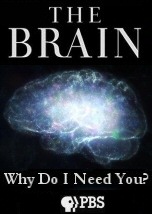
Why Do I Need You

   2015    Medicine
In ‘Why Do I Need You?’ Dr. David Eagleman explores how the human brain relies on other brains to thrive and survive. Our fundamentally social nature can hold the key to our sucdess as a species. Our brains are so fundamentally wired to interact that we are something more like a single vast super-organism. In this age of digital connection, we desperately need to understand how human brains interact if we want our civilization to have a future, if we want to avoid fanaticism and to embrace cooperation. This neural interdependence begins at birth. Dr. David Eagleman invites a group of babies to a puppet show to showcase their ability to discern who is trustworthy, and who isn’t.
Series: The Brain with David Eagleman
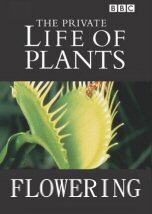
Flowering

   1995    Nature
The third episode is devoted to the ways in which plants reproduce. Pollen and a stigma are the two components needed for fertilisation. Most plants carry both these within their flowers and rely on animals to transport the pollen from one to the stigma of another. To do this, they attract their couriers with colour, scent and nectar. It isn't just birds that help pollination: some mammals and reptiles also do so. However, it is mostly insects that are recruited to carry out the task. To ensure that pollen is not wasted by being delivered to the wrong flower, some species of plant have developed exclusive relationships with their visitors, and the gentian and its attendant carpenter bees is one example. Since pollen can be expensive to produce in terms of calories, some plants, such as orchids, ration it by means of pollinia and a strategically placed landing platform. Other orchids offer no reward for pollination, but instead mislead their guests by mimicking their markings and aroma, thus enticing males to 'mate' with them (Pseudocopulation). The most extreme fertilisation method is one of imprisonment, and one plant that uses it is the dead horse arum. It is often found near gull colonies, and mimics the appearance and smell of rotting flesh. Blow-flies are attracted to it, and are forced to stay the night before being allowed to depart in the morning, laden with pollen. Finally, Attenborough introduces the world's largest inflorescence: that of the titan arum.
Series: The Private Life of Plants

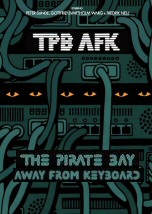
The Pirate Bay Away From Keyboard

   2013    Technology
An intellectual freedoms documentary based around the interpersonal triumphs, and defeats of the three main characters against the largest industry in the known universe. The media industry. Based on the lives of the three founders of The Pirate Bay: Peter Sunde, Fredrik Neij and Gottfrid Svartholm

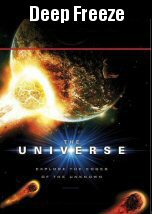
Deep Freeze

   2012    Science
There is an extraordinary range of temperatures in the universe. This program examines the extreme lower temperature range, the temperature we live in and below, explaining how cold is essential for the formation of habitats suitable for life. Explore icy planets and moons, discover the role of cold in the Universe, and learn about the importance of ice to the development of habitable worlds.
Series: The Universe

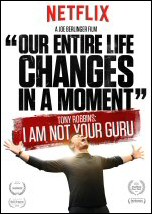
Tony Robbins I Am Not Your Guru

   2016    Culture
Embedding over the course of his seminar 'Date with Destiny', Joe Berlinger turns an unflinching eye on Tony Robbins powerful and uncompromising approach to achieving success, ensuring the attendees leave with new perspective on the forces, thoughts and feelings that motivate their behavior and help them better take control of their lives. The films pulls back the curtain on Tony Robbins, a man that traverses the globe and consults over 200,000 people annually, including world leaders, pundits and celebrities. An emotional tour de force that unveils the inner-workings of this mega event, the zealous participants and the man himself.

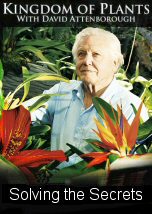
Solving the Secrets

   2012    Nature    3D    HD
Bladderwort utricularia is a pond-dweller that is among the fastest known, its traps snapping shut in less than a millisecond. As the seasons change, David demonstrates how plants operate on a different time scale to us; how they modify their lives according to the time of year. We discover insects’ hidden links with plants, both as pests and pollinators. UV-sensitive 3D cameras reveal the invisible alter-ego of plants and their flowers’ mesmerizing patterns; a parallel-dimension of strange colours and stunning patterns through which plants communicate with them. With the aid of visual effects, David steps among the swirling vortices of plant scent; communication signals with which plants are inextricably plugged in to the natural world. And using a tuning fork, he demonstrates how plants and insects can even communicate with music. As autumn envelopes the Gardens, fungi reveal themselves not as the enemies of plants but their vital allies. In Kew’s atmospheric Fungarium, David discovers a specimen that has the power of mind control and another that lives underground where it has grown to be so big it can be counted as the largest single organism on the planet. It is 6 times bigger than Kew Gardens itself.
Series: Kingdom of Plants
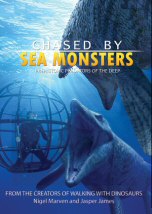
Chased by Sea Monsters

Chased by Sea Monsters

2003  Nature
Hidden Kingdoms

Hidden Kingdoms

2014  Nature
Zeitgeist

Zeitgeist

2007  Culture
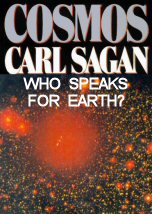
Cosmos

Cosmos

1980  Culture
Worst Ex Ever

Worst Ex Ever

2024  Culture
Science and Islam

Science and Islam

2017  History