The James Webb Space Telescope, a flagship observatory developed by NASA, the European Space Agency, and the Canadian Space Agency, is the largest space telescope ever built, with a deployable mirror measuring 21.3 feet (6.5 meters) in diameter and four scientific instruments to observe the universe in infrared wavelengths. The mission will study the formation of galaxies, stars, and planets. JWST was launched December 25, 2021 on an Ariane 5 ECA rocket. This is the story of the James Webb Space Telescope, told by the people who have devoted their lives to it. It is the world’s most advanced and most expensive telescope, and building it has been fraught with challenges. But it will all be worth it if the mission is successful.
In part two, Professor Al-Khalili looks at the 19th century chemists who struggled to impose an order on the apparently random world of the elements. From working out how many there were to discovering their unique relationships with each other, the early scientists' bid to decode the hidden order of the elements was driven by false starts and bitter disputes. But ultimately the quest would lead to one of chemistry's most beautiful intellectual creations - the periodic table.
Cabeza de Vaca was shipwrecked off the coast of Texas in 1528 and lived with Indians for eight years. Upon his return to Spain, he wrote a book based on his experiences. His tale is one of empathy and respect for the Indians. Follow along as Michael Wood traces his journey.
The journeys of the Voyager probes is put in the context of the Netherlands in the seventeenth century, with a centuries-long tradition of sailing ship explorers, and its contemporary thinkers (such as Constantijn Huygens and his son Christian). Their discoveries are compared to the Voyager probes' discoveries among the Jovian and Saturn systems. In Cosmos Update, image processing reconstructs Voyager’s worlds and Voyager’s last portrait of the Solar System as it leaves is shown.
We can survive for weeks without food, but only days without water: it is the essential element of life. Yet many millions of us live in parched deserts around the world. In the second episode of Human Planet, we discover how the eternal quest for water brings huge challenges - and ingenious solutions - in the driest places on Earth. Battling through a sand storm in Mali, Mamadou must get his cows to a remote lake but desert elephants have arrived first. Can he find a safe way through the elephant blockade? Alone for weeks on end, Tubu women and children navigate the endless dunes of the Sahara. How does young Shede know where to find the last oasis, three days walk across the sea of sand? At the height of the drought we witness a spectacular frenzy: two thousand men rushing into Antogo Lake to catch the fish trapped by the evaporating water. When the rain finally arrives in the desert it's a time for flowering and jubilation - and love. The Wodaabe men of Niger put on make-up for an intoxicating courtship dance and beauty contest.
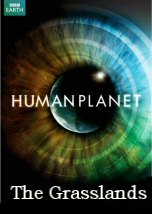
Grasslands feed the world. Over thousands of years, we humans have learned to grow grains on the grasslands and domesticate the creatures that live there. Our success has propelled our population to almost seven billion people. But this episode reveals that, even today, life in the 'Garden of Eden' isn't always rosy. We walk with the Dorobo people of Kenya as they bravely attempt to scare off a pride of hungry lions from their freshly caught kill. We gallop across the Steppe with extraordinary Mongolian horsemen who were 'born in the saddle'. And in a perfect partnership with nature built up over generations Maasai children must literally talk to the birds! The honeyguide leads them to find sweet treats, but they'll have to repay the favour.













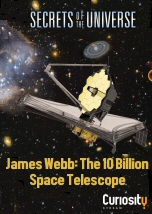








This is the story of the James Webb Space Telescope, told by the people who have devoted their lives to it. It is the world’s most advanced and most expensive telescope, and building it has been fraught with challenges. But it will all be worth it if the mission is successful.