







Last Watched

"ET"  Sort by

The God Particle

   2014    Culture
Researchers discuss the possibility that the creation of the Large Hadron Collider was foretold in ancient sources that were inspired by aliens
Series: Ancient Aliens
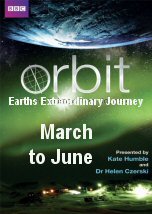
March to June

   2014    Nature
In this final episode we complete our journey, travelling back from the March equinox to the end of June. Kate Humble is in the Arctic at a place where spring arrives with a bang, whilst Helen Czerski chases a tornado to show how the earth's angle of tilt creates the most extreme weather on earth.
Series: Orbit: Earth Extraordinary Journey

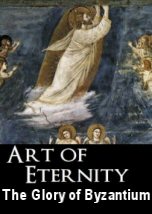
The Glory of Byzantium

   2007    Art
Andrew Graham-Dixon travels to Istanbul to immerse himself in the tumultuous world of the Byzantine Empire. He decodes the iconography of the art of the period and explains its continuing relevance.
Series: Art of Eternity

When East Meets West

   2007    Art
Andrew Graham-Dixon examines early Christian art and the reasons for its evolution during the Renaissance. He also reveals just how far modern artists have been influenced by the pre-perspective view of the world.
Series: Art of Eternity

Pluto: Back From the Dead

   2020    Science
The incredible story of how Pluto has been propelled from an unremarkable ball of ice on the edge of the solar system to a world of unimaginable complexity - where some form of alien life might exist.
New discoveries from the edge of the solar system are transforming what is known about Pluto, thanks to the New Horizons space probe that took the first-ever close up images of the planet. Pluto was once thought to be geologically dead, but the pictures revealed it to be an active world of stunning complexity, with mountains carved from ice, a nitrogen glacier that appeared to be moving and a recently active volcano, with data sent back lead some scientists to speculate that there may even be life on Pluto today.
Series: Space Deepest Secrets

Beyond Thinking

   2012    Culture
We live our lives pursuing happiness 'out there' as if it is a commodity. We have become slaves to our own desires and craving. Happiness isn't something that can be pursued or purchased like a cheap suit. This is Maya, illusion, the endless play of form. In the Buddhist tradition, Samsara, or the endless cycle of suffering is perpetuated by the craving of pleasure and aversion to pain. Freud referred to this as the "pleasure principle." Everything we do is an attempt to create pleasure, to gain something that we want, or to push away something that is undesirable that we don't want. Even a simple organism like the paramecium does this. It is called response to stimulus. Unlike a paramecium, humans have more choice. We are free to think, and that is the heart of the problem. It is the thinking about what we want that has gotten out of control. The dilemma of modern society is that we seek to understand the world, not in terms of archaic inner consciousness, but by quantifying and qualifying what we perceive to be the external world by using scientific means and thought. Thinking has only led to more thinking and more questions. We seek to know the innermost forces which create the world and guide its course. But we conceive of this essence as outside of ourselves, not as a living thing, intrinsic to our own nature. It was the famous psychiatrist Carl Jung who said, "one who looks outside dreams, one who looks inside awakes." It is not wrong to desire to be awake, to be happy. What is wrong is to look for happiness outside when it can only be found inside.
Series: Inner Worlds Outer Worlds
History of the Eagles

History of the Eagles

2013  History
Reel Rock

Reel Rock

2014  Culture
Planet Earth

Planet Earth

2007  Nature
Space

Space

2001  Science
All or Nothing: Arsenal

All or Nothing: Arsenal

2022  Culture
Science and Islam

Science and Islam

2017  History