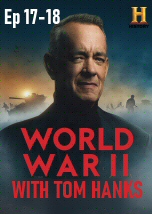
In episodes 17 and 18, the Second World War enters its most devastating final phase as two distant battlefields become the stage for unimaginable destruction. Across the Pacific, American forces fight island by island against an enemy determined to resist to the very last soldier. Every beachhead is won at an unbearable cost, revealing a campaign where courage, sacrifice and survival are pushed beyond all human limits. As casualties mount and Japan refuses to surrender, the conflict descends into one of the bloodiest chapters in military history. Meanwhile, the Soviet Union launches its overwhelming final offensive into the heart of Nazi Germany. As the Red Army closes in on Berlin from the east and Western Allied forces advance from the west, Hitler's collapsing regime makes one last desperate stand. Street by street, the battle for the German capital becomes a brutal struggle that seals the fate of the Third Reich. Through extraordinary archival footage and firsthand accounts, these episodes reveal how two immense campaigns—one in Europe and one in the Pacific—brought the deadliest war in history to its dramatic and unforgettable conclusion.
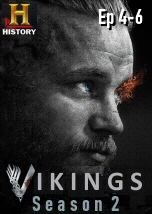
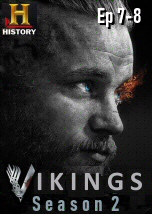
In episodes 7 and 8 of Season 2, rivalries harden and new alliances begin to reshape the balance of power on both sides of the sea. Ragnar and King Horik clash over the fate of Jarl Borg and over who should control their next expedition to England. While Horik argues that they still need Borg’s ships and warriors, Ragnar finds an unexpected new ally in Lagertha, now commanding warriors of her own. With that obstacle removed, Ragnar carries out one of the most terrifying punishments in Viking tradition: the blood eagle. At the same time, King Ecbert welcomes King Aelle to Wessex and seals an alliance between their kingdoms through marriage, preparing England for the Vikings’ inevitable return. The tension only increases when Aslaug’s dark prophecy appears to come true with the birth of Ragnar’s son Ivar, while the Viking fleet once again sails for Wessex. Ragnar wants negotiation and sees the possibility of something more lasting than simple plunder, but Horik is driven by revenge and increasingly resents Ragnar’s independence. Ecbert, meanwhile, prepares both for peace and war, using Athelstan as a link to the man he knows is unlike any other Viking leader. When Ragnar discovers that Athelstan is still alive and Ecbert offers talks under safe conduct, the possibility of a historic agreement suddenly emerges—but distrust, ambition and bloodshed threaten to destroy it before it can even begin.
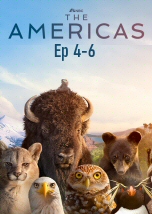
In the next three episodes the journey moves into three radically different worlds where survival depends on mastering water, ice and extreme seasonal change. In the Amazon, giant river otters hunt as a family, black caimans ambush newly hatched turtles, army ants sweep through the forest in highly organized raids and a harpy eagle guards a vulnerable chick high above the jungle floor. The rainforest emerges as a vast living system, shaped by rivers, floods, towering trees and countless species competing for food, space and the chance to raise their young. The story then heads north to Alaska and Canada, where polar bears wait for sea ice, wolves struggle through blizzards, hares evade lynx and immense caribou herds cross dangerous meltwater rivers during their ancient migrations. Finally, along the Gulf Coast, flooded swamps and subtropical wetlands become the stage for black bears, alligators, manatees, burrowing owls and one of America’s rarest wild cats, the ocelot. From the frozen Arctic to the humid marshes of Louisiana, Florida and Texas, these episodes reveal how animals adapt to landscapes that can change completely from one season to the next.
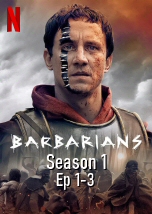
Click CC for subtitles. Torn between the Roman Empire that raised him and the Germanic people into which he was born, a Roman officer finds himself trapped between loyalty, identity and rebellion. As Rome tightens its grip over the tribes beyond the Rhine, resentment grows and old bonds are tested. At the center of the conflict stands Arminius, a man shaped by Roman discipline but increasingly confronted with the suffering of his own people, while Thusnelda and Folkwin become symbols of defiance against an empire that demands obedience at any cost. Based on real historical events and figures, the series reinforces its sense of authenticity by using Latin and Germanic dialogue, helping recreate the cultural and historical setting of the period as faithfully as possible. In the first three episodes, tensions erupt when the Cherusci are pushed beyond endurance by Governor Varus’s demands. Thusnelda and Folkwin strike a provocative blow against Roman authority by stealing the legion’s sacred eagle standard, triggering a brutal response. The crisis brings Arminius back face to face with his father Segimer and with the childhood friends he left behind. Ordered by Varus to hunt down Folkwin and return with his head, Arminius is forced into an impossible choice as Roman reprisals threaten Folkwin’s family, his village and the fragile loyalties that bind them all together.
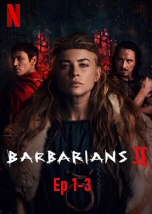
In the first three episodes of Season 2, the uneasy peace after Rome’s defeat begins to unravel. Arminius suspects the Romans are rebuilding their strength and turns to Marbod, the powerful leader of the Marcomanni, hoping to forge a broader Germanic alliance before Rome can strike again. At the same time, his brother Flavus returns to Germania in Roman service, reopening old wounds and forcing Arminius to confront the family he left behind. Thusnelda takes dangerous risks of her own, infiltrating the Roman camp as tensions rise on both sides. The situation becomes even more explosive when Marbod secretly meets Tiberius in an attempt to secure peace with Rome, while Germanicus questions Flavus’s loyalty and the Romans exploit every division among the tribes. Arminius brings his son Gaius into the village, then turns against Marbod when he discovers the depth of his dealings with Rome, while Thusnelda reacts furiously to the secrets Arminius has kept from her. These opening episodes turn the struggle into a dangerous web of betrayal, family conflict and political ambition, where every alliance could decide the future of Germania.
During 1959-1961 both the Americans and Soviets are planning manned space flight, and we see both sides preparing to do so with the development of the Vostok programme (Russia) and Project Mercury (USA). After difficulties and failures on both sides, the Soviets succeed in putting Yuri Gagarin into space first, with the Americans putting Alan Shepard up shortly afterwards.



















Meanwhile, the Soviet Union launches its overwhelming final offensive into the heart of Nazi Germany. As the Red Army closes in on Berlin from the east and Western Allied forces advance from the west, Hitler's collapsing regime makes one last desperate stand. Street by street, the battle for the German capital becomes a brutal struggle that seals the fate of the Third Reich. Through extraordinary archival footage and firsthand accounts, these episodes reveal how two immense campaigns—one in Europe and one in the Pacific—brought the deadliest war in history to its dramatic and unforgettable conclusion.