









Last Watched

"Io"  Sort by

The Nazis, A Warning From History. Episode 4

   1997    History
The BBC's definitive television history of the rise and fall of the Nazis. The Nazis - A Warning From History exposes the popular myths surrounding the rise and fall of the Third Reich. The series explores how the Nazis came to power, how they ruled, how they treated their occupied territories and, above all, how a cultured nation could be responsible for such acts of inhumanity. How could a political party as fundamentally evil and overtly racist as the Nazis come to power? This remains one of the most enigmatic questions of the last century. Acclaimed historian Laurence Rees examines what led a cultured nation at the heart of Europe to commit the atrocities it did. In so doing, he exposes popular myths and encourages understanding of the real forces that led to one of the darkest chapters in modern history. Was it simply the hypnotic power of Hitler's rhetoric? Did the Gestapo really impose themselves by terror on an unwilling population? Through interviews with witnesses and perpetrators, along with archive film and records, this six-part series unveils a more chilling reality.
Series: The Nazis, A Warning From History

Vengeance

   2005    History
This programme describes the Red Army's dramatic advance and the German's brutal resistance. Witnesses reveal how the final days of the conflict were barbarous almost beyond comprehension.
Series: War of the Century

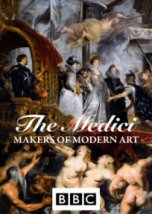
The Medici: Makers of Modern Art

   2008    Art
Andrew Graham-Dixon reveals how the Medici family transformed Florence through sculpture, painting and architecture and created a world where masterpieces fetch millions today. Without the money and patronage of the Medici we might never have heard of artists such as Donatello, Michelangelo or Botticelli, and Graham-Dixon examines how a family of shadowy, corrupt businessmen, driven by greed and ambition, became the financial engine behind the Italian Renaissance.

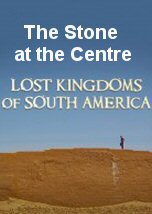
The Stone at the Centre

   2013    History
Deep in the Bolivian Andes at the height of 13,000ft stands Tiwanaku, the awe-inspiring ruins of a monolithic temple city. Built by a civilisation who dominated a vast swathe of South America, it was abandoned 1,000 years ago. For centuries it has been a mystery - how did a civilisation flourish at such an altitude and why did it vanish? Jago Cooper journeys through Bolivia's spectacular landscape to investigate the origins of Tiwanaku and finds evidence of an ancient people with amazing understanding of their environment, whose religion was based on collective effort and ritual beer drinking.
Series: Lost Kingdoms of South America

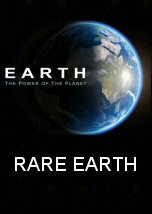
Rare Earth

   2007    Nature
It has taken 4.6 billion years for the Earth to evolve from a barren rock into the world we know today. Explore the forces beyond our planet that have determined Earth’s destiny -- forces of destruction and regeneration in the solar system that created the planet and still protect it. And now the remarkable planet is facing a new challenge: humankind. The question is, how will it survive?
Series: Earth, The Power of the Planet

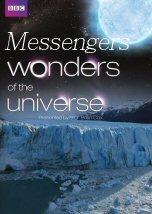
Messengers

   2011    Science
Professor Brian Cox travels from the fossils of the Burgess Shale to the sands of the oldest desert in the world to show how light holds the key to our understanding of the whole universe, including our own deepest origins. To understand how light holds the key to the story of the universe; you first have to understand its peculiar properties. Brian considers how the properties of light that lend colour to desert sands and the spectrum of a rainbow can lead to profound insights into the history and evolution of our universe. Finally, with some of the world's most fascinating fossils in hand, Brian considers how but for an apparently obscure moment in the early evolutionary history of life, all the secrets of light may have remained hidden. Because although the universe is bathed in light that carries extraordinary amounts of information about where we come from, it would have remained invisible without a crucial evolutionary development that allowed us to see. Only because of that development can we now observe, capture and contemplate the incredible wonders of the universe that we inhabit.
Series: Wonders of the Universe