







Last Watched

"Environmentalism"  Sort by

Sacred Nature I

   2017    Nature
Award winning wildlife photographers Jonathan and Angela Scott have travelled the world, always returning home to Kenya. There they introduced the world to the big cats of the Maasai Mara and now they are part of its fight for survival.
Series: Tales by Light Season 2
Fightback

       Nature
Dr Iain Stewart investigates the counter-attack that was launched by the global warming sceptics in the 1990s. At the start of the 1990s it seemed the world was united. At the Rio Earth summit the world signed up to a programme of action to start tackling climate change. Even George Bush was there. But the consensus didn't last.
Iain examines the scientific arguments that developed as the global warming sceptics took on the climate change consensus. The sceptics attacked almost everything that scientists held to be true. They argued that the planet wasn't warming up, that even if it was it was nothing unusual, and certainly whatever was happening to the climate was nothing to do with human emissions of greenhouse gases. Iain interviews some of the key global warming sceptics, and discovers how their positions have changed over time.
Series: The Climate Wars

Vegan 2019

   2019    Culture    HD
Widespread dietary changes are needed if we’re to combat the range of health problems associated with obesity and the environmental damage caused by industrial farming. Switching to a vegan diet is a potential solution, but selling the idea to the meat-eaters around the world is a tricky proposition.
Series: Vegan

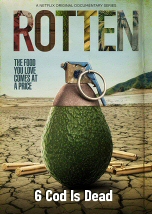
Cod is Dead

   2018    Nature
In the last 50 years, we have doubled the amount of fish we consume. Globally, billions of people rely on seafood as their primary source of protein. But the oceans can't keep up with so much demand. Around the world, fish stocks have plummeted and fisheries are crashing. People lost out. There was an industry just completely ravaged.
As the global fish supply dwindles, the industry faces a crisis on all sides - including crooked moguls, dubious imports and divisive regulations.
Series: Rotten

Shadows of Forgotten Ancestors

   2020    Nature
When Homo sapiens, which means 'wise ones,' discovered and controlled fire hundreds of thousands of years ago, everything changed. Fire allowed us to cook food and heat dwellings, and it served as a focal point for storytelling and sharing cultural identity among community members. We don't yet have established parameters for what it means to be 'distinctly human,' It would seem the only thing that separates us from other animals, Neil deGrasse Tyson ponders, is our neurotic need to feel 'special'. Against the backdrop of the Halls of Extinction, Tyson insists that there must be a clear distinction between ourselves and animals that justifies our eating them, wearing them and even bringing an end to their species.
From the birth of the devil in ancient Persia to a searing story of saintliness among macaque monkeys, this episode is an exploration of human potential for change. It concludes with the story of how one of history's greatest monsters was transformed into one of its shining lights.
Series: Cosmos: Possible Worlds

Coming of Age In The Anthropocene

   2020    Nature
At 11 o'clock on New Year's Eve of the Cosmic Calendar, Homo erectus stood up for the first time, freeing its hands and earning the species its name. They began to move around, to explore, daring to risk everything to get to unknown places. Our Neanderthal relatives lived much as we did and did many of the things we consider to be 'human.' More restless than their cousins the Neanderthals and Denisovans, our Homo sapiens ancestors crossed seas and unforgiving landscapes, changing the land, ocean and atmosphere, leading to mass extinction. The scientific community gave our age a new name, 'Anthropocene.'
Since the first civilizations we've wondered if there's something about human nature that contains the seeds of our destruction. Syukuro Manabe was born in rural Japan and took an intense interest in Earth's average global temperature. In the 1960's, he would assemble the evidence he needed to predict the increase of Earth's temperature due to greenhouse gases until it becomes an uninhabitable and toxic environment, leading to our extinction. 'This doesn't have to be,' says Neil deGrasse Tyson, 'it's not too late. There's another hallway, another future we can still have; we'll find a way.'
Series: Cosmos: Possible Worlds