Winner of the Best Documentary Short Award, the film tells the story of four unassuming heroes who ensure no student is deprived of the joy of music. It is also a reminder of how music can be the best medicine, stress reliever and even an escape from poverty. Since 1959, Los Angeles has been one of the few United States cities to offer and fix musical instruments for its public school students at no cost. Those instruments, numbering around 80,000, are maintained at a Los Angeles downtown warehouse by a handful of craftspeople. The film profiles four of them, each specializing in an orchestra section, as well as students whose lives have been enriched by the repair shop's work. The film concludes with a performance by district alumni.
The once-quiet suburbs of Sweden's major cities are the epicenter of a vicious turf war between rival gangs competing for the drug trade. The fierce competition has resulted in a series of tit-for-tat killings with almost daily shootings and bombings. More than 45 people have been shot dead so far this year. Paraic O'Brien steps onto the frontline of Sweden's deadly gang war, as the country becomes one of the most lethal for gun crime in the whole of Europe. From the front line of its lethal drug wars, a look at how Sweden has become one of Europe's deadliest hot spots for gun crime, with shootings often committed by children.
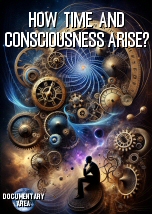
The documentary, an own production, immerses the viewer in a journey that blends science and philosophy, questioning the nature of time and unveiling a 4-dimensional universe, where space and time are integrated. We are invited to consider a universe in which past, present, and future coexist, suggesting that our linear perception of time might be more of a mental construction than a physical reality. The narrative progresses by exploring how quantum particles exist in states of probability until they are observed, at which point they acquire defined properties. Then, the provocative hypothesis is presented that observation also fixes the temporal dimension of the particles. The sensation of the flow of time and the distinction between past, present, and future are introduced as mental constructions, arising from the human brain's limited capacity to process the complexity of reality. It is then proposed that the mind, by observing itself, fixes itself in the temporal dimension, thus creating the illusion of the present. Finally, the impact of these theories on free will is discussed. This documentary challenges viewers to look beyond their everyday perceptions and consider the possibility that reality is much more complex and fascinating than our immediate experiences suggest. It is an invitation to explore the limits of science, philosophy, and the mind itself in search of answers to some of the deepest questions of existence.
More information on https://www.javier-serrano.blog/Ciencia/representacion_tridimensional_del_universo.php
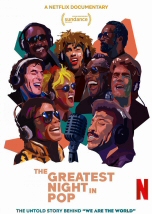
On January 25th, 1985, dozens of the era's most popular musicians gathered in Los Angeles to record a charity single for African famine relief. Setting egos aside, they collaborated on a song that would make history. The documentary transports viewers back to the recording of ‘We Are the World,’ capturing a seminal moment in music with gripping detail and emotion. Through an intimate lens, the film chronicles the night when some of the biggest names in the music industry united for a cause greater than themselves. With exclusive behind-the-scenes footage, candid interviews with the artists involved, and insights from music historians, the documentary reveals the challenges, camaraderie, and sheer talent that converged to make the recording session an unparalleled event in pop culture, making it a poignant reminder of the power of art to effect change.
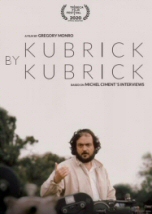
Stanley Kubrick's mark on the legacy of cinema can never be measured. He was a giant in his field, his great works resembling pristine pieces of art, studied by students and masters alike, all searching for answers their maker was notoriously reticent to give. While he's among the most scrutinized filmmakers that ever lived, the chance to hear Kubrick’s own words was a rarity—until now. Unspooling exclusive new recordings of detailed interviews with the mythic director spanning 30 years that ruminate on his philosophies, documentarian Gregory Monro weaves a tapestry of archival footage with the rhythm and care of a consummate historian relishing in his discoveries.
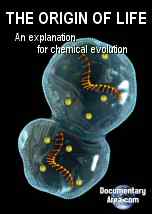
The film, marking our first own production, embarks on an awe-inspiring journey, shedding light on one of science's most profound questions: How did life emerge from the non-living? With a focus on the intricate mechanisms that may have transformed simple molecules into the first microorganisms, this film explores the concept of a chemical evolution that meticulously selected increasingly complex molecules, eventually leading to the genesis of life. By delving into the pivotal role of RNA, viewers are invited to contemplate the plausibility of life spontaneously arising from the basic elements of the universe. The documentary meticulously illustrates a potential pathway for the emergence of life, emphasizing the significance of ribozymes—RNA molecules with catalytic abilities—and their role in a prebiotic chemical evolution. The film posits a compelling argument for the natural processes that might have led to the formation of the first complex lipid vesicles, a critical step towards cellular life. By presenting a theory that bridges gaps in our understanding with scientific ingenuity, ‘The Origin of Life’ invites viewers on an intellectual adventure to discover the origins of existence itself. More information on https://www.javier-serrano.blog/Evolucion/el_origen_de_la_vida_parteI.php








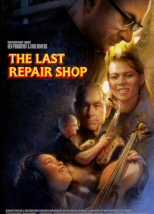



Since 1959, Los Angeles has been one of the few United States cities to offer and fix musical instruments for its public school students at no cost. Those instruments, numbering around 80,000, are maintained at a Los Angeles downtown warehouse by a handful of craftspeople. The film profiles four of them, each specializing in an orchestra section, as well as students whose lives have been enriched by the repair shop's work. The film concludes with a performance by district alumni.