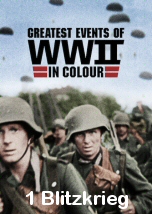
This illuminating ten-part series tells the story of World War ll through the ten most pivotal turning points in the conflict. Gripping story-telling illustrated with exquisitely restored and colourised archived films and supported by a global cast of stellar historians bring this crucially important era in history to life. In the first chapter, Britain and France declare war when Hitler invades Poland. In May 1940 the Germans attack Holland and Belgium as a decoy. As the Wehrmacht comes through the Ardennes and the Luftwaffe strikes in force, French leaders are caught like rabbits in headlights. The Germans are on a drug called Pervitin, which beats off fatigue, and reach the Atlantic coast. There is a danger that the Germans will encircle the Allies and cut them off from the sea. But Hitler issues his Halt Order and some 340,000 Allies are evacuated.
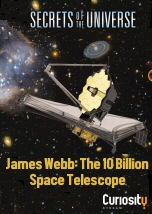
The James Webb Space Telescope, a flagship observatory developed by NASA, the European Space Agency, and the Canadian Space Agency, is the largest space telescope ever built, with a deployable mirror measuring 21.3 feet (6.5 meters) in diameter and four scientific instruments to observe the universe in infrared wavelengths. The mission will study the formation of galaxies, stars, and planets. JWST was launched December 25, 2021 on an Ariane 5 ECA rocket. This is the story of the James Webb Space Telescope, told by the people who have devoted their lives to it. It is the world’s most advanced and most expensive telescope, and building it has been fraught with challenges. But it will all be worth it if the mission is successful.
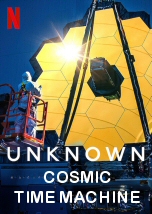
Space exploration as we’ve never seen it before, taking us behind the scenes of how NASA creates and sends the James Webb Space Telescope into space. Follows a team of engineers and scientists in an ambitious mission to launch the telescope and take the next giant leap in the understanding of the universe.
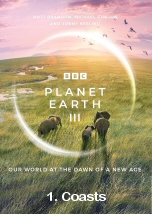
Discover amazing landscapes, the most amazing fights of animals on our planet, from the highest mountains to the deepest oceans, from the darkest caves to the hottest deserts with new technology. In the first episode, Sir David Attenborough explores the dangerous frontiers created by the world's coasts, where animals fight for survival amidst constant change. Cape fur seals, sea angels, lions, archer fish, flamingos and green turtles feature.
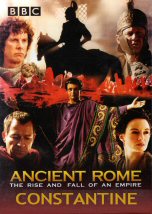
This episode tells the story of how the Emperor Constantine brought Christianity to the western world. In AD 312, Rome was in crisis. The empire had been divided into four parts, each with its own emperor who fought one another. Constantine intervened and united Rome, using military might and a new religion - Christianity.
In part two, Professor Al-Khalili looks at the 19th century chemists who struggled to impose an order on the apparently random world of the elements. From working out how many there were to discovering their unique relationships with each other, the early scientists' bid to decode the hidden order of the elements was driven by false starts and bitter disputes. But ultimately the quest would lead to one of chemistry's most beautiful intellectual creations - the periodic table.





In the first chapter, Britain and France declare war when Hitler invades Poland. In May 1940 the Germans attack Holland and Belgium as a decoy. As the Wehrmacht comes through the Ardennes and the Luftwaffe strikes in force, French leaders are caught like rabbits in headlights. The Germans are on a drug called Pervitin, which beats off fatigue, and reach the Atlantic coast. There is a danger that the Germans will encircle the Allies and cut them off from the sea. But Hitler issues his Halt Order and some 340,000 Allies are evacuated.