








Last Watched

"Lead"  Sort by

Death Of The Universe

   2008    Science
While scientists have previously theorised about a “Big Crunch” where the universe retracts back to its original size, the discovery of Dark Matter and Dark Energy has placed that hypothesis on the backburner. Some astronomers now believe that if Dark Matter offsets Dark Energy then as the universe slowly expands, stars will gradually fade, running out of fuel and leading to a dark, cold and lifeless universe. Others hypothesise a much more violent end where Dark Energy continues to expand the universe at a greater and greater speed. Stronger than gravity, Dark Energy would pull apart everything down to the fundamental particles – the universe’s very fibres. While the universe’s end may be 50 billion years away, great leaps in science will continue to alter how we believe the universe was formed – and how it will end.
Why Do Viruses Kill

   2010    Medicine
The world stood in fear of an emerging new disease that threatened to kill millions. A new flu variant H1N1 had arrived. If this latest pandemic has taught anything, it is just how little is understood about the invisible world of viruses. But that has not stopped scientists trying. Horizon follows the leading researchers from across the world, who are attempting to unravel the many secrets of viruses to understand when and why they kill.

The Normans: Men from the North

   2010    History
Professor Robert Bartlett explores how the Normans developed from a band of marauding Vikings into the formidable warriors who conquered England in 1066. He tells how the Normans established their new province of Normandy -'land of the northmen' - in northern France. Under the leadership of Duke William, they conquered England. The Battle of Hastings marked the end of the Anglo-Saxon aristocracy and monarchy. The culture and politics of England would now be transformed by the Normans.
Series: The Normans

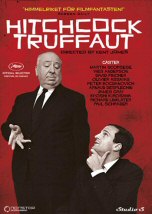
Hitchcock/Truffaut

   2015    Art
In 1962 Hitchcock and Truffaut locked themselves away in Hollywood for a week to excavate the secrets behind the mise-en-scène in cinema. Based on the original recordings of this meeting-used to produce the mythical book Hitchcock/Truffaut-this film illustrates the greatest cinema lesson of all time and plummets us into the world of the creator of Psycho, The Birds, and Vertigo. Hitchcock's incredibly modern art is elucidated and explained by today's leading filmmakers: Martin Scorsese, David Fincher, Arnaud Desplechin, Kiyoshi Kurosawa, Wes Anderson, James Gray, Olivier Assayas, Richard Linklater, Peter Bogdanovich and Paul Schrader.

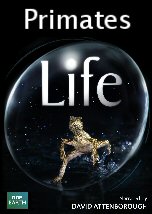
Life: Primates

   2009    Nature
Intelligence and adaptability allow primates to tackle the many challenges of life, and this is what makes our closest relatives so successful. This resourcefulness has enabled primates to conquer an incredible diversity of habitat. Hamadryas baboons live on the open plains of Ethiopia in groups up to 400 strong. Strength in numbers gives them some protection from potential predators. But, should their path cross with other baboon troops, it can lead to all-out battle, as males try to steal females from one another, and even settle old scores. Japanese macaques are the most northerly-dwelling primates and they experience completely different challenges. Some beat the freezing conditions by having access to a thermal spa in the middle of winter. But this privilege is only for those born of the right female bloodline. For western lowland gorillas, it's the male silverback that leads his family group in the rich forests of the Congo basin. He advertises his status to all with a powerful chest-beating display. Most primates are forest dwellers, and one of the strangest is the tarsier – the only purely carnivorous primate. As it hunts for insects the tarsier leaps from tree to tree in the dead of night, using its huge forward-facing eyes to safely judge each jump. Good communication is essential for success in primate society.
Series: Life

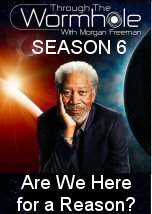
Through the Wormhole Season 6: Are We Here for a Reason

   2015    Science
Evolution tells us that all life exists for only one purpose: to reproduce. But is that all there is? How could such a simple imperative lead us to create great art and civilizations? A new theory suggests that instead of passing on genes, our ultimate purpose is to process and pass on information. We are the universe figuring itself out. Scientists dig deep into DNA, chemistry, technology and engineering to find the meaning of life. One thing is certain: living is easier if you find a reason for living.
Series: Through the Wormhole Season 6
Bronze Age

Bronze Age

2016  History
Seven Ages of Rock

Seven Ages of Rock

2007  Art
Secrets of the Universe

Secrets of the Universe

2022  Technology
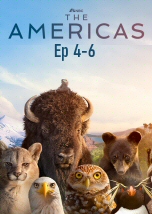
The Americas

The Americas

2025  Nature
Leaving Neverland

Leaving Neverland

2019  Culture
The Human Body

The Human Body

1998  Medicine