


Last Watched

"Orc"  Sort by

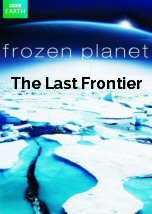
Frozen Planet: The Last Frontier

   2011    Culture
The documentary series reveals the extraordinary riches and wonders of the Polar Regions that have kept people visiting them for thousands of years. Today, their survival relies on a combination of ancient wisdom and cutting-edge science. Most Arctic people live in Siberia, either in cities like Norilsk - the coldest city on earth - or out on the tundra, where tribes like the Dogan survive by herding reindeer, using them to drag their homes behind them. On the coast, traditional people still hunt walrus from open boats - it is dangerous work, but one big walrus will feed a family for weeks. Settlers are drawn to the Arctic by its abundant minerals; the Danish Armed Forces maintain their claim to Greenland's mineral wealth with an epic dog sled patrol, covering 2,000 miles through the winter. Above, the spectacular northern lights can disrupt power supplies so scientists monitor it constantly, firing rockets into it to release a cloud of glowing smoke 100 kilometres high. In contrast, Antarctica is so remote and cold that it was only a century ago that the first people explored the continent. Captain Scott's hut still stands as a memorial to these men. Science is now the only significant human activity allowed; robot submarines are sent deep beneath the ice in search of new life-forms, which may also be found in a labyrinth of ice caves high up on an active volcano. Above, colossal balloons are launched into the purest air on earth to detect cosmic rays. At the South Pole there is a research base designed to withstand the world's most extreme winters. Cut off from the outside world for six months, the base is totally self-sufficient, even boasting a greenhouse.
Series: Frozen Planet
Is Poverty Genetic

   2014    Culture
Are the wealthy just born in the right place at the right time? Are the poor victims of a system designed to keep them down? Or do physics and biology determine who is rich and who is poor? Throughout history, distribution of wealth is governed by hidden forces: DNA, environmental stress, patterns of human migration and even the laws of thermodynamics! Nature seems to demand winners and losers in life. But does this mean greed is king, and the rich can take what they want? Or is cooperation – between microorganisms, monkeys, and humans – more essential to survival of a species?
Series: Through the Wormhole Season 5

Beyond Thinking

   2012    Culture
We live our lives pursuing happiness 'out there' as if it is a commodity. We have become slaves to our own desires and craving. Happiness isn't something that can be pursued or purchased like a cheap suit. This is Maya, illusion, the endless play of form. In the Buddhist tradition, Samsara, or the endless cycle of suffering is perpetuated by the craving of pleasure and aversion to pain. Freud referred to this as the "pleasure principle." Everything we do is an attempt to create pleasure, to gain something that we want, or to push away something that is undesirable that we don't want. Even a simple organism like the paramecium does this. It is called response to stimulus. Unlike a paramecium, humans have more choice. We are free to think, and that is the heart of the problem. It is the thinking about what we want that has gotten out of control. The dilemma of modern society is that we seek to understand the world, not in terms of archaic inner consciousness, but by quantifying and qualifying what we perceive to be the external world by using scientific means and thought. Thinking has only led to more thinking and more questions. We seek to know the innermost forces which create the world and guide its course. But we conceive of this essence as outside of ourselves, not as a living thing, intrinsic to our own nature. It was the famous psychiatrist Carl Jung who said, "one who looks outside dreams, one who looks inside awakes." It is not wrong to desire to be awake, to be happy. What is wrong is to look for happiness outside when it can only be found inside.
Series: Inner Worlds Outer Worlds

Bitter Lake

   2015    Culture
And epic film by Adam Curtis that explains why the big stories that politicians tell us have become so simplified that we can’t really see the world any longer. The narrative goes all over the world, America, Britain, Russia and Saudi Arabia, but the country at the heart of it is Afghanistan. Because Afghanistan is the place that has confronted our politicians with the terrible truth, that they cannot understand what is going on any longer". The coumentary reveals the forces that over the past thirty years rose up and undermined the confidence of politics to understand the world. And it shows the strange, dark role that Saudi Arabia has played in this. But Bitter Lake is also experimental. Curtis has taken the unedited rushes of everything that the BBC has ever shot in Afghanistan - and used them in new and radical ways. He has tried to build a different and more emotional way of depicting what really happened in Afghanistan. A counterpoint to the thin, narrow and increasingly destructive stories told by those in power today.

Hitting the Apex

   2015    Culture
The combustion of fuel and air in the engine and the fire in the heart of a rider willing to risk everything to win. Time is the enemy. The fractions of a second lost or gained in every corner which add up to defeat or victory. And the few years that you have to make it to the top. 'Hitting the Apex' is the story of six fighters - six of the fastest motorcycle racers the world has ever seen - and of the fates that awaited them at the peak of the sport.

Flowering

   1995    Nature
The third episode is devoted to the ways in which plants reproduce. Pollen and a stigma are the two components needed for fertilisation. Most plants carry both these within their flowers and rely on animals to transport the pollen from one to the stigma of another. To do this, they attract their couriers with colour, scent and nectar. It isn't just birds that help pollination: some mammals and reptiles also do so. However, it is mostly insects that are recruited to carry out the task. To ensure that pollen is not wasted by being delivered to the wrong flower, some species of plant have developed exclusive relationships with their visitors, and the gentian and its attendant carpenter bees is one example. Since pollen can be expensive to produce in terms of calories, some plants, such as orchids, ration it by means of pollinia and a strategically placed landing platform. Other orchids offer no reward for pollination, but instead mislead their guests by mimicking their markings and aroma, thus enticing males to 'mate' with them (Pseudocopulation). The most extreme fertilisation method is one of imprisonment, and one plant that uses it is the dead horse arum. It is often found near gull colonies, and mimics the appearance and smell of rotting flesh. Blow-flies are attracted to it, and are forced to stay the night before being allowed to depart in the morning, laden with pollen. Finally, Attenborough introduces the world's largest inflorescence: that of the titan arum.
Series: The Private Life of Plants
Dangerous knowledge

Dangerous knowledge

2007  Science
The Planets

The Planets

2000  Science
The Sky at Night

The Sky at Night

2023  Science
Ancient Rome

Ancient Rome

2006  History
Ancient Apocalypse

Ancient Apocalypse

2024  History
Prehistoric Planet

Prehistoric Planet

2022  Science
Leaving Neverland

Leaving Neverland

2019  Culture