Huge asteroids have smashed into the earth, and turned it into an enveloped fire, uninhabitable to almost all life on the surface. The world will get hit again. It's just a matter of when. So, what should we do as a species? Should we just, like the dinosaurs, look up and die? The reasons the dinosaurs are extinct is they didn't have a space program. We do. We have the capability to perhaps escape the Earth. Astronaut Chris Hadfield believes the only chance for human survival is to escape from Earth and build a space colony, but there are real barriers.
This is our home, the earth it's, it's the only place we've got. It is one strange rock because it's ours and we are here and we don't know if any other place in the universe, yet, that can support life. We're very lucky to have it as our home. Astronauts including the legendary Peggy Whitson, who spent 665 days in space, speak about how their concepts of home have changed since their experience.
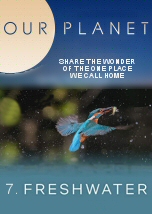
Everything that lives on land, animal or plant, depends on fresh water. Yet only part of it is within reach: Much of the planet's fresh water, is locked away, almost two-thirds of it lies frozen around the poles. Even away from the poles, much of the land's fresh water freezes each winter. The need for fresh water is as strong as ever. However, the supply is becoming increasingly unpredictable and uncertain for all manner of species. We are not alone in our need for water, but we have the ability to ensure the fresh waters of the world do flow, and we alone can determine how they are shared.
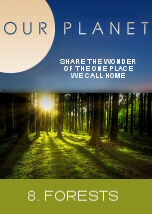
The last episode examines the fragile interdependence that exists between forests' wide variety of residents, including bald eagles, hunting dogs and Siberian tigers. Over half of all the world's trees, evergreen and deciduous, stand in great assemblies. For many of us, they are places of mystery and darkness. They are key to our climate, and home to countless unique species. The boreal forest contains 750 billion trees, and it stores over 40 percent of the world's carbon, making it a vital element in the fight against climate change. In the past, we have destroyed them without hesitation. Yet, forests do have an astonishing ability to recover. If we choose to give forests time and space, they could reclothe the earth with much of the rich and varied communities of animals and plants of which we have, so recently, robbed it. A future with more forests is key to the resilience of our planet.
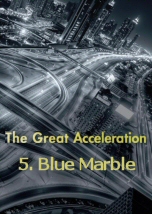
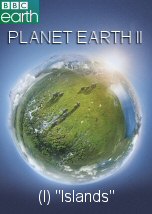
The Blue Marble is an image of Earth taken on 1972, from a distance of about 18,000 miles from the planet's surface. It was taken by the crew of the Apollo 17 spacecraft on its way to the Moon. Before it was photographed from space, our perspective of Earth was fragmented and disconnected. Recent discoveries have revealed a dynamic and rapidly changing planet, above the crust and below.
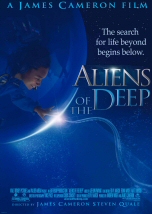
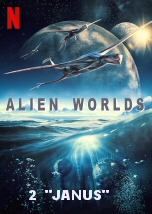
Most planets we know of are so hellish, it seems impossible that anything could live. But it's amazing where life can take hold in the Earth. Astrobiologists look for simple single-celled microbes known as extremophiles in places as Danakil Depression, known in Ethiopia as 'The Gateway to Hell.' In Episode 2, the fictional world is Janus, a planet in such a close orbit than its rotation is locked by the star's gravity and it always shows the same face to its sun. On one side of the planet, it's always daytime, a searing desert. On the other side, it's forever night, a frozen shadowland. Squeezed between the two, a sliver of perpetual twilight. Freezing meltwater flows from the cold side, carving canyons through the landscape. Deep in these canyons lives an extraordinary five-legged creature.






Astronaut Chris Hadfield believes the only chance for human survival is to escape from Earth and build a space colony, but there are real barriers.