Destiny is beyond our control, our fate already set, perhaps from the onset of disease or being born with a special ability. You may think our lives are determined by the genes we're born with, but that is not the case. In the non-coding 98% of our DNA, we have countless switches to promote or suppress the physiological reactions of our bodies. Interestingly, we can change the states of these switches through our own efforts and even can affect the DNA conditions of our offspring before their birth. Explore the hottest area of bioscience, genomics with stunning live image, quality CGI, the forefront research, and real human stories.
From virtually the moment we're born, there's a story that's preached across cultures and continents. It's a familiar fairy tale, that finding one true love is the key to a fulfilled and happy life. As an adult, we're forced to reconcile the messaging on monogamy with one simple fact: humans are terrible at it. What do biology, human history and the promiscuity of bonobos reveal about monogamy? Experts and everyday couples weigh in on shifting cultural norms.
Human society is incredibly complex, and the duelling forces pushing us to conform and also to express our individuality are both necessary. Other people can influence us in good ways and in not-so-good ways. Michael Stevens takes a look into the human urge to conform and just how strong it is against our own beliefs and sense of selves.
Our relationship with destruction is not a simple one. It can release endorphins and relax our minds. It can amp us up and make us even more aggressive. It can even help us regulate our emotional reactions. Can violently breaking things calm us down? Or does it simply anger us more? Find out as Michael Stevens takes a look into our urge to destroy.
More than 90% of all crashes have a human driver as the cause. So if you want to solve traffic fatalities, the best solution is driverless vehicles. It's an ambitious goal, but only possible because of the recent breakthroughs in deep learning. Artificial intelligence is one of those key pieces that has made it possible now to do driverless cars where it wasn't possible ten years ago. For computers, until very, very recently, to do even the most basic visual tasks, like seeing a picture of a person and knowing that it's a person was remarkably hard. That's obviously fundamental to being able to understand the world around you with the sensors that you have. And we've made also gigantic strides in being able to perform complex tasks.
Here's a growing trend in artificial intelligence. Dating video games and other applications let users carry on virtual relationships with computerized girlfriends ranging from career women to Japanese schoolgirls. There's even something for the ladies. How soon will there be artificial intelligence of such complexity that protecting its well-being and rights becomes a serious political and social concern? In what year will there be an app or computer program or a device that you not only love but that possibly, within the realm of believability might actually love you ...back?














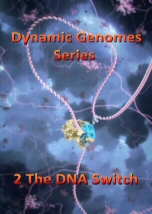






Explore the hottest area of bioscience, genomics with stunning live image, quality CGI, the forefront research, and real human stories.