Join us on a journey into the mysterious depths of the human psyche as we investigate the strange and surprising terrain of the Mind Field. Chimps and Humans can be traced biologically back to a common ancestor. The Cognitive Tradeoff Hypothesis theorizes about the two different paths of development - particularly cognitive development - that occurred in these two species after the split. Chimps stayed in the trees and developed some extraordinary cognitive capabilities which are shown by the research work of Japanese scientists, while humans came down into the savanna and developed social capabilities and language. The hypothesis is that humans 'traded' some aspects of cognitive capabilities by re-purposing areas of the brain that had evolved in the context of other uses. Those capabilities are kept in chimps and are far surpassing that of normal humans. This is shown by the research work of scientists at the Primate Research Center connected with Kyoto University.
Looking back on the major stories of the year - from the New Horizons mission to the most distant world we have ever visited to the release of the first-ever picture of a black hole. The team relive the highlights and uncover the latest developments.
Why were the most fearsome warriors our planet has ever known stopped by a flaming light in the sky? How did Columbus use secret knowledge of the heavens to cheat death in the New World? Our ancestors saw a universe
filled with bad omens. The film examines the interpretations by ancient peoples of celestial phenomena as bad omens, and the impact that the perceived omens may have had on history.
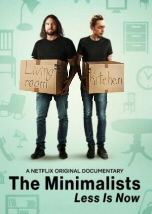
Longtime friends Joshua Fields Millburn and Ryan Nicodemus share how our lives can be better with less. The film's title was inspired by the popular maxim 'Less is more,' popularized by architect Ludwig Mies van der Rohe, who used this aphorism to describe his design aesthetic; his tactic was one of arranging the necessary components of a building to create an impression of extreme simplicity. The Minimalists have reworked this phrase to create a sense of urgency for today's consumer culture: now is the time for less.
How is the universe put together? How is it built? And how does it actually work? How the Universe Works Series 8 shows the inner workings of our planet, the solar system, the galaxies and the universe itself. In the first episode, if a massive asteroid collides with earth, it could end life on our planet as we know it. New discoveries and cutting-edge tech reveal just how close we are to apocalypse and what it would take for the world's leading space agencies to stop it.
The climate is changing faster than ever, which is why 'fix our climate' is one of the five goals of the Earthshot Prize. Prince William, Sir David Attenborough and Christiana Figueres highlight inspiring and often unexpected solutions to the challenge. In this film, we'll explain the scale of the problem posed by climate change and will introduce you to some amazing people already working on climate crisis. One of these three finalists will win the Earthshot Prize and get the platform and resources they need to scale their ground-breaking work. Nine more solutions for fixing our climate will receive the same support over the course of this decade.












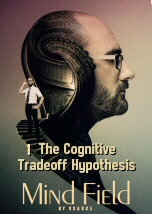









Chimps and Humans can be traced biologically back to a common ancestor. The Cognitive Tradeoff Hypothesis theorizes about the two different paths of development - particularly cognitive development - that occurred in these two species after the split. Chimps stayed in the trees and developed some extraordinary cognitive capabilities which are shown by the research work of Japanese scientists, while humans came down into the savanna and developed social capabilities and language.
The hypothesis is that humans 'traded' some aspects of cognitive capabilities by re-purposing areas of the brain that had evolved in the context of other uses. Those capabilities are kept in chimps and are far surpassing that of normal humans. This is shown by the research work of scientists at the Primate Research Center connected with Kyoto University.