

Last Watched

"EMI"  Sort by

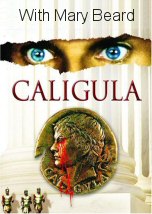
Caligula

   2013    History
Two thousand years ago one of history's most notorious individuals was born. Professor Mary Beard embarks on an investigative journey to explore the life and times of Gaius Julius Caesar Augustus Germanicus - better known to us as Caligula. Caligula has now become known as Rome's most capricious tyrant, and the stories told about him are some of the most extraordinary told about any Roman emperor. He was said to have made his horse a consul, proclaimed himself a living God, and indulged in scandalous orgies - even with his own three sisters - and that's before you mention building vast bridges across land and sea, prostituting senators' wives and killing half the Roman elite seemingly on a whim. All that in just four short years in power before a violent and speedy assassination in a back alley of his own palace at just 28-years-old." But how much of his story is true? Travelling across the Roman world - from Germany and Capri in the bay of Naples to the astonishing luxury of his life in imperial Rome - Mary attempts to peel away the myths. Some stories are difficult to get to the bottom of as they were written by hacks long after his death, but there is plenty of surviving evidence where the 'real' Caligula can be glimpsed. Such as in the extraordinary luxury of his private yachts outside Rome; in the designs he chose for his coins when he became Emperor; in an eye-witness account of Caligula's withering humour written in 41AD; the trial documents covering the mysterious death of his father when he was just seven-years-old; and even in a record of his imperial slaves - from the palace spy to his personal trainer. Piecing together the evidence, Mary puts Caligula back into the context of his times to reveal an astonishing story of murder, intrigue and dynastic family power. Above all, she explains why Caligula has ended up with such a seemingly unredeemable reputation. In the process, she reveals a more intriguing portrait of not just the monster, but the man.
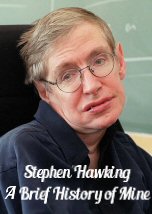
Stephen Hawking: A Brief History of Mine

   2013    History
This new feature-length biographical film tells the extraordinary and dramatic story of the planet's most famous living scientist, told for the first time in his own words and by those closest to him. Made with unique access to his private life, this is an intimate and moving journey into Stephen Hawking's past and present. Interviewees include Stephen Hawking's sister Mary, his ex-wife Jane, carers and students, as well as colleagues such as Roger Penrose, plus Apollo astronaut Buzz Aldrin, actors Benedict Cumberbatch and Jim Carrey, and Sir Richard Branson This inspirational portrait of an iconic figure relates Hawking's incredible personal journey from boyhood underachiever to scientific genius and multi-million-selling author. And it charts how he overcame being diagnosed with motor neurone disease - and being given just two years to live - to make amazing scientific discoveries and become a symbol of triumph over adversity. Born exactly 300 years after the death of Galileo, Hawking grew up in a family some regarded as eccentric. Always asking questions, he was nicknamed 'Einstein' at school. Hawking blossomed at Oxford, although he only spent an hour a day studying. He noticed that he was becoming clumsy and fell over for no apparent reason. He was diagnosed with motor neurone disease, but nevertheless started a family and embarked on his academic career, finding himself at the heart of a searing scientific debate about the origins of the universe. And as he lost the use of his body, Hawking had to find new ways to think. He went on to write the huge bestseller A Brief History of Time, and the film reveals the high and lows of his resulting fame and fortune.

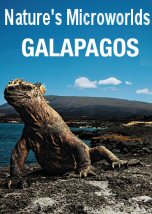
Nature Microworlds: Galapagos

   2012    Nature
A visit to arguably the most famous archipelago on Earth, the Galapagos. It's home to a myriad of bizarre and unique creatures, endemic to these islands - but how did they get here and what is the key to these extraordinary islands that allows them to thrive? The programme reveals that this key holds not just the secret to life here, but also to how Darwin was able to leave with the ideas that would revolutionise biology.

London: The Modern Babylon

   2012    Culture
Julien Temple's epic time-travelling voyage to the heart of his hometown. From musicians, writers and artists to dangerous thinkers, political radicals and above all ordinary people, this is the story of London's immigrants, its bohemians and how together they changed the city forever. Reaching back to the dawn of film in London at the start of the 20th century, the story unfolds through film archive, voices of Londoners past and present and the flow of popular music across the century; a stream of urban consciousness, like the river which flows through its heart. It ends now, as London prepares to welcome the world to the 2012 Olympics.

The Gatekeepers

   2012    Culture
(Click CC for subtitles) Charged with overseeing Israel's war on terror-both Palestinian and Jewish- the head of the Shin Bet, Israel's secret service is present at the crossroad of every decision made. For the first time ever six former heads of the agency agreed to share their insights and reflect publicly on their actions and decisions. The Gatekeepers offers an exclusive account of the sum of their success and failures. It validates the reasons that each man individually and the six as a group came to reconsider their hard-line positions and advocate a conciliatory approach toward their enemies based on a two-state solution.

Fermat Last Theorem

   1996    Science
The Pythagorean Theorem is simple: x2 + y2 = z2. In this form, the equation can be solved. But what if the 2 is replaced with any positive integer greater than 2? Would the equation still be solvable? More than 300 years ago, amateur mathematician Pierre de Fermat said no, and claimed he could prove it. Unfortunately, the book margin in which he left this prophecy was too small to contain his thinking. Fermat's Last Theorem has since baffled mathematicians armed with the most advanced calculators and computers. Andrew Wiles methodically worked in near isolation to determine the proof for this seemingly simple equation.
The Cell

The Cell

  Science
Leaving Neverland

Leaving Neverland

2019  Culture
Asia

Asia

2024  Nature
Rome

Rome

  History
Trainwreck

Trainwreck

2025  Culture
Human

Human

2025  History
Future Warfare

Future Warfare

2021  Technology