




Last Watched

"Heart"  Sort by

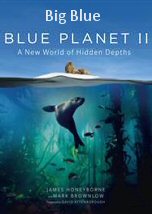
Big Blue

   2017    Nature
The big blue is the world's greatest wilderness, far from shore and many kilometres deep. It's a vast marine desert where there is little to eat and nowhere to hide. Yet it's home to some of the biggest and most spectacular creatures on earth. This episode reveals what it takes to survive in this savage and forbidding world. We witness feats of incredible endurance, moments of high drama and extraordinary acts of heart-wrenching self-sacrifice. Every animal in the big blue must find their own unique way to survive. Sperm whales have the largest brains in the world. They live for 80 years, and we are only now beginning to learn the extraordinary complexity of their language of clicks - thought to coordinate the whole family in everything from childcare to hunting. With special pressure-proof cameras, we witness record-breaking feats of endurance as they hunt for squid a kilometre down into the abyss. Only recently have we begun to solve the mystery of where baby turtles disappear to in their early years. They leave the crowded waters of the coast and head to the open ocean, where they use floating debris like logs as life rafts. Here they remain until adulthood, adrift on the high seas in relative safety away from coastal predators. Over half of all animals in the open ocean drift in currents. Jellyfish cross entire oceans feeding on whatever happens to tangle with their tentacles. The jelly-like Portuguese man-of-war can harness sail power to fish with its deadly tentacles. Sometimes there is a brief explosion of food in this marine desert, but ocean hunters must be fast to make the best of this bonanza. We witness super pods of up to 5,000 spinner dolphins racing to herd vast shoals of lanternfish, briefly caught at the surface where it is thought they spawn. New aerial footage reveals, for the first time, the truth to a centuries-old sailors' legend of the 'boiling seas' - the spectacular feeding frenzy of 90kg tuna and dolphins smashing through the lantern fish shoals turning the sea white with foam.
Series: Blue Planet II
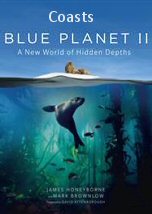
Blue Planet II Coasts

   2017    Nature
On the coast, two worlds collide. Coasts are the most dynamic and challenging habitats in the ocean - that brings great rewards but also great danger. The extraordinary animals that live here must find ingenious ways to cope with two very different worlds. This episode is a rollercoaster ride of heart-stopping action and epic drama, peopled with characters from the beautiful to the bizarre. We meet fish that live on dry land and puffins that must travel 60 miles or more for a single meal, and witness a life-and-death struggle in a technicolour rock pool. In a secluded cove in the Galapagos, sea lions feast on 60kg tuna. It should be impossible - tuna are usually far too fast for sea lions to catch. But here the sea lions club together to herd their prey inshore. Once trapped in the shallows, these huge fish are easy pickings. As the tide recedes in Brazil, lightfoot crabs leap from rock to rock, desperately avoiding the water - their lives depend on it. Moray eels launch themselves from rock pools, jaw gaping. Then octopuses, too. Both crawl across dry rock to set their ambush. Elsewhere, the ever-changing tides create rock pools. But these temporary worlds are a battleground. Predatory starfish turn a magical garden into the stuff of nightmares.
Series: Blue Planet II

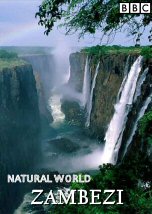
Zambezi

   2011    Nature
Africa's wildest river is home to the most spectacular wildlife. Hippos fight for territory while herds of elephant, water buffalo and zebra depend on it for life. In the wet season the rains burst the riverbanks and everyone, including people, must move whilst fish swim through the villages. In the dry season the creatures fight over the few pools of water while predators prowl. At its heart it plunges over Victoria Falls and into wild ravines before draining into the Indian Ocean, where storm clouds cycle the water back into the heart of Africa.
Series: Natural World

The Great Feast

   2009    Nature
Every summer in the seas off Alaska humpback whales, sea lions and killer whales depend on an explosion of plant life, the plankton bloom. It transforms these seas into the richest on Earth. But will these animals survive to enjoy the great feast? The summer sun sparks the growth of phytoplankton, microscopic floating plants which can bloom in such vast numbers that they eclipse even the Amazon rainforest in sheer abundance of plant life. Remarkably, it is these minute plants that are the basis of all life here. But both whales and sea lions have obstacles to overcome before they can enjoy the feast. Humpback whales migrate 3,000 miles from Hawaii, and during their 3 month voyage lose a third of their body weight. In a heart-rending scene a mother sea lion loses her pup in a violent summer storm, while another dramatic sequence shows a group of killer whales working together to kill a huge male sea lion.
In late summer the plankton bloom is at its height. Vast shoals of herring gather to feed on it, diving birds round the fish up into a bait ball and then a humpback whale roars in to scoop up the entire ball of herring in one huge mouthful. When a dozen whales work together they employ the ultimate method of co-operative fishing - bubble net feeding. One whale blows a ring of bubbles to engulf the fish and then they charge in as one. Filmed from the surface, underwater and, for the first time, from the air, we reveal how these giant hunters can catch a tonne of fish every day.
Series: Nature Great Events

It Was Fifty Years Ago Today 2of2

   2017    Art
Featuring interviews with former employees, fellow musicians, family members and journalists, and supported by original and exclusive never-seen-before footage, this star-studded rockumentary offers a fascinating insight into the creation and recording of one of the most ground-breaking and influential albums in pop history. A documentation of the influences that went on to help create the seminal album Sgt. Pepper's Lonely Hearts Club Band.
Series: It Was Fifty Years Ago Today

A Tale of Two Atoms

   2020    Science
Inside the heart of the atom, its nucleus houses energy. This hidden treasure was forged billions of years ago in distant stellar furnaces. The secret of starlight is nothing to fool with. It can bring a civilization to life and it can burn it to the ground.
Two atoms from different parts of the universe meet on a small planet. A deadly embrace between science and state altered the fate of the world and a gripping cautionary tale of others who grew used to living in the shadow of grave danger until it killed them all except one.
Series: Cosmos: Possible Worlds
Leonardo Da Vinci

Leonardo Da Vinci

2024  History
The Art of Russia

The Art of Russia

2009  Art
Mind Field Season 1

Mind Field Season 1

2017  Medicine
Kingdom

Kingdom

2025  Nature
Natural World

Natural World

2017  Nature
Secrets of the Bees

Secrets of the Bees

2026  Nature
Food Inc

Food Inc

2009  Technology
Big Oil vs The World

Big Oil vs The World

2022  Nature