




Last Watched

"Light"  Sort by

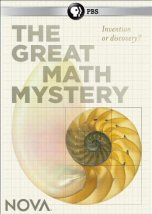
The Great Math Mystery

   2015    Science
Go with us on a mathematical mystery tour, a provocative exploration of math's astonishing power across the centuries. We discover math's signature in the swirl of a nautilus shell, the whirlpool of a galaxy, and the spiral in the center of a sunflower. Math was essential to everything from the first wireless radio transmissions to the successful landing of rovers on Mars. But where does math get its power?" Astrophysicist and writer Mario Livio, along with a colorful cast of mathematicians, physicists, and engineers, follow math from Pythagoras to Einstein and beyond, all leading to the ultimate riddle: Is math an invention or a discovery? Humankind's clever trick, or the language of the universe? Whether we think we're good with numbers or not, we all use math in our daily lives. The Great Math Mystery sheds fascinating light on how math works in our brains and ponders the ultimate mystery of why it works so well when decoding the universe.
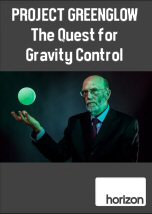
Project Greenglow The Quest for Gravity Control

   2016    Science
For centuries, the precise workings of gravity have confounded the greatest scientific minds - from Newton to Faraday and Einstein - and the idea of controlling gravity has been seen as little more than a fanciful dream. Yet in the mid 1990s, UK defence manufacturer BAE Systems began a ground-breaking project code-named Greenglow. Nasa was simultaneously running its own Breakthrough Propulsion Physics Project". It was concerned with potential space applications of new physics, including concepts like 'faster-than-light travel' and 'warp drives'. Looking into the past and projecting into the future, Horizon explores science's long-standing obsession with the idea of gravity control. It looks at recent breakthroughs in the search for loopholes in conventional physics and examines how the groundwork carried out by Project Greenglow has helped change our understanding of the universe. Gravity control may sound like science fiction, but the research that began with Project Greenglow is very much ongoing, and the dream of flying cars and journeys to the stars no longer seems quite so distant.

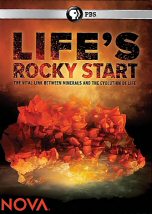
Life Rocky Start

   2016    Science
Four and a half billion years ago, the young Earth was a hellish place, a seething chaos of meteorite impacts, volcanoes belching noxious gases, and lightning flashing through a thin, torrid atmosphere. Then, in a process that has puzzled scientists for decades, life emerged. But how? Join mineralogist Robert Hazen as he journeys around the globe. From an ancient Moroccan market to the Australian Outback, he advances a startling and counterintuitive idea—that the rocks beneath our feet were not only essential to jump-starting life, but that microbial life helped give birth to hundreds of minerals we know and depend on today. It's a theory of the co-evolution of Earth and life that is reshaping the grand-narrative of our planet’s story.

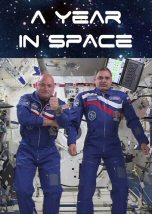
A Year in Space

   2016    Technology
Follow astronaut Scott Kelly’s record-breaking 12-month mission on the International Space Station, from launch to landing, as NASA charts the effects of long-duration spaceflight. A Russian Soyuz spacecraft carried Scott Kelly of NASA and Mikhail Kornienko of Roscosmos to the space station for the longest space mission ever assigned to a NASA astronaut". The expedition provided important insights into operational and scientific areas in human research in space and on Earth. Integrated scientific investigations between NASA and Roscosmos will combine resources to improve data sharing among space medical and human research communities, as well as help inform current assessments of crew performance and health and better determine and validate countermeasures to reduce the risks associated with future exploration as NASA plans for missions around the moon, to an asteroid and eventually to Mars.

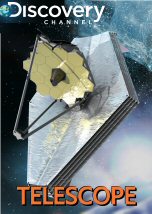
Telescope

   2016    Technology
A dynamic journey behind the scenes of the next step in the evolution of telescopes: NASA's James Webb Space Telescope. A new generation has been inspired to design and build this massive instrument, which is 100 times more powerful than the Hubble Space Telescope and will be a veritable time machine, capable of looking back on the origins of our universe and identifying signatures of potential life on planets far outside our solar system". With unprecedented access to the people and technologies that power its creation, including astrophysicists, engineers at Northrop Grumman, and personnel from NASA'S Goddard Space Flight Center and the Space Telescope Science Institute, the operations center for Hubble and Webb, Telescope spotlights the high-stakes mission of building this massive new scientific instrument. The film is a comprehensive look at the dynamic history of 400 years of telescopes starting with Galileo in 1609. The Webb is the next great telescope in society's ongoing mission to see farther into the universe and answer fundamental questions that have haunted mankind from the beginning of time. Directed by Oscar nominated filmmaker Nathaniel Kahn

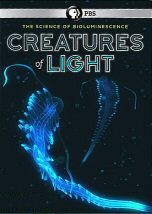
Creatures Of Light

   2016    Nature
In the dark depths of the oceans, nearly 90% of all species light up the darkness from within. These creatures flash, sparkle, shimmer, or simply glow. Whether it’s to scare off predators, fish for prey, or lure a mate, the language of light is everywhere in the ocean depths, and scientists are finally starting to decode it. Discover surprising ways to harness nature’s light—from tracking cancer cells to detecting pollution, lighting up cities, and even illuminating the inner workings of our brains.