






Last Watched

"Self"  Sort by

The Genius of Charles Darwin: The Fifth Ape

   2008    Culture
Richard Dawkins deals with some of the philosophical and social ramifications of the theory of evolution. Dawkins starts out in Kenya, speaking with palaeontologist Richard Leakey. He then visits Christ is the Answer Ministries, Kenya's largest Pentecostal church, to interview Bishop Bonifes Adoyo. Adoyo has led the movement to press Kenya's national museum to sideline its collection of hominid bones pointing to man's evolution from ape to human.[5] The collection includes the Turkana Boy discovered by Kamoya Kimeu, a member of a team led by Richard Leakey in 1984. Dawkins discusses social darwinism and eugenics, explaining how these are not versions of natural selection, and that 'Darwin has been wrongly tainted'. He then meets with evolutionary psychologist Steven Pinker to discuss how morals can be compatible with natural selection. He goes on to explaining sexual selection, with peafowls as an example. To find out whether sexual selection plays a role for altruism and kindness among humans, he visits women who are looking for sperm donors, as well as a sperm bank manager. Dawkins also explains kin selection and selfish genes.
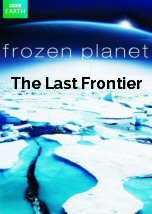

Frozen Planet: The Last Frontier

   2011    Culture
The documentary series reveals the extraordinary riches and wonders of the Polar Regions that have kept people visiting them for thousands of years. Today, their survival relies on a combination of ancient wisdom and cutting-edge science. Most Arctic people live in Siberia, either in cities like Norilsk - the coldest city on earth - or out on the tundra, where tribes like the Dogan survive by herding reindeer, using them to drag their homes behind them. On the coast, traditional people still hunt walrus from open boats - it is dangerous work, but one big walrus will feed a family for weeks. Settlers are drawn to the Arctic by its abundant minerals; the Danish Armed Forces maintain their claim to Greenland's mineral wealth with an epic dog sled patrol, covering 2,000 miles through the winter. Above, the spectacular northern lights can disrupt power supplies so scientists monitor it constantly, firing rockets into it to release a cloud of glowing smoke 100 kilometres high. In contrast, Antarctica is so remote and cold that it was only a century ago that the first people explored the continent. Captain Scott's hut still stands as a memorial to these men. Science is now the only significant human activity allowed; robot submarines are sent deep beneath the ice in search of new life-forms, which may also be found in a labyrinth of ice caves high up on an active volcano. Above, colossal balloons are launched into the purest air on earth to detect cosmic rays. At the South Pole there is a research base designed to withstand the world's most extreme winters. Cut off from the outside world for six months, the base is totally self-sufficient, even boasting a greenhouse.
Series: Frozen Planet

The Glory of Byzantium

   2007    Art
Andrew Graham-Dixon travels to Istanbul to immerse himself in the tumultuous world of the Byzantine Empire. He decodes the iconography of the art of the period and explains its continuing relevance.
Series: Art of Eternity

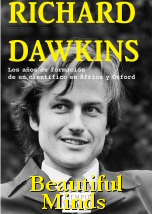
Beautiful Minds: Richard Dawkins

   2012    History
Professor Richard Dawkins explain how his unique scientific perspectives have redefined how we think about the world around us and describe his big moment or discovery. Dawkins reveals how he came to write The Selfish Gene in 1976, an explosive book which divided the scientific community and made him the most influential evolutionary biologist of his generation, and how this made him an outspoken spokesman for atheism.

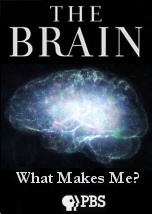
What Makes Me

   2015    Medicine
'What Makes Me?', explores the question of how the brain gives rise to our thoughts, emotions, our memories and personality. Philosophers and great thinkers have for millennia pondered the question of how physical stuff can give rise to mental processes. Last century, the new field of neuroscience joined the discussion, and Dr David Eagleman explains that to a neuroscientist, the answers to such questions lie in a deep understanding of the brain.
Series: The Brain with David Eagleman

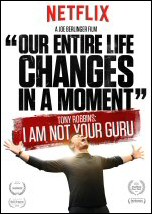
Tony Robbins I Am Not Your Guru

   2016    Culture
Embedding over the course of his seminar 'Date with Destiny', Joe Berlinger turns an unflinching eye on Tony Robbins powerful and uncompromising approach to achieving success, ensuring the attendees leave with new perspective on the forces, thoughts and feelings that motivate their behavior and help them better take control of their lives. The films pulls back the curtain on Tony Robbins, a man that traverses the globe and consults over 200,000 people annually, including world leaders, pundits and celebrities. An emotional tour de force that unveils the inner-workings of this mega event, the zealous participants and the man himself.
Seven Worlds One Planet

Seven Worlds One Planet

2019  Nature
The Story of the Jews

The Story of the Jews

2013  History
Top Gear

Top Gear

2012  Technology
Explained

Explained

2018  Technology
High Score

High Score

2020  Technology
Asia

Asia

2024  Nature
The Germanic Tribes

The Germanic Tribes

2007  History