Professor Jim Al-Khalili looks at how we have created machines that can simulate, augment, and even outperform the human mind - and why we shouldn't let this spook us. He reveals the story of the pursuit of AI, the emergence of machine learning and the recent breakthroughs brought about by artificial neural networks. He shows how AI is not only changing our world but also challenging our very ideas of intelligence and consciousness.
Along the way, we'll investigate spam filters, meet a cutting-edge chatbot, look at why a few altered pixels makes a computer think it's looking at a trombone rather than a dog and talk to Demis Hassabis, who heads DeepMind and whose stated mission is to 'solve intelligence, and then use that to solve everything else'. Stephen Hawking remarked 'AI could be the biggest event in the history of our civilisation. Or the worst'. Jim argues that AI is a potent new tool that should enhance our lives, not replace us.
For a predominately visual medium like cinema, its musical component plays a vital role as well, especially its score. In that essential musical accompaniment, the soul of the film is expressed whether it be sweepingly majestic fanfares or delicate lyrical pieces. This documentary explores the artistic role of this special musical discipline that completes the cinematic artistic creation process and the artists who have devoted their careers to this contribution. We explore the form's history and examine the masters who defined it with their own distinctive artistic vision. In doing so, the various components of this delicate creative process are revealed as they create a musical compositional work that has inspired a popular appreciation of music in all its forms, which gave some old musical ways their own new lease on life.
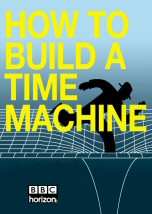
Time travel is not forbidden by the laws of nature, but to build a time machine, we would need to understand more about those laws and how to subvert them than we do now. And every day, science does learn more. In this film Horizon meets the scientists working on the cutting edge of discovery - men and women who may discover how to build wormholes, manipulate entangled photons or build fully functioning time crystals. In short, these scientists may enable an engineer of the future to do what we have so far been only able to imagine - to build a machine that allows us travel back and forward in time at the touch of a button. It could be you! Science fiction? Watch this film.
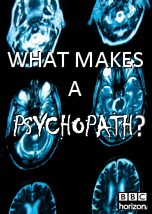
Psychopaths have long captured the public imagination. Painted as charismatic, violent predators lacking in all empathy, they provide intrigue and horror in equal measure. But what precisely is a psychopath? What is it that drives them to cause harm, even kill? And can they ever be cured? The film also features a series of candid interviews with prison inmates who not only describe their crimes but why they think they committed them. 'What Makes a Psychopath?' explores not only how each individual's crimes were shaped by their own life experiences, but also gives an insight into how these people think and behave. Working with the world's experts in the field, the film sheds light on the biological, psychological and environmental influences that shape a psychopath. And it looks to the future, with ground-breaking research that suggests a lifetime of incarceration is not the only option to manage violent and dangerous psychopaths.
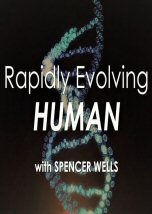
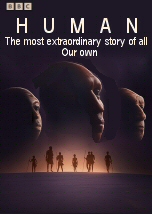
We humans often like to think we're the end of the line when it comes to evolution. But if we rewind through our short time on Earth as a species, and the many changes that have occurred to us along the way, we find we're still very much a work in progress. Renowned geneticist and author Spencer Wells reveals how changes in our genetic code have fuelled major changes in our appearance and capabilities over time, and why scientists believe we're continuing to rapidly evolve today. By understanding these changes, we are better prepared for the future.
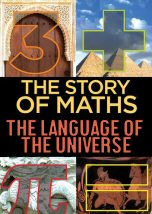
This four-part British television series outlines aspects of the history of mathematics. Written and presented by University of Oxford professor Marcus du Sautoy, it is a co-production between the Open University and the BBC. In the first episode, Marcus du Sautoy in Egypt uncovers use of a decimal system based on ten fingers of the hand and discovers that the way we tell the time is based on the Babylonian Base 60 number system. In Greece, he looks at the contributions of some of the giants of mathematics including Plato, Archimedes and Pythagoras, who is credited with beginning the transformation of mathematics from a counting tool into the analytical subject of today. A controversial figure, Pythagoras’ teachings were considered suspect and his followers seen as social outcasts and a little be strange and not in the norm. There is a legend going around that one of his followers, Hippasus, was drowned when he announced his discovery of irrational numbers. As well as his work on the properties of right angled triangles, Pythagoras developed another important theory after observing musical instruments. He discovered that the intervals between harmonious musical notes are always in whole number intervals.










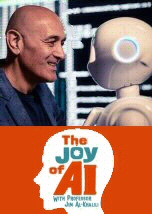





Along the way, we'll investigate spam filters, meet a cutting-edge chatbot, look at why a few altered pixels makes a computer think it's looking at a trombone rather than a dog and talk to Demis Hassabis, who heads DeepMind and whose stated mission is to 'solve intelligence, and then use that to solve everything else'. Stephen Hawking remarked 'AI could be the biggest event in the history of our civilisation. Or the worst'. Jim argues that AI is a potent new tool that should enhance our lives, not replace us.