Most planets we know of are so hellish, it seems impossible that anything could live. But it's amazing where life can take hold in the Earth. Astrobiologists look for simple single-celled microbes known as extremophiles in places as Danakil Depression, known in Ethiopia as 'The Gateway to Hell.' In Episode 2, the fictional world is Janus, a planet in such a close orbit than its rotation is locked by the star's gravity and it always shows the same face to its sun. On one side of the planet, it's always daytime, a searing desert. On the other side, it's forever night, a frozen shadowland. Squeezed between the two, a sliver of perpetual twilight. Freezing meltwater flows from the cold side, carving canyons through the landscape. Deep in these canyons lives an extraordinary five-legged creature.
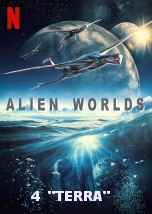
What sort of alien civilizations might exist in the vastness of space? Terra is the fictional world imagined in Episode 4, a planet nine billion years old, twice as old as Earth. Old enough that a truly advanced intelligence could evolve. It was once a fertile world, now it is barren. But life can still thrive here in artificial domes. Over time, they've evolved not to need their bodies. They exist only as neural tissue. They never age, they never die. They're monitored and maintained by robots. If alien civilizations are statistically so likely, why haven't astronomers found any sign of them? Where is everyone? Every time we look at an individual star, that's like dropping a bucket in the ocean. We're going to have to look at a lot of stars and to search through a lot of data until we find the clue that leads us to another civilization.
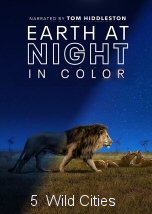
Each night, across the planet, our cities illuminate the darkness. Their lights burning brighter than ever before. And whilst we're asleep, animals are making the most of this new neon landscape. The sunset in Los Angeles, Chicago, and Toronto creates worlds of opportunities for the cleverest animals willing to take the risk.
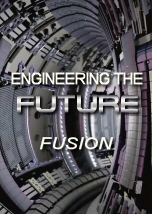
It is the greatest technological challenge ever undertaken by humankind. The quest to produce the ultimate energy solution, Fusion, a reliable source of clean power. What if we could create here on earth, our very own version of a star, a machine that makes power from nuclear fuel? But so immense are the challenges, the goal of a power-producing fusion reactor has so far remained elusive and out of reach... until now.
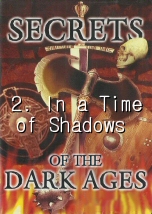
On the second part of his journey through the dark ages Richard Rudgley continues into the age of the wandering peoples, the Volkerwanderung. These Northern people enjoyed a golden age unaffected by Rome and just 30 years after the Romans relinquished Britain, the 'Anglo-Saxons' made their move. The bedraggled legions are in retreat. Walls are pulled down. Mosaics shattered. And yet there never was a people called Anglo-Saxon. We look at the lasting influence of Saxon leaders like Alfred the Great, and his blue print for social justice.
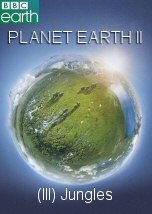
Jungles provide the richest habitats on the planet - mysterious worlds of high drama where extraordinary animals attempt to survive in the most competitive place on earth. Flooded forests are home to caiman-hunting jaguars and strange dolphins that swim amongst the tree tops, while in the dense underworld, ninja frogs fight off wasps and flying dragons soar between trees. Acrobatic indri leap through the forests of Madagascar, while the jungle night conceals strange fungi and glow-in-the-dark creatures never filmed before.










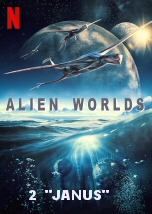


In Episode 2, the fictional world is Janus, a planet in such a close orbit than its rotation is locked by the star's gravity and it always shows the same face to its sun. On one side of the planet, it's always daytime, a searing desert. On the other side, it's forever night, a frozen shadowland. Squeezed between the two, a sliver of perpetual twilight. Freezing meltwater flows from the cold side, carving canyons through the landscape. Deep in these canyons lives an extraordinary five-legged creature.