









Last Watched

"Astronomy"  Sort by

Beyond the Big Bang

   2007    Science
The universe began with a massive expansion, billions and billions of years ago, and it continues to expand with every passing second. The idea that the universe, and man's very existence, began with a "Big Bang" is no longer a topic of debate among most scientists--it is essentially taken as fact.
Series: The Universe
The Alien Planets

   2007    Science
Have planet hunters finally found proof of other Earth like worlds? Astronomers have now discovered over two hundred alien worlds, beyond our solar system, that were unknown just a decade ago. Discover planets that rage with fiery hurricanes and bizarre planets covered by water so dense that it forms a kind of hot ice. Among these weird worlds, Earth actually seems like the oddball.
Series: The Universe

Cosmic Holes

   2007    Science
Today, we know black holes exist, and now scientists are trying to confirm that other holes lurk in hyperspace. Our infinite cosmos could contain a variety of "holes" such as black, white, "mini" and wormholes. White holes are the reverse of black holes; instead of matter being sucked into it, matter is ejected out. Wormholes are gateways in the fabric of space and time. They are included in Einstein's field equations as possibilities for their existence. Neither white holes nor wormholes have ever been found. Learn about new discoveries including, colliding binary black holes, intermediate black holes and manufacturing mini black holes.
Series: The Universe

The Milky Way

   2007    Science
We used to think that Earth was at the centre of the universe, but now we know we're not even at the centre of our own galaxy. Countless wonders exist between where earth is situated and the massive black hole at the galactic centre of our galaxy. Within the Milky Way can be found the debris of old, dying stars fuelling the birth of new stars and at the galactic centre hypervelocity stars get catapulted clear beyond the Milky Way's outer rim at unimaginable speeds. Come along for a guided tour of 100,000 light-year-wide family of stars and stellar phenomena we call The Milky Way.
Series: The Universe

Dark Matter and Dark Energy

   2008    Science
Scientists have no idea what it is, but Dark Matter and Dark Energy make up 96% of the Universe. Dark Matter is everywhere. It passes through everything we know on earth at billions of particles every second, yet no one has ever gotten a direct detection of this mysterious dark substance. An even more bewildering force is Dark Energy, which is rapidly pushing apart our Universe. Discovered only ten years ago, scientists are struggling to comprehend its unusual characteristics and answer the ultimate question; what is the fate of our Universe? Using cutting-edge computer graphics watch as the universe is brought down to earth.
Series: The Universe

Supernovas

   2008    Science
A stellar explosion, the supernova is the sensational death of a star. It can shine as bright as 100 billion Suns and radiate as much energy as the Sun would emit over 10 billion years. Jets of high-energy light and matter are propelled into space and can cause massive Gamma Ray Bursts and emit intense X-ray radiation for thousands of years. Astronomers believe that this process creates the very building blocks of planets, people and plants. Meet the world's leading Supernova hunters, and take a look at recorded supernovas throughout history.
Series: The Universe
Ancient Apocalypse

Ancient Apocalypse

2024  History
Universe

Universe

2021  Science
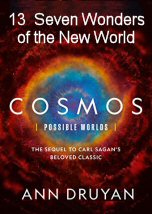
Cosmos: Possible Worlds

Cosmos: Possible Worlds

2020  Science
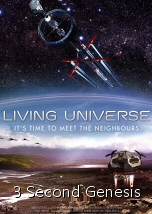
Living Universe

Living Universe

2018  Technology
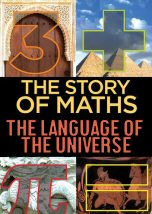
The Story of Maths

The Story of Maths

2008  Science
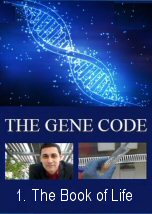
The Gene Code

The Gene Code

2011  Science