The series Warrior Graveyard uncovers some extraordinary warrior skeletons from history. Archaeologists and forensic scientists use remains to tell the story of famous warriors of the past and unleash the full force of modern forensics upon them: battle scars, bone deformations and recoverable scraps of DNA will all be tested and explored. CGI and drama will then bring them dramatically to life, revealing a revolutionary new picture of how these warriors lived - and died. An archaeological and forensic examination of six crusaders' bones brings to life the 1179 Battle of Jacob's Ford, revealing the wounds that killed the warriors in the Holy Land. With every sword slash comes an insight into an historic day. Excavations along the Israel/ Jordan border are unearthing skeletons and rewriting the history of the First Crusade. The site at Jacob's Ford is the only known Crusader battle site with complete skeletons. To secure the road between Akkon and Damascus, King Baldwin IV of Jerusalem had a mighty castle built at the Jacob's Ford of the Jordan River in October 1178. The fortress was a thorn in the side of Sultan Saladin, so he had it stormed a year later, before it was completed. Excavations have been taking place on the site of the legendary crusader castle since the early 1990s. Archaeologists and forensic experts have examined the remains of six fallen crusaders and uncovered fascinating details about the Battle of Chastellet. The programme has secured access to the excavation and remains of some of the 80 Crusader Knights and 750 foot soldiers stationed at the fort when it was attacked and its Crusaders massacred by Saladin's army in 1179, in the battle that changed the course of history in the Middle East.
Starring globally renowned figures and the world's leading scientists, 'Eating Our Way To Extinction' will take you on a journey - A powerful cinematic feature documentary that opens the lid on the elephant in the room no one wants to talk about: Unsustainable beef cattle production leads to deforestation, increased pollution and plundering of resources. Alarming and entertaining, this compelling film will make you never look at your food or the food industry in the same way again. We cannot deny the destruction of our planet any longer. The damage is clear and we have nowhere else to go! It is time to face the truth, however uncomfortable that may be – we are on borrowed time. But every day we have the power to make great food choices for our planet, palate and person.
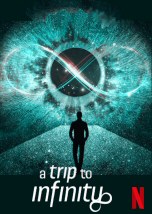
Does Infinity exist? Can we experience the Infinite? In an animated film created by artists from 10 countries, the world's most cutting-edge scientists and thinkers go in search of the infinite and its mind-bending implications for the universe. It doesn’t behave like we’re used to. It’s a monster that needs to be tamed. It creates and destroys mathematicians. It’s infinity! You know, the thing that goes on and on and on and never ends. Here we have theoretical physicists, mathematicians, philosophers, theoretical cosmologists talking about infinity – what it is, how it works, where we can find it, etc., and their concepts and explanations are illustrated by a variety of nifty animations in a variety of visual styles ranging from literal to metaphorical. Directors Jonathan Halperin and Drew Takahashi solicit experts to help them tackle the most maximal topic in the history of everything from a few different angles. Y when you think about it for a second, the only possible conclusion one can arrive at is a sublime and confounding realization that, on a cosmic scale, humans are naught but grand ignoramuses.
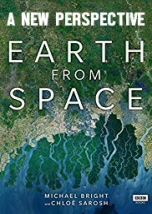
Prepare yourself for a groundbreaking series that reveals a spectacular new space-based vision of our planet. Cameras in space will tell stories of life on our planet from a brand new perspective. Satellites follow an elephant family struggling through drought, reveal previously unknown emperor penguin colonies from the colour of their poo, and discover mysterious ice rings that could put seal pups in danger. Using cameras on the ground, in the air and in space, Earth from Space follows nature’s greatest spectacles, weather events and dramatic seasonal changes. This is our home, as we’ve never seen it before.
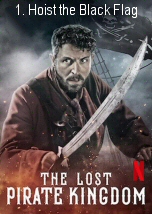
In this documentary series we will see how the real-life pirates of the Caribbean violently plunder, stealing and form a surprisingly egalitarian republic. The historical drama portrays the rise and fall of the eponymous early-18th century pirate republic based in Nassau, Bahamas. The series begins in 1715, shortly after the close of the War of the Spanish Succession, which pitted England against Spain. England had waged the war on the cheap, resorting to the use of privateers rather than incurring the expense of fully funding the Royal Navy. The ending of this war leaved thousands of Caribbean privateers unemployed, when the wreck of a treasure fleet creates new opportunities.
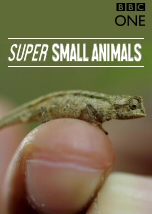
From a primate that’s no bigger than a mouse, to a chameleon that can fit on your fingertip, the natural world is full of fantastically small animals. Biologist Patrick Aryee explores the fascinating secrets behind these miniature marvels and shows that they’re not the underdogs you might think they are. Super Small Animals follows him as he meets the leading experts on these pint sized superstars, and finds out what makes them some of the most successful on the planet. First up, he reveals the huge benefits that being small can bring. There’s the little lemur whose diminutive frame helps it to exploit a unique gap in the eco-system, the tiny hummingbird that uses its size to out-maneuver the competition, and the world’s smallest seahorse that never has to leave home. He also explores why small animals are proportionally the strongest in the world, and introduces a peanut-sized beetle that can pull over a thousand times its own weight. Next he explores the challenges that animals face when they shrink in size, and the ingenious ways they overcome them. We find out how the smallest armadillo in the world manages to control its temperature in the searing desert sun, and the how the world’s smallest fish can survive in nothing more than a puddle, because it never really grows up. Patrick meets a secretive hippo that lives in the dense jungle, and looks like it’s been shrunk in the wash, and some of the world’s smallest snakes that give birth to enormous babies. He also meets a scientist that studies how really tiny spiders have a surprising trick that enables them to travel an incredible 40 miles per day, using almost no energy. Then there are the animals that refuse to be pigeon holed as small, and manage to punch way above their weight. He puts some astonishing invertebrates to the test, to see how they work together to become much bigger than the sum of their parts and meets a pint-sized predator that takes on some of the largest and most dangerous creatures on the planet, getting hands on to discover how its build helps it to be brave. Finally he uncovers the incredible lengths that deep sea anglerfish go to in order to be big and small at the same time, and has an endearing encounter with a tiny carnivore that manages to be small in just one direction. Whether their size helps them to hunt, hide or survive, all these remarkable animals prove that good things really do come in small packages.






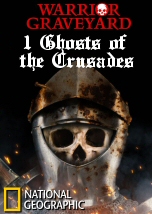


An archaeological and forensic examination of six crusaders' bones brings to life the 1179 Battle of Jacob's Ford, revealing the wounds that killed the warriors in the Holy Land. With every sword slash comes an insight into an historic day. Excavations along the Israel/ Jordan border are unearthing skeletons and rewriting the history of the First Crusade. The site at Jacob's Ford is the only known Crusader battle site with complete skeletons. To secure the road between Akkon and Damascus, King Baldwin IV of Jerusalem had a mighty castle built at the Jacob's Ford of the Jordan River in October 1178. The fortress was a thorn in the side of Sultan Saladin, so he had it stormed a year later, before it was completed.
Excavations have been taking place on the site of the legendary crusader castle since the early 1990s. Archaeologists and forensic experts have examined the remains of six fallen crusaders and uncovered fascinating details about the Battle of Chastellet. The programme has secured access to the excavation and remains of some of the 80 Crusader Knights and 750 foot soldiers stationed at the fort when it was attacked and its Crusaders massacred by Saladin's army in 1179, in the battle that changed the course of history in the Middle East.