

Last Watched

"Bot"  Sort by

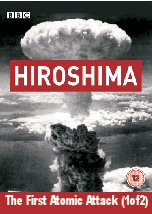
Hiroshima 1 of 2

   2005    History
It was the defining moment of the 20th Century - the scientific, technological, military, and political gamble of the world's first atomic attack. This drama-documentary attempts to do what no other film has done before - to show what it is like to live through a nuclear explosion, millisecond by millisecond. Set in the three weeks from the first test explosion in New Mexico to the eventual dropping of the bomb, the action takes viewers into the room where the crucial political decisions are made; on board the Enola Gay on her fateful voyage; inside the bomb as it explodes; and on the streets of Hiroshima when disaster strikes. Parallel storylines interweave, unfolding the action from both US and Japanese perspectives, and revealing the tensions and conflicts in the actions and minds of people who were making history. Special effects recreate the reality of the mission - even going inside the workings of the bomb - and archive film replays the horrific aftermath.
Series: Hiroshima
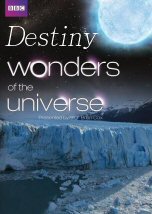
Wonders Of The Universe: Destiny

   2011    Science
Professor Brian Cox seeks to understand the nature of time and its role in creating both the universe and ourselves. From an extraordinary calendar built into the landscape of Peru to the beaches of Costa Rica, Brian explores the cycles of time which define our experience of life on Earth. But even the most epic cycles of life can't begin to compare to the vast expanse of cosmic time. Ultimately, Brian discovers that time is not characterised by repetition but by irreversible change. The vast universe is subject to these same laws of change. As we look out to the cosmos, we can see the story of its evolution unfold, from the death of the first stars to the birth of the youngest. This journey from birth to death will ultimately lead to the destruction not just of our planet, but also the entire universe, and with it the end of time itself. Yet without this inevitable destruction, the universe would be without what is perhaps the greatest wonder of all; the brief moment in time in which life can exist.
Series: Wonders Of The Universe

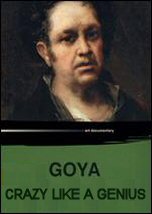
Goya: Crazy Like A Genius

   2007    Art
Written and presented by Robert Hughes, one of the world’s most prominent art commentators, this program explores the life and work of Francisco Goya—focusing on the painter’s subversive, often gruesome outlook. The video provides in-depth visual and intellectual analysis of dark Goya masterpieces, including The Dream of Reason, Witches in the Air, and The Third of May, as well as examples of his portraiture and early work—such as The Duchess of Alba, both Majas, and a gratuitously violent tapestry painting. Links between Goya’s work, deafness, and political stance are explored in detail, while observations from painter Leon Golub highlight Goya’s continuing relevance.

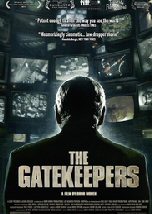
The Gatekeepers

   2012    Culture
(Click CC for subtitles) Charged with overseeing Israel's war on terror-both Palestinian and Jewish- the head of the Shin Bet, Israel's secret service is present at the crossroad of every decision made. For the first time ever six former heads of the agency agreed to share their insights and reflect publicly on their actions and decisions. The Gatekeepers offers an exclusive account of the sum of their success and failures. It validates the reasons that each man individually and the six as a group came to reconsider their hard-line positions and advocate a conciliatory approach toward their enemies based on a two-state solution.

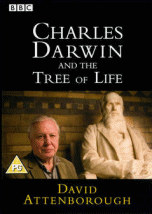
Charles Darwin and the Tree of Life

   2009    Science
David Attenborough asks three key questions: how and why did Darwin come up with his theory of evolution? Why do we think he was right? And why is it more important now than ever before? David starts his journey in Darwin's home at Down House in Kent, where Darwin worried and puzzled over the origins of life. David goes back to his roots in Leicestershire, where he hunted for fossils as a child, and where another schoolboy unearthed a significant find in the 1950s. And he revisits Cambridge University, where both he and Darwin studied, and where many years later the DNA double helix was discovered, providing the foundations for genetics. At the end of his journey in the Natural History Museum in London, David concludes that Darwin's great insight revolutionised the way in which we see the world. We now understand why there are so many different species, and why they are distributed in the way they are. But above all, Darwin has shown us that we are not set apart from the natural world, and do not have dominion over it. We are subject to its laws and processes, as are all other animals on earth to which, indeed, we are related.

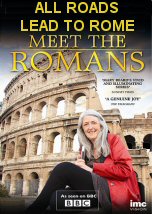
Meet the Romans: All Roads Lead to Rome

   2012    History
Professor Mary Beard looks beyond the stories of emperors, armies, guts and gore to meet the everyday people at the heart of Ancient Rome's vast empire. In this programme, Mary asks not what the Romans did for us, but what the empire did for Rome. She rides the Via Appia, climbs up to the top seats of the Colosseum, takes a boat to Rome's port Ostia and takes us into the bowels of Monte Testaccio. She also meets some extraordinary Romans: Eurysaces, an eccentric baker, who made a fortune out of the grain trade and built his tomb in the shape of a giant bread oven; Baricha, Zabda and Achiba, three prisoners of war who became Roman citizens; and Pupius Amicus, the purple dye seller making imperial dye from shellfish imported from Tunisia. This is Rome from the bottom up.
Series: Meet the Romans