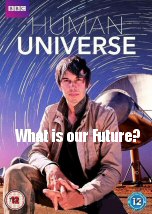
Professor Brian Cox concludes his exploration of our place in the universe by asking what next for the ape that went to space. Our future is far from certain. In Florida, Brian joins the latest efforts to protect Earth from potential catastrophic events. He joins a team of Nasa astronauts who are training for a future mission to an asteroid - should we ever discover one coming our way - under 30 feet of water in a submerged laboratory that simulates space. It is just one example of how, for our long-term survival, space exploration may well be vital. It is a view shared by Apollo 16 astronaut Charlie Duke, who tells Brian what it was like to escape the confines of the planet. It is a dream that both Nasa and now commercial companies share as they race to get humans back into deep space. But space travel, like every leap our civilisation has ever made, requires energy. Here too, scientists are hard at work attempting to safeguard our future. At the National Ignition Facility in California, Brian witnesses the world's most successful fusion experiment in action. He believes that if their mission succeeds, our civilisation will have unlocked a way to the stars that will not destroy the planet in the process. Brian concludes by returning to the top of the world in Svalbard, where he gains access to our civilisation's greatest treasure, locked away in a vault buried deep in the permafrost.
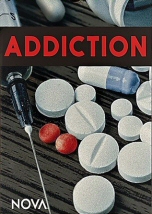
Hear firsthand from individuals struggling with addiction and follow the cutting-edge work of doctors and scientists as they investigate why addiction is not a moral failing, but a chronic, treatable medical condition. Easy access to drugs like heroin, fentanyl, and even prescription medications like OxyContin has fueled an epidemic of addiction - the deadliest in US history. Now, science is revealing how addiction affects the brain, and top experts are gathering evidence about how we should address our drug problem, from embracing evidence-based treatments, to rethinking public policies.
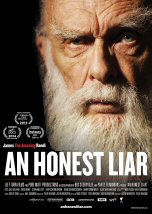
A feature documentary about the world-famous magician, escape artist, and world-renowned enemy of deception, James 'The Amazing' Randi. The film brings to life Randi's intricate investigations that publicly exposed psychics, faith healers, and con-artists with quasi-religious fervour. A master deceiver who came out of the closet at the age of 81, Randi created fictional characters, fake psychics, and even turned his partner of 25 years, the artist Jose Alvarez, into a sham guru named Carlos. But when a shocking revelation in Randi's personal life is discovered, it isn't clear whether Randi is still the deceiver - or the deceived.
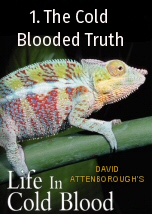
David Attenborough reveals the surprising truth about the cold-blooded lives of reptiles and amphibians. These animals are as dramatic in combat, as colourful in their communication and as tender in their parental care as any other animals. Join giant courting crocodiles, jousting tortoises and bright red sumo-wrestling frogs in their sophisticated, solar-powered lives.
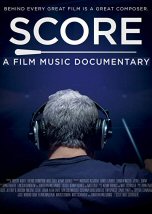
For a predominately visual medium like cinema, its musical component plays a vital role as well, especially its score. In that essential musical accompaniment, the soul of the film is expressed whether it be sweepingly majestic fanfares or delicate lyrical pieces. This documentary explores the artistic role of this special musical discipline that completes the cinematic artistic creation process and the artists who have devoted their careers to this contribution. We explore the form's history and examine the masters who defined it with their own distinctive artistic vision. In doing so, the various components of this delicate creative process are revealed as they create a musical compositional work that has inspired a popular appreciation of music in all its forms, which gave some old musical ways their own new lease on life.
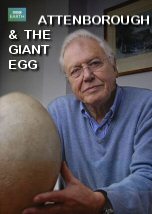
David Attenborough returns to the island of Madagascar on a very personal quest. In 1960, he visited the island to film one of his first ever wildlife series - Zoo Quest. Whilst he was there, he acquired a giant egg belonging to an extinct bird known as the 'elephant bird' - the largest bird that ever lived. It has been one of his most treasured possessions ever since. Fifty years older, he now returns to the island to find out more about this amazing creature and to see how the island has changed. Could the elephant bird's fate provide lessons that may help protect Madagascar's remaining wildlife? Using Zoo Quest archive and specially shot location footage, this film follows David as he revisits scenes from his youth and meets people at the front line of wildlife protection. On his return, scientists at Oxford University are able to reveal for the first time how old David's egg actually is, and what that might tell us about the legendary elephant bird.


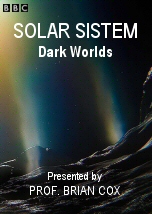



But space travel, like every leap our civilisation has ever made, requires energy. Here too, scientists are hard at work attempting to safeguard our future. At the National Ignition Facility in California, Brian witnesses the world's most successful fusion experiment in action. He believes that if their mission succeeds, our civilisation will have unlocked a way to the stars that will not destroy the planet in the process. Brian concludes by returning to the top of the world in Svalbard, where he gains access to our civilisation's greatest treasure, locked away in a vault buried deep in the permafrost.