




Last Watched

"EMI"  Sort by

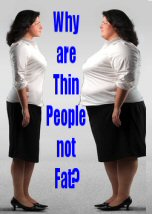
Why are Thin People not Fat

   2009    Medicine
The world is affected by an obesity epidemic, but why is it that not everyone is succumbing? Medical science has been obsessed with this subject and is coming up with some unexpected answers. As it turns out, it is not all about exercise and diet. At the centre of this programme is a controversial overeating experiment that aims to identify exactly what it is about some people that makes it hard for them to bulk up.
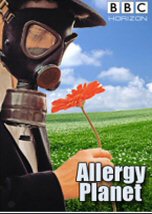
Allergy Planet

   2008    Medicine
We are in the grip of an allergy epidemic. 50 years ago one in 30 were affected, but in Britain today it is closer to one in three. Why this should be is one of modern medicine's greatest puzzles. In search of answers, Horizon travels round the globe, from the remotest inhabited island to the polluted centres of California and the UK. We meet sufferers and the scientists who have dedicated their lives trying to answer the mystery of why we are becoming allergic to our world.

Chemistry: Discovering the Elements

   2010    Science
Just 92 elements made up the world, but the belief that were only four - earth, fire, air and water - persisted until the 19th Century. Professor Al-Khalili retraces the footsteps of the alchemists who first began to question the notion of the elements in their search for the secret of everlasting life.He reveals the red herrings and rivalries which dogged scientific progress, and explores how new approaches to splitting matter brought us both remarkable elements and the new science of chemistry.
Series: Chemistry

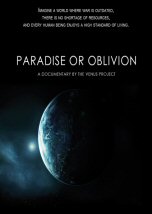
The Venus Project: Paradise or Oblivion

   2012    Technology
This documentary details the root causes of the systemic value disorders and detrimental symptoms caused by our current established system. This video presentation advocates a new socio-economic system, which is updated to present-day knowledge, featuring the life-long work of Social Engineer, Futurist, Inventor and Industrial Designer Jacque Fresco, which he calls a Resource-Based Economics.

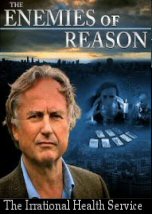
The Irrational Health Service

       Medicine
Richard Dawkins examines the growing suspicion the public has for science-based medicine, despite its track record of successes like the germ theory of disease, vaccines, antibiotics and increased lifespan. He notes a fifth of British children are currently not immunised against measles, mumps and rubella, attributing it to fears arising from a highly controversial report linking the vaccine with autism. Dawkins criticizes the growing field of alternative medicine which does not pass the same objective and statistical rigour as scientifically derived treatments using controlled double-blind studies. Without verifiable evidence, alternative therapies must rely on biased anecdotes and word of mouth to perpetuate. Dawkins observes these treatments have fanciful rationales and rituals behind them, with many alternative treatments employing pseudoscientific jargon such as "energy", "vibration" or "quantum theory" to give themselves greater credence to patients.
Series: Enemies of Reason

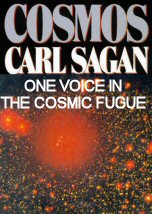
One Voice in the Cosmic Fugue

   1980    Science
Sagan discusses the story of the Heike crab and artificial selection of crabs resembling samurai warriors, as an opening into a larger discussion of evolution through natural selection (and the pitfalls of intelligent design). Among the topics are the development of life on the Cosmic Calendar and the Cambrian explosion; the function of DNA in growth; genetic replication, repairs, and mutation; the common biochemistry of terrestrial organisms; the creation of the molecules of life in the Miller-Urey experiment; and speculation on alien life (such as life in Jupiter's clouds). In the Cosmos Update ten years later, Sagan remarks on RNA also controlling chemical reactions and reproducing itself and the different roles of comets (potentially carrying organic molecules or causing the Cretaceous–Paleogene extinction event).
Series: Cosmos