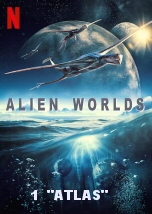
The series, depicted by state of the art CGI techniques, and applying the laws of life on Earth to the rest of the galaxy, blends fact with science fiction and conceptualizes what alien life might be like on other planets. In the prologue, astronomer Didier Queloz makes an appearance to discuss the discoveries of exoplanets and how they are analyzed in the real world. In Episode 1, the fictional world imagined is Atlas, a world with higher gravity than Earth and a thicker atmosphere leading to airborne creatures. In explaining the aliens of Atlas, the episode also explores the handicap principle in insects, and shows a rehabilitative form of falconry as captive falcons are trained to live in the wild.
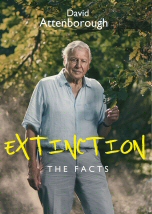
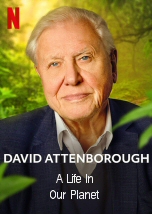
With a million species at risk of extinction, Sir David Attenborough explores how this crisis of biodiversity has consequences for us all, threatening food and water security, undermining our ability to control our climate and even putting us at greater risk of pandemic diseases. Everything in the natural world is connected in networks that support the whole of life on earth, and we are losing many of the benefits that nature provides to us. The loss of insects is threatening the pollination of crops, while the loss of biodiversity in the soil also threatens plants growth. Last year, a UN report identified the key drivers of biodiversity loss, including overfishing, climate change and pollution. But the single biggest driver of biodiversity loss is the destruction of natural habitats. Seventy-five per cent of Earth's land surface (where not covered by ice) has been changed by humans, much of it for agriculture, and as consumers we may unwittingly be contributing towards the loss of species through what we buy in the supermarket. Human activities like the trade in animals and the destruction of habitats drive the emergence of diseases. Disease ecologists believe that if we continue on this pathway, this year’s pandemic will not be a one-off event.
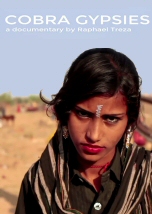
Cobra Gypsies offers a contemporary and colorful window to the amazing ancient culture of the nomadic Kalbeliya tribe, living in rural Rajasthan, Northern India. Their name means 'those who love snakes'. The film explores their culture of eternal dance, syncopated music, snake charming, colorful fashion and the nomadic way of life of these exotic looking castoffs, ancestors to the modern Roma Gypsies living in Europe today.
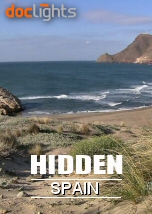
Spain is found at the crossroads between the Mediterranean and the Atlantic, between Europe and Africa, resulting in diverse landscapes, ancient cultures and magnificent wildlife. It's a hidden Spain missed by many tourists who fail to venture outside the resorts. Worlds within worlds, the medieval towns, to farming communities, desert, mountains and forests with some of the most dramatic and diverse wildlife of the continent.
One man has seen more of the natural world than any other. This unique feature documentary is his witness statement. In his 93 years, David Attenborough has visited every continent on the globe, exploring the wild places of our planet and documenting the living world in all its variety and wonder. Now, for the first time he reflects upon both the defining moments of his lifetime as a naturalist and the devastating changes he has seen. Honest, revealing and urgent, this film is a powerful first-hand account of humanity's impact on nature and a message of hope for future generations.
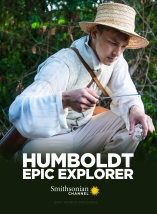
In 1799, the German scientist Alexander von Humboldt embarked on a perilous journey of discovery across South America. It would take him to the deepest jungle near the Orinoco and to the heights of the Andes. His aim was twofold: to conduct the first scientific survey of South America and to discover how the natural world actually works — at a time when most scientists believed that the world was created less than 6,000 years ago. He later became a leading scientific figure and champion of the abolitionist movement in the US. This extremely visual docudrama follows Humboldt’s extraordinary path. Travelling in Humboldt’s footsteps is historian Andrea Wulf, whose book on Humboldt became a worldwide bestseller. For good reason, since Humboldt’s ideas on the planet’s fragile web of life are as important today as they were 220 years ago.







In the prologue, astronomer Didier Queloz makes an appearance to discuss the discoveries of exoplanets and how they are analyzed in the real world. In Episode 1, the fictional world imagined is Atlas, a world with higher gravity than Earth and a thicker atmosphere leading to airborne creatures. In explaining the aliens of Atlas, the episode also explores the handicap principle in insects, and shows a rehabilitative form of falconry as captive falcons are trained to live in the wild.