



Last Watched

"Pan"  Sort by

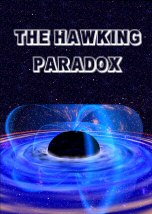
The Hawking Paradox

   2005    Science
Stephen Hawking is the most famous scientist on the planet. But behind the public face lies an argument that has been raging for almost 30 years. Has he been wrong for the last 30 years? Hawking shot to fame in the world of physics when he provided a mathematical proof for the Big Bang theory. This theory showed that the entire universe exploded from a singularity, an infinitely small point with infinite density and infinite gravity. Hawking was able to come to his proof using mathematical techniques that had been developed by Roger Penrose. These techniques were however developed to deal not with the beginning of the Universe but with black holes". Science had long predicted that if a sufficiently large star collapsed at the end of its life, all the matter left in the star would be crushed into an infinitely small point with infinite gravity and infinite density – a singularity. Hawking realised that the Universe was, in effect, a black hole in reverse. Instead of matter being crushed into a singularity, the Universe began when a singularity expanded to form everything we see around us today, from stars to planets to people. Hawking realised that to come to a complete understanding of the Universe he would have to unravel the mysteries of the black hole and its paradoxes
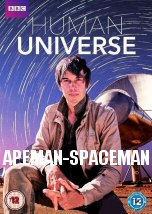
Apeman - Spaceman

   2014    History
Professor Brian Cox examines how it was that in a universe made of stars, rocks and endless space, a conscious civilisation was born. His latest adventure takes him from a submerged space station in Star City on the outskirts of Moscow, to Ethiopia, high above in the Great Rift Valley, where he encounters the geladas, mankind's distant ancestors. Despite once being Africa's most successful primate, a species who at one time roamed across the entire continent, these days they are found in one just place in the remote Ethiopian Highlands. Cox investigates why these ancestors retreated, yet modern mankind has expanded across the planet.
Series: Human Universe

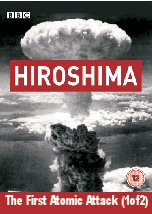
Hiroshima 1 of 2

   2005    History
It was the defining moment of the 20th Century - the scientific, technological, military, and political gamble of the world's first atomic attack. This drama-documentary attempts to do what no other film has done before - to show what it is like to live through a nuclear explosion, millisecond by millisecond. Set in the three weeks from the first test explosion in New Mexico to the eventual dropping of the bomb, the action takes viewers into the room where the crucial political decisions are made; on board the Enola Gay on her fateful voyage; inside the bomb as it explodes; and on the streets of Hiroshima when disaster strikes. Parallel storylines interweave, unfolding the action from both US and Japanese perspectives, and revealing the tensions and conflicts in the actions and minds of people who were making history. Special effects recreate the reality of the mission - even going inside the workings of the bomb - and archive film replays the horrific aftermath.
Series: Hiroshima

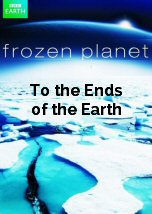
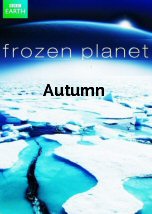
Frozen Planet: To the Ends of the Earth

   2011    Nature
Our journey begins with David Attenborough at the North Pole, as the sun returns after six months of darkness. We follow a pair of courting polar bears, which reveal a surprisingly tender side. Next stop is the giant Greenland ice cap, where waterfalls plunge into the heart of the ice and a colossal iceberg carves into the sea. Humpback whales join the largest gathering of seabirds on earth to feast in rich Alaskan waters. Further south, the tree line marks the start of the Taiga forest, containing one third of all trees on earth. Here, 25 of the world's largest wolves take on formidable bison prey. At the other end of our planet, the Antarctic begins in the Southern Ocean where surfing penguins struggle to escape a hungry sea-lion and teams of orcas create giant waves to wash seals from ice floes -a filming first. Diving below the ice, we discover prehistoric giants, including terrifying sea spiders and woodlice the size of dinner plates. Above ground, crystal caverns ring the summit of Erebus, the most southerly volcano on earth. From here we retrace the routes of early explorers across the formidable Antarctic ice-cap - the largest expanse of ice on our planet. Finally, we rejoin David at the South Pole, exactly one hundred years after Amundsen then Scott were the first humans to stand there
Series: Frozen Planet

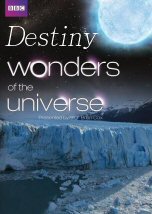
Wonders Of The Universe: Destiny

   2011    Science
Professor Brian Cox seeks to understand the nature of time and its role in creating both the universe and ourselves. From an extraordinary calendar built into the landscape of Peru to the beaches of Costa Rica, Brian explores the cycles of time which define our experience of life on Earth. But even the most epic cycles of life can't begin to compare to the vast expanse of cosmic time. Ultimately, Brian discovers that time is not characterised by repetition but by irreversible change. The vast universe is subject to these same laws of change. As we look out to the cosmos, we can see the story of its evolution unfold, from the death of the first stars to the birth of the youngest. This journey from birth to death will ultimately lead to the destruction not just of our planet, but also the entire universe, and with it the end of time itself. Yet without this inevitable destruction, the universe would be without what is perhaps the greatest wonder of all; the brief moment in time in which life can exist.
Series: Wonders Of The Universe

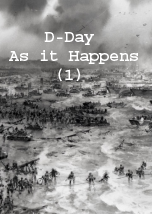
D-Day: As it Happens (1)

   2013    History
D-Day: As It Happens D-Day: As It Happens tells the story of this pivotal event in 20th-century history in a completely new way. Using newly-analysed archive footage, viewers can track the progress of seven people who were there on the day, each of them a real participant in the 1944 invasion. And they can do so moment by moment in real time, encountering the twists and turns of the fighting at the same time as the D-Day seven did, and learning their fate as the action unfolds in parallel with the present, Narrated by Peter Snow, with Channel 4 presenter and former marine Arthur Williams, and experts including former British Army officer Colonel Tim Collins and front-line journalist Lorna Ward. The first programme tells the back stories of the real people that the event is following in real time and sets out their missions over the following 24 hours. The D-Day seven include a paratrooper, a midget submariner, a nurse and a military cameraman.
Series: D-Day
Unknown

Unknown

2023  Science
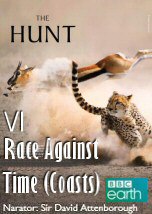
The Hunt

The Hunt

2015  Nature
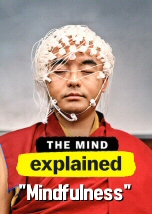
The Mind Explained

The Mind Explained

2019  Medicine
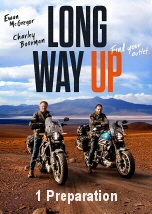
Long Way Up

Long Way Up

2020  Culture
The Hunt

The Hunt

2015  Nature