








Last Watched

"Space"  Sort by

The World Set Free

   2014    Nature
This episode explores the nature of the greenhouse effect (discovered by Joseph Fourier and Svante Arrhenius), and the evidence demonstrating the existence of global warming from humanity's influence. Tyson begins by describing the long-term history of the planet Venus; based on readings from the Venera series of probes to the planet, the planet had once had an ocean and an atmosphere, but due to the release of carbon dioxide from volcanic eruptions, the runaway greenhouse effect on Venus caused the surface temperatures to increase and boiled away the oceans. Tyson then notes the delicate nature of the amount of carbon dioxide in the atmosphere can influence Earth's climate due to the greenhouse effect, and that levels of carbon dioxide have been increasing since the start of the 20th century. Evidence has shown this to be from mankind's consumption of oil, coal, and gas instead of from volcanic eruptions due to the isotopic signature of the carbon dioxide. The increase in carbon dioxide has led to an increase in temperatures, in turn leading to positive feedback loops of the melting polar ice caps and dethawing of the permafrost to increase carbon dioxide levels. Tyson then notes that humans have discovered means of harvesting solar power, such as Augustin Mouchot's solar-driven motor in the 19th century, and Frank Shuman's solar-based steam generator in the 1910's. Tyson points out that in both cases, the economics and ease of using cheap coal and oil caused these inventions to be overlooked at the time. Today, solar and wind-power systems would be able to collect enough solar energy from the sun easily. Tyson then compares the motivation for switching to these cleaner forms of energy to the efforts of the Space race and emphasizes that it is not too late for humanity to correct its course.
Series: Cosmos: A Spacetime Odyssey
New Worlds

   2001    Nature
Sam Neill explores humanity's long-term future - a future where we make new homes for ourselves on other worlds as we flee from the slow but inevitable death of our sun.
Series: Space

Pluto: Back From the Dead

   2020    Science
The incredible story of how Pluto has been propelled from an unremarkable ball of ice on the edge of the solar system to a world of unimaginable complexity - where some form of alien life might exist.
New discoveries from the edge of the solar system are transforming what is known about Pluto, thanks to the New Horizons space probe that took the first-ever close up images of the planet. Pluto was once thought to be geologically dead, but the pictures revealed it to be an active world of stunning complexity, with mountains carved from ice, a nitrogen glacier that appeared to be moving and a recently active volcano, with data sent back lead some scientists to speculate that there may even be life on Pluto today.
Series: Space Deepest Secrets

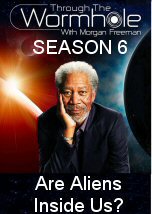
Are Aliens Inside Us

   2015    Culture
Odds are excellent that extraterrestrial life exists. So why haven’t we found aliens out in the galaxy? Are we looking in the wrong places? New research shows we should look closer to home, even inside our bodies. It turns out that a lot of our DNA is from a mysterious, nonhuman source. Theoretically, alien microbial life can make the journey to Earth from distant worlds, and scientists are finding some unearthly microbes in our upper atmosphere. Could it be from outer space? Could we be part alien? It’s even possible alien life is already here as digital life forms, hiding inside our technology.
Series: Through the Wormhole Season 6

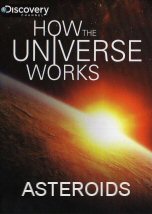
Asteroids - Worlds That Never Were

   2012    Science
From icy worlds with more fresh water than Earth to flying mountains of pure metal, asteroids shaped our past and promise much for the future. Could these enigmatic space rocks hold the key to how life in the Universe arises and is extinguished?
Series: How the Universe Works

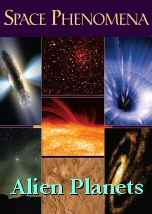
Alien Planets

   2020    Science
Our universe reveals itself in ways we’ve never seen before, thanks to new discoveries in astrobiology. Today, the advent of cutting-edge observational instruments is shedding light on amazing facts about life and the universe. NASA's next-generation space telescope TESS (Exoplanet Survey Satellite) has begun its search for Earth-like planets belonging to other star systems. How many of these 'exoplanets' can host life, and what kind of life forms can evolve in these environments?
Series: Space Phenomena
Wild Wild Country

Wild Wild Country

2018  Culture
Becoming Martian

Becoming Martian

2021  Technology
Walking with Cavemen

Walking with Cavemen

2003  History
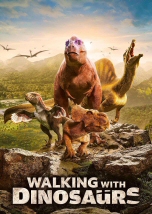
Walking with Dinosaurs

Walking with Dinosaurs

2025  Science
Ancient Apocalypse

Ancient Apocalypse

2024  History
Space

Space

2001  Science