




Last Watched

"Io"  Sort by

Penguin Shores

   2005    Nature
A dramatic journey along the coasts of South America, from the Falklands to the tropical Galapagos. The cold currents create rich fisheries, and support such diverse marine life as dolphins, killer whales, sea lions and albatross. But the most biquitous creatures are the penguins, which inhabit surprising locations - lush forest, arid desert and even equatorial areas.
Series: Wild South America
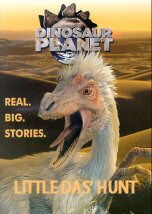
Little Das Hunt

   2003    Science
SETTING: 72 million years ago, near present-day Montana. As a young male daspletosaurus, it's Das' job to herd unsuspecting prey towards the rest of the pack. But he's easily distracted and ruins several hunts getting him in deep trouble with his mother, the pack leader. When a volcano threatens, the dinosaurs are unprepared.
Series: Dinosaur Planet

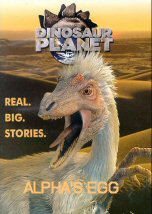
Alpha Egg

   2003    Science
SETTING: 80 million years ago in the South American forests of Patagonia. The world is a very dangerous place for tiny hatchlings like Alpha, a female saltasaur. Follow Alpha along the road of her growth years, from before her birth through asolescence and on to adulthood, as she learns how to survive and beat the odds.
Series: Dinosaur Planet

The Riddles of Black Holes

   2011    Science
They are the most powerful objects in the universe. Nothing, not even light, can escape the gravitational pull of a black hole. Astronomers now think there are billions of them out in the cosmos, swallowing up planets, even entire stars in violent feeding frenzies. New theoretical research into the twisted reality of black holes suggests that three-dimensional space could be an illusion. That reality actually takes place on a two-dimensional hologram at the edge of the universe.
Series: Through the Wormhole

How Did We Get... Here

   2011    Science
Everywhere we look in the most hospitable of environments and in the most extreme we find life. On Earth, life exists everywhere we look. Yet we have only ever found life on our planet. How did the stuff of stars come together to create life as we know it? What do we really mean by 'life'? And will unlocking this mystery help us find life elsewhere?
Series: Through the Wormhole

What are We Really Made of

   2011    Science
What is the universe made of? If you answered stars, planets, gas and dust, you'd be dead wrong. Thirty years ago, scientists first realized that some unknown dark substance was affecting the way galaxies moved. Today, they think there must be five times our understanding of the universe and the nature of reality itself has drastically changed over the last 100 years - and it's on the verge of another seismic shift. In a 17-mile-long tunnel buried 570 feet beneath the Franco-Swiss border, the world's largest and most powerful atom smasher, the Large Hadron Collider, is powering up. Its goal is nothing less than recreating the first instants of creation, when the universe was unimaginably hot and long-extinct forms of matter sizzled and cooled into stars, planets, and ultimately, us. These incredibly small and exotic particles hold the keys to the greatest mysteries of the universe. What we find could validate our long-held theories about how the world works and what we are made of -- or, all of our notions about the essence of what is real will fall apart.
Series: Through the Wormhole
Leaving Neverland

Leaving Neverland

2019  Culture
Reel Rock

Reel Rock

2014  Culture
The Sky at Night

The Sky at Night

2024  Science
The Sky at Night

The Sky at Night

2023  Science
Life on Our Planet

Life on Our Planet

2023  Science
Space Deepest Secrets

Space Deepest Secrets

2020  Technology