



Last Watched

"Allen"  Sort by

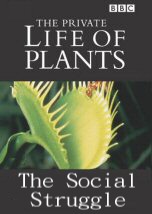
The Social Struggle

   1995    Nature
Fourth episode examines how plants either share environments harmoniously or compete for dominance within them. Attenborough highlights the 1987 hurricane and the devastation it caused. However, for some species, it was that opportunity for which they had lain dormant for many years. The space left by uprooted trees is soon filled by others who move relatively swiftly towards the light. The oak is one of the strongest and longest-lived, and other, lesser plants nearby must wait until the spring to flourish before the light above is extinguished by leaves. Tropical forests are green throughout the year, so brute force is needed for a successful climb to the top of the canopy: the rattan is an example that has the longest stem of any plant. As its name suggests, the strangler fig 'throttles' its host by growing around it and cutting off essential water and light. Some can take advantage of a fallen tree by setting down roots on the now horizontal trunk and getting nutriment from the surrounding moss and the fungi on the dead bark. The mountain ash (eucalyptus regnans) grows so tall, that regeneration becomes a considerable problem. It is easily flammable, so its solution is to shed its seeds during a forest fire and sacrifice itself. It therefore relies on the periodic near-destruction of its surroundings in order to survive. Attenborough observes that catastrophes such as fire and drought, while initially detrimental to wildlife, eventually allow for deserted habitats to be reborn.
Series: The Private Life of Plants
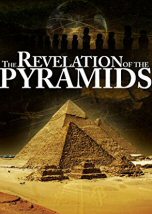
The Revelation of the Pyramids

   2010    History
An apocryphal view on the pyramids, starting in awe at the amazing achievement of the Pharaonic architecture and sculpture, most specially at Gizeh, given Cheops's pyramid's size, weight, incredibly precise carving, four pairs of slightly shifted half sides, stunningly precisely measured shapes and symmetry. Then it questions and challenges conventional Egyptology beliefs, which it calls unproven or even impossible to verify, such as the absence of machines, a wharf duration of only 20 years or accidental equinox-orientation. Next it elaborates the theory that other major pyramid technology sites in Precolombian America, Easter Island and China can't coincidentally lie on two lines intersecting at Gizeh, even if not contemporaneous and without known contacts in their ages, and have several improbable things in common, like some of their cultures. Elaborate mathematical theories and measurements indicate the Egyptians must have known some astronomy, pi and the golden number

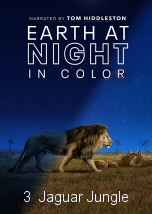
Jaguar Jungle

   2020    Nature
A jaguar fights to keep his river home in Brazil as the night brings both challenges and opportunities to hunt. Evening is falling in the world's greatest tropical wetland, Brazil's Pantanal. A stronghold for South America's most secretive big cat, the jaguar. And enjoying the last warmth of the day is a male known as Juru. At six years old and weighing over 100 kilos, he's amongst the largest, most powerful big cats in the Americas. This prime stretch of river has been his territory for two years. But tonight Juru's reign hangs in the balance. In a recent fight with a rival male, he badly injured his paw. It's left him weak and hungry. The coming days and nights will test him more than ever before. He'll need to summon the strength to defend his river.
Series: Earth at Night in Color

The Challenger

   2012    Science
In the last episode, Iain discovers the remarkable impact of just one plant: grass. On the savannah of South Africa he sees how grass unleashed a firestorm to fight its greatest enemy, the forests. He shows how cutting your finger on a blade of grass shows us how it transformed life in the oceans. In Senegal, he meets the cleverest chimps in the world. And, in the ruins of the oldest temple on Earth, he tells the extraordinary story of how grass triggered human civilisation.
Series: How to Grow a Planet

Woody Allen A Documentary 2

   2011    History
The film chronicles Allen's career - from teen writer to Sid Caesar's TV scribe, from stand-up comedian to award-winning writer-director averaging one film-per-year for more than 40 years. Exploring Allen's writing habits, casting, directing, and relationship with his actors first-hand, new interviews with A-listers, writing partners, family and friends provide insight and backstory to the usually inscrutable filmmaker.
Series: Woody Allen A Documentary

Space

   2014    Art
What if we could explore the vastness of Space? Science fiction has always fed upon our need to explore – to wonder what is out there. Space journeys from Jules Verne’s earliest ideas about attempts to leave our planet, to the Star Wars far away galaxy through to Nichelle Nichols revealing how her groundbreaking role as Lt. Uhura in Star Trek led to her participation in the recruitment of NASA’s astronauts. It explores the deep sea inspiration for Avatar, finds out why Ursula K Le Guin wrote The Left Hand of Darkness and discovers how Stanley Kubrick was able to make 2001: A Space Odyssey seem so believable. In addition, the program looks at the way Dune and The Mars Trilogy embraced the challenge of world building and discusses the appeal of the beaten up ‘dirty space’ of Dark Star and Firefly. From the horrifying scenes of Alien, to the epic spectacle of Star Wars, this is a journey to the stars and the alien encounters that await us there.
Series: The Real History of Science Fiction
The Beauty of Maps

The Beauty of Maps

2010  History
Ancient Rome

Ancient Rome

2006  History
Future Warfare

Future Warfare

2021  Technology
Leaving Neverland

Leaving Neverland

2019  Culture
The Future of Nature

The Future of Nature

2025  Nature