With a humorous and surprisingly revealing look at modern farming, this documentary series follows Jeremy Clarkson as he trades fast cars and city life for the unpredictable challenges of running a working farm in the English countryside. What begins as an ambitious new venture soon becomes a constant battle against weather, bureaucracy, livestock, machinery, and the harsh realities faced by farmers every day. Combining stunning rural landscapes with Clarkson's trademark humor, the series offers an entertaining and eye-opening glimpse into life on the land. In the first three episodes, Jeremy finds himself largely on his own as key members of the team are away, forcing him to take greater responsibility for the farm's daily operations. Persistent rain threatens crucial planting schedules, while new equipment, a new farmhand, and even a potential new business opportunity provide fresh challenges and unexpected lessons. As he searches for a local pub to expand his ambitions, Jeremy also faces competition, difficult decisions, and the constant pressure of keeping the farm running in an environment where success often depends on factors completely beyond his control.
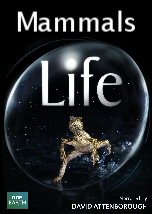
Mammals dominate the planet. They do it through having warm blood and by the care they lavish on their young. Weeks of filming in the bitter Antarctic winter reveal how a mother Weddell seal wears her teeth down keeping open a hole in the ice so she can catch fish for her pup.
A powered hot air balloon produces stunning images of millions of migrating bats as they converge on fruiting trees in Zambia, and slow-motion cameras reveal how a mother rufous sengi exhausts a chasing lizard. A gyroscopically stabilised camera moves alongside migrating caribou, and a diving team swim among the planet's biggest fight as male humpback whales battle for a female.
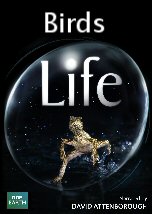
Birds owe their global success to feathers - something no other animal has. They allow birds to do extraordinary things. For the first time, a slow-motion camera captures the unique flight of the marvellous spatuletail hummingbird as he flashes long, iridescent tail feathers in the gloomy undergrowth. Aerial photography takes us into the sky with an Ethiopian lammergeier dropping bones to smash them into edible-sized bits. Thousands of pink flamingoes promenade in one of nature's greatest spectacles. The sage grouse rubs his feathers against his chest in a comic display to make popping noises that attract females. The Vogelkop bowerbird makes up for his dull colour by building an intricate structure and decorating it with colourful beetles and snails.
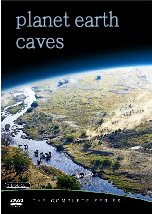
The Cave of Swallows in Mexico is a 400m vertical shaft, deep enough to engulf the Empire State Building. The Lechuguilla cave system in the USA is 193km long and 500m deep with astonishing crystal formations hanging from its chambers. Although often overlooked, caves are remarkable habitats with equally bizarre wildlife. Cave angel fish cling to the walls behind cave waterfalls with microscopic hooks on their flattened fins. Cave swiftlets navigate by echo-location and build nests out of saliva. The Texas cave salamander has neither eyes nor pigment. Unique access to a hidden world of stalactites, stalagmites, snotites and troglodytes brings a wealth of surprises.
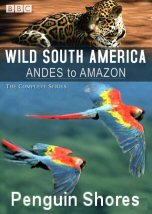
A dramatic journey along the coasts of South America, from the Falklands to the tropical Galapagos. The cold currents create rich fisheries, and support such diverse marine life as dolphins, killer whales, sea lions and albatross. But the most biquitous creatures are the penguins, which inhabit surprising locations - lush forest, arid desert and even equatorial areas.
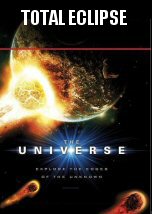
Once they were dreaded and thought to be dragons eating the sun--but modern science has dispelled mythology and we now look forward to total Solar Eclipses as one of the most spectacular phenomena in the heavens. Explore the complex movements of Earth, Moon and Sun that produce these unusual events and hear details why we may be the only intelligent beings in the known Universe to witness eclipses like we see on Earth. Man-made eclipses also figure into the science in the form of instruments called "coronagraphs." They blot out the sun and reveal its corona, uncovering secrets which, while enlightening, also warn of a disaster that could make our advanced technology crash and burn. Finally, travel into deep space, where the tiny eclipses caused by planets circling distant stars is now beginning to reveal hundreds more stars where "exoplanets" exist... perhaps even those in habitable zones like the Earth.













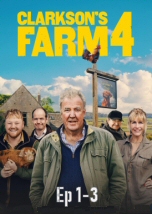
In the first three episodes, Jeremy finds himself largely on his own as key members of the team are away, forcing him to take greater responsibility for the farm's daily operations. Persistent rain threatens crucial planting schedules, while new equipment, a new farmhand, and even a potential new business opportunity provide fresh challenges and unexpected lessons. As he searches for a local pub to expand his ambitions, Jeremy also faces competition, difficult decisions, and the constant pressure of keeping the farm running in an environment where success often depends on factors completely beyond his control.