Dr Hannah Fry explores a paradox at the heart of modern maths, discovered by Bertrand Russell, which undermines the very foundations of logic that all of maths is built on. These flaws suggest that maths isn't a true part of the universe but might just be a human language - fallible and imprecise. However, Hannah argues that Einstein's theoretical equations, such as E=mc2 and his theory of general relativity, are so good at predicting the universe that they must be reflecting some basic structure in it. This idea is supported by Kurt Godel, who proved that there are parts of maths that we have to take on faith. Hannah then explores what maths can reveal about the fundamental building blocks of the universe - the subatomic, quantum world. The maths tells us that particles can exist in two states at once, and yet quantum physics is at the core of photosynthesis and therefore fundamental to most of life on earth - more evidence of discovering mathematical rules in nature. But if we accept that maths is part of the structure of the universe, there are two main problems: firstly, the two main theories that predict and describe the universe - quantum physics and general relativity - are actually incompatible; and secondly, most of the maths behind them suggests the likelihood of something even stranger - multiple universes. We may just have to accept that the world really is weirder than we thought, and Hannah concludes that while we have invented the language of maths, the structure behind it all is something we discover. And beyond that, it is the debate about the origins of maths that has had the most profound consequences: it has truly transformed the human experience, giving us powerful new number systems and an understanding that now underpins the modern world.
A feature documentary about the world-famous magician, escape artist, and world-renowned enemy of deception, James 'The Amazing' Randi. The film brings to life Randi's intricate investigations that publicly exposed psychics, faith healers, and con-artists with quasi-religious fervour. A master deceiver who came out of the closet at the age of 81, Randi created fictional characters, fake psychics, and even turned his partner of 25 years, the artist Jose Alvarez, into a sham guru named Carlos. But when a shocking revelation in Randi's personal life is discovered, it isn't clear whether Randi is still the deceiver - or the deceived.
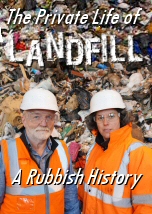
Their quest is to discover whether the items we throw away today have any value for tomorrow's world. In a unique science experiment, Dr George McGavin and Dr Zoe Laughlin chronicle the history of rubbish and explore how what we throw away tells us about the way we live our lives. With unprecedented access to one of the UK's largest landfill sites, the team of experts spend three days carrying out tests all over the site, revealing the secret world of rubbish. They also carry out three other 'archaeological' digs into historic landfills to chart the evolution of our throwaway society. Is mining trash for something valuable really viable? McGavin concluded: 'The idea of landfill mining is a pretty compelling vision of the future.'
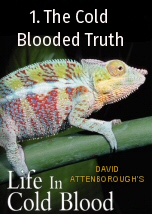
David Attenborough reveals the surprising truth about the cold-blooded lives of reptiles and amphibians. These animals are as dramatic in combat, as colourful in their communication and as tender in their parental care as any other animals. Join giant courting crocodiles, jousting tortoises and bright red sumo-wrestling frogs in their sophisticated, solar-powered lives.
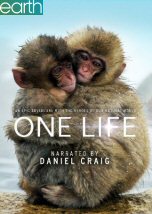
Growing up. Finding food. Seeking shelter. Finding a soul mate. Raising children. These universal themes touch the hearts of audiences everywhere. Parents will do anything to give their kids the best start in life. Witness the epic journey of a tiny poison arrow frog, scaling impossibly high trees to feed her tadpoles in the canopy. As the young grow, they confront the life long search for food. Capuchin monkeys spend up to eight years teaching their young the complex process of preparing a palm nut meal. For those creatures who successfully negotiated all the obstacles to adulthood, it’s time to face the ultimate test: to find a partner and to pass on their genes to the next generation. In what is one of the most spectacular and romantic courtship dances in the world, grebes step out across the surface of a lake in perfect unison. We see so much of ourselves in these different animals, and them in us – intelligence, strength, determination, courage, even love. The stories combine to reveal how every living thing on our planet shares the same desire – not just to live, but to foster new life. Relevant, engaging and above all, amazing. Narrated by Daniel Craig,
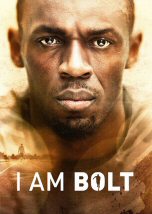
The film the tells the life of Jamaican sprinter and three times Olympic gold medalist and World Record holder for 100m, 200m and 4x100m, Usain Bolt, the fastest man in recorded human history. It describes Bolt's journey in winning nine gold medals and the incidents surrounding the Olympic titles. Featuring interviews with famous athletes like Pelé, Neymar, and Serena Williams, the film examines multiple world-record holder Bolt's rise to dominance and the the legacy of the fastest man ever timed.

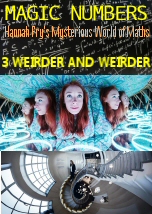




Hannah then explores what maths can reveal about the fundamental building blocks of the universe - the subatomic, quantum world. The maths tells us that particles can exist in two states at once, and yet quantum physics is at the core of photosynthesis and therefore fundamental to most of life on earth - more evidence of discovering mathematical rules in nature. But if we accept that maths is part of the structure of the universe, there are two main problems: firstly, the two main theories that predict and describe the universe - quantum physics and general relativity - are actually incompatible; and secondly, most of the maths behind them suggests the likelihood of something even stranger - multiple universes.
We may just have to accept that the world really is weirder than we thought, and Hannah concludes that while we have invented the language of maths, the structure behind it all is something we discover. And beyond that, it is the debate about the origins of maths that has had the most profound consequences: it has truly transformed the human experience, giving us powerful new number systems and an understanding that now underpins the modern world.