











Last Watched

"UN"  Sort by

Who is in Control

   2015    Medicine
‘Who Is in Control?’ explores the great deception that greets us each morning when we awake: it feels as though we are in conscious control of our lives but the truth is that we are not. Instead almost every action, every decision, every belief that we hold is driven by parts of the brain that we have no access to.
Series: The Brain with David Eagleman
How Do I Decide

   2015    Medicine
The human brain is the most complex object we’ve discovered in the universe, and every day much of its neural circuitry is taken up with the tens of thousands of decisions we need to make. ‘How do I decide?’ is a journey through the unseen world of decisions, and how they get made. Decisión-making is what allows us to navigate a course through life. Discover how important emotions are in making decissions and, as we learn more about our own brains, we can break away from slavery to our impulses. Neuroscience shows that you're made up of multiple competing drives and by understanding how choices battle it out in the brain, we can learn how to make better decisions.
Series: The Brain with David Eagleman

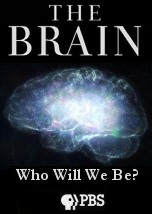
Who Will We Be

   2015    Medicine
In ‘Who will we be?’ Dr. David Eagleman journeys into the future, and asks what’s next for the human brain, and for our species. We stand at a major turning point, one where we might take control of our own development. We face a future of uncharted possibilities in which our relationship with our own body, our relationship with the world, the very basic nature of who we are is set to be transformed. For thousands of generations, humans have lived the same life cycle over and over. We are born, we control a fragile body, we experience a limited reality, and we die. But science and technology are giving us tools to transcend that evolutionary story. Our brains don't have to remain as we have inherited them. We are capable of extending our reality, of inhabiting new bodies, and possibly shedding our physical forms altogether. And we are discovering the tools to shape our own destiny. Who we become is up to us.
Series: The Brain with David Eagleman
Into The Mind

   2013    Culture
This is a story of rising to the ultimate challenge. Having the courage to risk fatal exposure and the perseverance demanded on the quest for achievement. These are not solely physical feats, they are mental conquest. Sherpas Cinema presents their newest feature film, Into The Mind. With stunning cinematography and groundbreaking storytelling techniques, the Sherpas blur the lines between dream state and reality, and immerse you into the mind of a common skier as he attempts to climb and ski the ultimate mountain. Innovative athlete segments are actually a glimpse into his dreamscape, each one harboring messages that help inform our hero’s current, real-life choices. As you experience the majesty of Alaska, Bolivia, the Himalaya and beyond, Into the Mind paints a philosophical portrait of human kind. How do we balance risk versus reward? Why are we inspired to rise to the challenges in our lives and what do we learn on this journey to attain them?

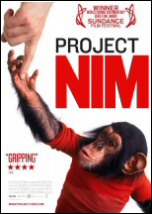
Project Nim

   2011    Science
The film tells the tale of Nim Chimpsky, a chimpanzee who was the subject of a landmark experiment to see if an ape could learn to communicate with language if raised and nurtured like a human child. This study was the brainchild of Dr. Herbert Terrace, a Columbia University behavioral psychologist who hoped to teach Nim enough language that he could eventually express what he was thinking and feeling. This would refute Noam Chomsky's thesis that language is inherent only in humans, hence his moniker, a direct pun on the famous linguists' name. The doc was a smash when it played at Sundance with this entirely different incredible but true story

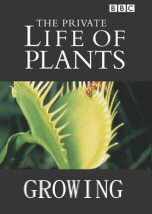
Growing

   1994    Nature
The second episode is about how plants gain their sustenance. Sunlight is one of the essential requirements if a seed is to germinate, and Attenborough highlights the cheese plant as an example whose young shoots head for the nearest tree trunk and then climb to the top of the forest canopy, developing its leaves en route. Using sunshine, air, water and a few minerals, the leaves are, in effect, the "factories" that produce food. However, some, such as the begonia, can thrive without much light. To gain moisture, plants typically use their roots to probe underground. Trees pump water up pipes that run inside their trunks, and Attenborough observes that a sycamore can do this at the rate of 450 litres an hour — in total silence. Too much rainfall can clog up a leaf's pores, and many have specially designed 'gutters' to cope with it. However, their biggest threat is from animals, and some require extreme methods of defence, such as spines, camouflage, or poison. Some can move quickly to deter predators: the mimosa can fold its leaves instantly when touched, and the Venus flytrap eats insects by closing its leaves around its prey when triggered. Another carnivorous plant is the trumpet pitcher that snares insects when they fall into its tubular leaves. Attenborough visits Borneo to see the largest pitcher of them all, Nepenthes rajah, whose traps contain up to two litres of water and have been known to kill small rodents.
Series: The Private Life of Plants
The Sky at Night

The Sky at Night

2025  Science
Living Universe

Living Universe

2018  Technology
Heavens Gate

Heavens Gate

2020  Culture
X-Ray Earth

X-Ray Earth

2021  Science
Oceans

Oceans

2009  Nature
Secrets of the Universe

Secrets of the Universe

2022  Technology