


Last Watched

"self"  Sort by

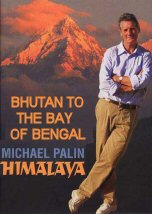
Bhutan to the Bay of Bengal

   2004    Culture
In Bhutan, Palin finds himself back in the land of yaks for a last look at the high Himalaya. Trekking to Chomolhari base camp he meets a nomad with a penchant for yak songs before heading down to Paro to witness the Buddhist festival or Tsechu. In a bar in Thimphu, he discusses reincarnation and the pursuit of happiness with Benji and Khendum, two of the king's cousins, and en route to Bangladesh is taken by Benji to see the rare black-neck cranes. On his journey south through Bangladesh, Michael visits the ship-breaking beaches of Chittagong and grid-locked Dhaka. He meets a man who made a fortune in Birmingham in the poultry business, and a woman who lends money only to women. On a 1920s paddle steamer he is serenaded with the words of Bengal's Shakespeare, and he completes his epic Himalayan journey aboard a fishing boat that carries him out into the Bay of Bengal and a westering sun.
Series: Himalaya with Michael Palin
The Mastery of Flight

   1998    Nature
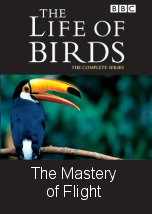
The second programme deals with the mechanics of flight. Getting into the air is by far the most exhausting of a bird's activities, and Sir Attenborough observes shearwaters in Japan that have taken to climbing trees to give them a good jumping-off point. The albatross is so large that it can only launch itself after a run-up to create a flow of air over its wings. A combination of aerodynamics and upward air currents (or thermals), together with the act of flapping or gliding is what keeps a bird aloft. Landing requires less energy but a greater degree of skill, particularly for a big bird, such as a swan. Weight is kept to a minimum by having a beak made of keratin instead of bone, a light frame, and a coat of feathers, which is maintained fastidiously. The peregrine falcon holds the record for being fastest in the air, diving at speeds of over 300 km/h. Conversely, the barn owl owes its predatory success to flying slowly, while the kestrel spots its quarry by hovering. However, the true specialists in this regard are the hummingbirds, whose wings beat at the rate of 25 times a second. The habits of migratory birds are explored. After stocking up with food during the brief summer of the north, such species will set off on huge journeys southwards. Some, such as snow geese, travel continuously, using both the stars and the sun for navigation. They are contrasted with hawks and vultures, which glide overland on warm air, and therefore have to stop overnight.
Series: The Life of Birds

Star

   2000    Science
Travel to heart of the Sun, our star, a cauldron of superheated gases that writhe and contort along immense magnetic field lines. Discover how even life itself is forged in the heart of stars. We are made of stardust.
Series: The Planets

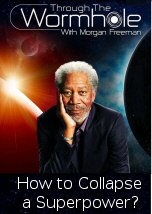
How to Collapse a Superpower

   2014    Technology
With a little imagination, could a few terrorists sabotage a mighty nation? Perhaps even tear down modern civilization? The stability of the US, Europe, China, or any global power depends on high-speed digital communication. Our increasing dependence on digital devices and global interactivity may be placing us in grave danger. Scientists around the world are dealing with new threats such as body hacking, Trojan horse viruses, and brain-damaging Internet addiction. But what if the ultimate threat isn’t an attack on technology, but the technology? Could the final superpower be the disembodied mind of the Internet itself?
Series: Through the Wormhole Season 5

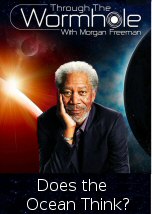
Does the Ocean Think

   2014    Science
There could be an undiscovered species on Earth unlike anything we’ve ever known. Not in the ocean, but the ocean itself! Its body spans thousands of miles; its heart beats with a one-thousand-year pulse. It could even have an immune system capable of annihilating all other life on earth. Just as our bodies function through the interaction of water with individual cells, including bacteria and other microorganisms, the ocean’s residents might collectively form a super-organism. A recent discovery suggests the ocean is a living being capable of thought. If so, what is the ocean thinking about us?
Series: Through the Wormhole Season 5

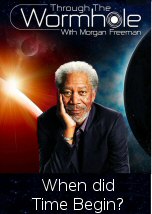
When Did Time Begin

   2014    Science
We float along the river of time. But does that river have a source? Where did time come from? Some believe time and space are one thing, and the Big Bang started the cosmic clock. Others believe the universe existed for almost half a million "years" before light could move and time began. Still others say time is older than our universe. But what if time itself is an illusion? Incredible new experiments may hold the answer. One groundbreaking experiment gives us the power to punch holes in time…and another may create a machine that operates outside time’s boundaries!
Series: Through the Wormhole Season 5
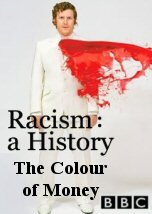
Racism: A History

Racism: A History

2007  Culture
The Beauty of Maps

The Beauty of Maps

2010  History
Leaving Neverland

Leaving Neverland

2019  Culture
The Cell

The Cell

  Science
Chemistry

Chemistry

2010  Science
History of the Eagles

History of the Eagles

2013  History