In 1983 Hasbro bought the license of the Diaclone and Micro Change toys from Takara, then commissioned Marvel Comics to come up with a story-line and character names for the toys. The result: Transformers. Despite Tonka releasing the cheaper Gobots line six months earlier, Hasbro's Transformers took the toy market by storm in 1984, raking in US$150 million that year. At the peak of the toy line's popularity, The Transformers: The Movie hit theaters to further capitalize on its success, but the film polarized fans and collectors with the death of Optimus Prime and majority of the original characters. As Hasbro took full control of Transformers from Takara by the late 1980s, sales declined until the toy line was discontinued in 1991. After the failed Generation 2 reboot, Beast Wars rejuvenated the franchise in 1995. In 2007, the live-action Transformers film solidified Transformers' position as Hasbro's flagship toy line.
In 1949, after decades of making wooden furniture and toys, Ole Kirk Christiansen's small factory in Billund, Denmark, moved to plastic and created the 'Automatic Binding Bricks', which would later be known as LEGO. When the company patented the tube system in 1958, LEGO became the dominant toy line worldwide throughout the 1960s and 1970s. When other competitors capitalized on the expiration of the company's patents in the 1980s, LEGO faced stiff competition until they reported their first loss in 1998. Poor business decisions with film licenses and the failure of the Jack Stone and Galidor lines brought LEGO to near-bankruptcy until Jørgen Vig Knudstorp took over the company and, by bringing it back to its roots, rejuvenated LEGO's profits. By the time The Lego Movie hit theaters in 2014, LEGO became the largest toy franchise in the world.
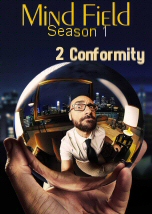
Human society is incredibly complex, and the duelling forces pushing us to conform and also to express our individuality are both necessary. Other people can influence us in good ways and in not-so-good ways. Michael Stevens takes a look into the human urge to conform and just how strong it is against our own beliefs and sense of selves.
Widespread dietary changes are needed if we’re to combat the range of health problems associated with obesity and the environmental damage caused by industrial farming. Switching to a vegan diet is a potential solution, but selling the idea to the meat-eaters around the world is a tricky proposition.
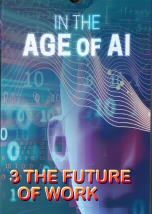
A.I. can be used in many ways that are very beneficial for society. But the current use of A.I. isn't necessarily aligned with the goals of building a better society, unfortunately. But, but we could change that. A.I. will be viewed as an age of enlightenment. Our children and their children will see A.I. as serendipity, that A.I. is here to liberate us from having to do routine jobs, and push us to do what we love, and push us to think what it means to be human. But what if humans mishandle this new power?

















In 2007, the live-action Transformers film solidified Transformers' position as Hasbro's flagship toy line.