





Last Watched

"Ape"  Sort by

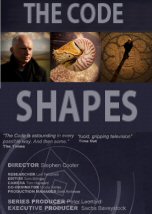
The Code: Shapes

   2011    Science
Marcus du Sautoy uncovers the patterns that explain the shape of the world around us. Starting at the hexagonal columns of Northern Ireland's Giant's Causeway, he discovers the code underpinning the extraordinary order found in nature - from rock formations to honeycomb and from salt crystals to soap bubbles. Marcus also reveals the mysterious code that governs the apparent randomness of mountains, clouds and trees and explores how this not only could be the key to Jackson Pollock's success, but has also helped breathe life into hugely successful movie animations.
Earth, the Power of the Planet: Atmosphere

   2007    Nature
The series highlights the major events which have shaped the Earth's history and allowed life to flourish. Follow Dr Stewart's personal journey to some of the most remote places on the planet. The atmosphere is Earth’s protective layer, cloaking us in a warm, oxygen-rich embrace and shielding us from the cold hostility of space. It acts as a natural greenhouse, keeping the Earth 51 degrees Fahrenheit warmer than it would otherwise be. Yet the atmosphere is also full of contradictions. It’s immensely powerful but at the same time highly sensitive. It’s destructive, yet it shelters us. It was created in part by the planet’s first organisms, and it continues to be essential for life.
Series: Earth, the Power of the Planet

Goya: Crazy Like A Genius

   2007    Art
Written and presented by Robert Hughes, one of the world’s most prominent art commentators, this program explores the life and work of Francisco Goya—focusing on the painter’s subversive, often gruesome outlook. The video provides in-depth visual and intellectual analysis of dark Goya masterpieces, including The Dream of Reason, Witches in the Air, and The Third of May, as well as examples of his portraiture and early work—such as The Duchess of Alba, both Majas, and a gratuitously violent tapestry painting. Links between Goya’s work, deafness, and political stance are explored in detail, while observations from painter Leon Golub highlight Goya’s continuing relevance.

Meet the Romans: All Roads Lead to Rome

   2012    History
Professor Mary Beard looks beyond the stories of emperors, armies, guts and gore to meet the everyday people at the heart of Ancient Rome's vast empire. In this programme, Mary asks not what the Romans did for us, but what the empire did for Rome. She rides the Via Appia, climbs up to the top seats of the Colosseum, takes a boat to Rome's port Ostia and takes us into the bowels of Monte Testaccio. She also meets some extraordinary Romans: Eurysaces, an eccentric baker, who made a fortune out of the grain trade and built his tomb in the shape of a giant bread oven; Baricha, Zabda and Achiba, three prisoners of war who became Roman citizens; and Pupius Amicus, the purple dye seller making imperial dye from shellfish imported from Tunisia. This is Rome from the bottom up.
Series: Meet the Romans

Becoming Human: First Steps

   2010    History
Where did we come from? What makes us human? Groundbreaking investigation explores how new discoveries are transforming views of our earliest ancestors. Featuring interviews with world-renowned scientists, footage shot in the trenches as fossils were unearthed, and stunning computer-generated animation, Becoming Human brings early hominids to life, examining how they lived and how we became the creative and adaptable modern humans of today. In the first episode Selam, the amazingly complete remains of a 3 million year-old child, packed with clues to why we split from the apes, came down from the trees, and started walking upright.
Series: Becoming Human

Ape Man: Search for the First Human

   2005    Science
After eight grueling years of hunting in the hot, wind-scoured desert of central Africa, an international team of researchers has uncovered one of the most sensational fossil finds in living memory: the well-preserved 7 million years old skull of a chimp-size animal, probably a male, that doesn't fit any known species. According to paleontologist Michel Brunet of the University of Poitiers in France, whose team reported the find in Nature last week, there is no way it could have been an ape of any kind. It was almost certainly a hominid — a member of a subdivision of the primate family whose only living representative is modern man.
Leaving Neverland

Leaving Neverland

2019  Culture
D-Day

D-Day

2013  History
Asia

Asia

2024  Nature
Neanderthal

Neanderthal

  History
Secrets of the Bees

Secrets of the Bees

2026  Nature
The Beauty of Maps

The Beauty of Maps

2010  Art