
Last Watched

"Bit"  Sort by

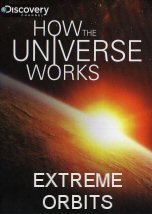
Extreme Orbits - Clockwork and Creation

   2012    Science
Orbits are the dynamics that drive the universe. From the smallest asteroid to the largest super-cluster, everything in the universe is in orbit. We owe our very existence to the stability of earth's orbit — it gave us life and keeps us safe. But we are the freaks. Everywhere else we look we find orbits are chaotic, unstable, and violent. Beyond our solar system we find planets that are blow-torched, stars that eat each other, and black holes that destroy everything in their path. Yet on the very largest scale, orbits are also a creative force. clashing galaxies give birth to new stars and new worlds. on the galactic scale orbits even construct the fabric of the universe itself.
Series: How the Universe Works
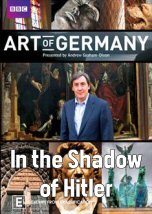
In the Shadow of Hitler

   2010    Art
There is a tendency to deny German culture the equal reverence of Italy or Spain, and this enlightening new series provides a wonderful opportunity to explore a great, yet often neglected, artistic tradition whose influence has been just as profound. Andrew Graham-Dixon concludes his exploration of German art by investigating the dark and difficult times of the 20th century. Dominating the landscape is the figure of Adolf Hitler, failed artist, would-be architect and obsessed with the aesthetics of his 1,000-year Reich". In a series of extraordinary building projects and exhibitions, Hitler waged a propaganda war against every form of modern art as a prelude to unleashing total war on the whole of Europe. After the war the shadow of the Third Reich persisted, Germany remained divided and traumatised. How would artists deal with a past that everybody wanted to forget? Journeying through the work of Otto Dix and George Grosz and the age of the Bauhaus to the post-war painters Georg Baselitz, Hilla Becher and the conceptual artist Joseph Beuys is a long and strange journey, but the signs that art has a place at the heart of the new reunited Germany are clearly visible.
Series: The Art of Germany

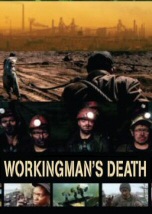
Workingman Death

   2005    Culture
Austrian director Michael Glawogger travels to five countries to focus on some of the worst jobs imaginable: Ukrainian miners crawl into tiny cracks in old coal pits to scratch out a few bags of winter fuel; Indonesian workers trudge long distances carrying baskets with hundreds of pounds of sulfur chunks extracted from a steaming mountain; Pakistanis risk explosions and burial under tons of scrap iron as they dismantle huge carrier ships. The visuals are everything here. Despite the hardships depicted, many sequences have a dreamlike beauty. In addition, the director has a bone-dry sense of irony; during the Ukraine scenes, he frequently cuts away to a statue of Stakhanov, the "hero" lauded by the Soviets for his superhuman work habits. He also shows us an old German smelting works that's been converted into a theme park.

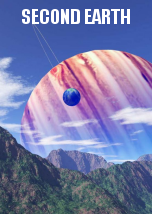
Second Earth

   2015    Science
20 years ago, two astronomers made a remarkable discovery, one which would change the way we view the universe for ever. A planet outside our solar system, orbiting a distant star - an exoplanet. Since then, we have found worlds where it rains diamonds, ones that boil at 3,000 degrees centigrade and even a world with four suns in its sky. But the big question is - will we ever find another Earth? As we close in on the discovery of the 2,000th planet outside our solar system, or exoplanet, we investigates the techniques that are revealing so much about these alien worlds. The documentary asks if we are really any closer to finding another world like our own - a second Earth.
Series: The Sky at Night

Who Will We Be

   2015    Medicine
In ‘Who will we be?’ Dr. David Eagleman journeys into the future, and asks what’s next for the human brain, and for our species. We stand at a major turning point, one where we might take control of our own development. We face a future of uncharted possibilities in which our relationship with our own body, our relationship with the world, the very basic nature of who we are is set to be transformed. For thousands of generations, humans have lived the same life cycle over and over. We are born, we control a fragile body, we experience a limited reality, and we die. But science and technology are giving us tools to transcend that evolutionary story. Our brains don't have to remain as we have inherited them. We are capable of extending our reality, of inhabiting new bodies, and possibly shedding our physical forms altogether. And we are discovering the tools to shape our own destiny. Who we become is up to us.
Series: The Brain with David Eagleman

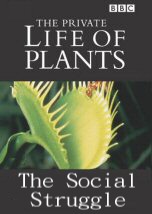
The Social Struggle

   1995    Nature
Fourth episode examines how plants either share environments harmoniously or compete for dominance within them. Attenborough highlights the 1987 hurricane and the devastation it caused. However, for some species, it was that opportunity for which they had lain dormant for many years. The space left by uprooted trees is soon filled by others who move relatively swiftly towards the light. The oak is one of the strongest and longest-lived, and other, lesser plants nearby must wait until the spring to flourish before the light above is extinguished by leaves. Tropical forests are green throughout the year, so brute force is needed for a successful climb to the top of the canopy: the rattan is an example that has the longest stem of any plant. As its name suggests, the strangler fig 'throttles' its host by growing around it and cutting off essential water and light. Some can take advantage of a fallen tree by setting down roots on the now horizontal trunk and getting nutriment from the surrounding moss and the fungi on the dead bark. The mountain ash (eucalyptus regnans) grows so tall, that regeneration becomes a considerable problem. It is easily flammable, so its solution is to shed its seeds during a forest fire and sacrifice itself. It therefore relies on the periodic near-destruction of its surroundings in order to survive. Attenborough observes that catastrophes such as fire and drought, while initially detrimental to wildlife, eventually allow for deserted habitats to be reborn.
Series: The Private Life of Plants
Life

Life

2009  Nature
Human Planet

Human Planet

2011  Culture
Minimalism

Minimalism

2015  Culture
Zeitgeist

Zeitgeist

2007  Culture
Top Gear

Top Gear

2012  Technology