



Last Watched

"Bit"  Sort by

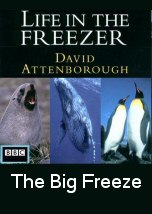
The Big Freeze

   1993    Nature
As almost all animal inhabitants of Antarctica are forced to migrate north, the sea underneath the frozen ice still provides a home to many specially adapted fish whose cells are protected from freezing through an 'antifreeze' liquid. Many of them feed on the faeces of other animals. The most notable larger animal that does not migrate north is perhaps the Weddell Seal, which can be found as close as 1300 kilometres to the pole. Groups of seals tear holes into the ice to dive for food and come up to breathe. The females come back to the ice to give birth. This episode also describes primitive plant life such as lichen, which can still be found on the continent in winter, even in the extremely dry and permanently frozen valleys conditions under which dead animals can lie frozen for many centuries without decomposing. It details the life of the Emperor Penguin, 'the only birds to lay their eggs directly on ice'. While other animals retreat, Emperors migrate not just to the ice, but into the Antarctic continent. The females lay eggs which are incubated by the males under the harshest conditions on Earth (huddling closely together for warmth), while the females return to the sea.
Series: Life in the Freezer
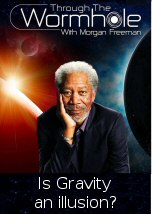
Is Gravity An illusion

   2014    Science
We feel it every moment of our lives but for physicists, gravity is the longest running unsolved mystery of the universe. Why do all objects that have mass pull on one another? Cutting-edge theories are proposing unexpected answers: Gravity could be another force in disguise, a thermodynamic mirage, or even, a shadow of a hidden holographic universe. If so, the force that holds us to the surface of the earth, and holds the earth in orbit around the sun, may be a trick of the mind. We feel it, but it may not be real. Is Gravity an Illusion?
Series: Through the Wormhole Season 5

Birth of the Earth

   2012    Science
The Earth was formed by a series of cosmic cataclysms including the most powerful blast in the Universe. Yet amid the turmoil our world was born. Could the same chain of events have created other earths elsewhere, inhabited by creatures like us?
Series: How the Universe Works

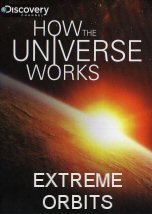
Extreme Orbits - Clockwork and Creation

   2012    Science
Orbits are the dynamics that drive the universe. From the smallest asteroid to the largest super-cluster, everything in the universe is in orbit. We owe our very existence to the stability of earth's orbit — it gave us life and keeps us safe. But we are the freaks. Everywhere else we look we find orbits are chaotic, unstable, and violent. Beyond our solar system we find planets that are blow-torched, stars that eat each other, and black holes that destroy everything in their path. Yet on the very largest scale, orbits are also a creative force. clashing galaxies give birth to new stars and new worlds. on the galactic scale orbits even construct the fabric of the universe itself.
Series: How the Universe Works

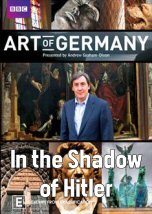
In the Shadow of Hitler

   2010    Art
There is a tendency to deny German culture the equal reverence of Italy or Spain, and this enlightening new series provides a wonderful opportunity to explore a great, yet often neglected, artistic tradition whose influence has been just as profound. Andrew Graham-Dixon concludes his exploration of German art by investigating the dark and difficult times of the 20th century. Dominating the landscape is the figure of Adolf Hitler, failed artist, would-be architect and obsessed with the aesthetics of his 1,000-year Reich". In a series of extraordinary building projects and exhibitions, Hitler waged a propaganda war against every form of modern art as a prelude to unleashing total war on the whole of Europe. After the war the shadow of the Third Reich persisted, Germany remained divided and traumatised. How would artists deal with a past that everybody wanted to forget? Journeying through the work of Otto Dix and George Grosz and the age of the Bauhaus to the post-war painters Georg Baselitz, Hilla Becher and the conceptual artist Joseph Beuys is a long and strange journey, but the signs that art has a place at the heart of the new reunited Germany are clearly visible.
Series: The Art of Germany

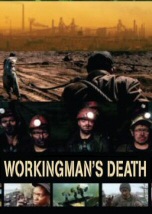
Workingman Death

   2005    Culture
Austrian director Michael Glawogger travels to five countries to focus on some of the worst jobs imaginable: Ukrainian miners crawl into tiny cracks in old coal pits to scratch out a few bags of winter fuel; Indonesian workers trudge long distances carrying baskets with hundreds of pounds of sulfur chunks extracted from a steaming mountain; Pakistanis risk explosions and burial under tons of scrap iron as they dismantle huge carrier ships. The visuals are everything here. Despite the hardships depicted, many sequences have a dreamlike beauty. In addition, the director has a bone-dry sense of irony; during the Ukraine scenes, he frequently cuts away to a statue of Stakhanov, the "hero" lauded by the Soviets for his superhuman work habits. He also shows us an old German smelting works that's been converted into a theme park.
Making a Murderer

Making a Murderer

2015  History
Frozen Planet

Frozen Planet

2011  Nature
Life

Life

2009  Nature
Galapagos

Galapagos

2006  Nature
Cosmos

Cosmos

1980  Culture