


Last Watched

"Pan"  Sort by

Pandora Promise

   2013    Technology
The film explores how and why mankind's most feared and controversial technological discovery is now passionately embraced by many of those who once led the charge against it. PANDORA'S PROMISE aims to inspire a serious and realistic debate over what is without question the most important question of our time: how do we continue to power modern civilization without destroying it?

Foreigners in their Own Land

   2013    History
One hundred years after Columbus' arrival in the Caribbean, Spanish Conquistadors and Priests, push into North America in search of gold and to spread Catholicism. With the arrival of the British in North America, the two colonial systems produce contrasting societies that come in conflict as Manifest Destiny pushes the U.S into the Mexican territories of the South West. As the Gold Rush floods California with settlers, complex and vital communities are overwhelmed. The elites, including Mariano Vallejo and Apolinaria Lorenzana lose their land. Mexicans and Mexican Americans are treated as second-class citizens, facing discrimination and racial violence. Resistance to this injustice appears in New Mexico as Las Gorras Blancas (The White Caps), burn Anglo ranches and cut through barbed wire to prevent Anglo encroachment. At the same time, New Mexicans manage to transform themselves through education, managing to preserve Hispano culture in New Mexico and their standing in the midst of an era of conquest and dispossession.
Series: Latino Americans

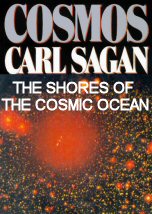
Cosmos Carl Sagan: The Shores of the Cosmic Ocean

   1980    Science
Carl Sagan opens the program with a description of the cosmos and the Spaceship of the Imagination. The ship journeys through the universe's hundred billion galaxies, the Local Group, the Andromeda Galaxy, the Milky Way, the Orion Nebula, our Solar System, and finally the planet Earth. Eratosthenes' successful calculation of the circumference of Earth leads to a description of the ancient Library of Alexandria. Finally, the Ages of Science are described, before pulling back to the full span of the Cosmic Calendar.
Series: Cosmos

Death Of The Universe

   2008    Science
While scientists have previously theorised about a “Big Crunch” where the universe retracts back to its original size, the discovery of Dark Matter and Dark Energy has placed that hypothesis on the backburner. Some astronomers now believe that if Dark Matter offsets Dark Energy then as the universe slowly expands, stars will gradually fade, running out of fuel and leading to a dark, cold and lifeless universe. Others hypothesise a much more violent end where Dark Energy continues to expand the universe at a greater and greater speed. Stronger than gravity, Dark Energy would pull apart everything down to the fundamental particles – the universe’s very fibres. While the universe’s end may be 50 billion years away, great leaps in science will continue to alter how we believe the universe was formed – and how it will end.

Ape Genius

   2008    Science
The great apes which include chimps, orangutans, gorillas and bonobos, seem to have rich emotional lives similar to our own. But just how smart are these animals? A new generation of investigators are converging on an explanation for why the non-human great apes never made the breakthrough into an accelerating human-style culture that builds on the achievements of previous generations.

Cosmos: A Spacetime Odyssey. Standing Up in the Milky Way

   2014    Science    HD
Famed astrophysicist Neil deGrasse Tyson takes a tour of the Solar System and the known universe establishing the components of Earth's "address" within the Virgo Supercluster. He then shares the story of the person who championed an expansive understanding of Earth's place in the universe by presenting Renaissance Italian Giordano Bruno's vision of the universe as a limitless expanse of space and time. He then makes an exploration into the Cosmic Calendar, which dates back to the dawn of the Big Bang (similar to the presentation from episode 1 of the original series). The episode ends with deGrasse Tyson narrating how he met his mentor Carl Sagan, who hosted the first Cosmos series.
Series: Cosmos: A Spacetime Odyssey