







Last Watched

"1970s"  Sort by

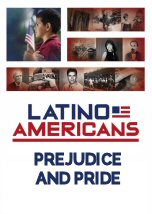
Prejudice and Pride

   2013    History
In the 1960s and 1970s a generation of Mexican Americans, frustrated by persistent discrimination and poverty, find a new way forward, through social action and the building of a new "Chicano" identity. The movement is ignited when farm workers in the fields of California, led by Cesar Chavez and Dolores Huerta, march on Sacramento for equal pay and humane working conditions. Through plays, poetry and film, Luis Valdez and activist Corky Gonzalez create a new appreciation of the long history of Mexicans in the South West and the Mestizo roots of Mexican Americans. In Los Angeles, Sal Castro, a schoolteacher, leads the largest high school student walkout in American history, demanding that Chicano students be given the same educational opportunities as Anglos. In Texas, activists such as Jose Angel Gutierrez, create a new political party and change the rules of the electoral game. By the end of the 1970s Chicanos activism and identity have transformed what it means to be an American. Chicano and Latino studies are incorporated into school curriculum; Latinos are included in the political process.
Series: Latino Americans
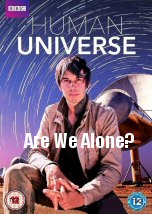
Are...We Alone

   2014    Science
Is mankind alone, or are there aliens out there, either waiting to be discovered, or on their way to find Earth? Professor Brian Cox spends this episode asking such questions, and what he discovers may raise a few eyebrows. He begins by exploring the human race's efforts to find neighbours in outer space, including the launch of two golden discs containing a greeting from Earth in the 1970s; they are still travelling and are now the most distant man-made objects from the planet. Brian also meets members of the Search for Extra-Terrestrial Intelligence, who have been monitoring radio signals for 50 years without success, before discussing the ingredients needed to make an intelligent civilisation with astrophysicist Dr Frank Drake.
Series: Human Universe

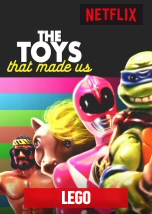
Lego

   2018    Technology
In 1949, after decades of making wooden furniture and toys, Ole Kirk Christiansen's small factory in Billund, Denmark, moved to plastic and created the 'Automatic Binding Bricks', which would later be known as LEGO. When the company patented the tube system in 1958, LEGO became the dominant toy line worldwide throughout the 1960s and 1970s. When other competitors capitalized on the expiration of the company's patents in the 1980s, LEGO faced stiff competition until they reported their first loss in 1998. Poor business decisions with film licenses and the failure of the Jack Stone and Galidor lines brought LEGO to near-bankruptcy until Jørgen Vig Knudstorp took over the company and, by bringing it back to its roots, rejuvenated LEGO's profits.
By the time The Lego Movie hit theaters in 2014, LEGO became the largest toy franchise in the world.
Series: The Toys that Made Us

Los Angeles

   2014    Art
Los Angeles' highly influential position in rock history is examined. Pat Smear remembers the days of Germs, and visits legendary KROQ disc jockey Rodney Bingenheimer, owner of a 1970s Sunset Strip club that became the hub for the Los Angeles glam rock scene. Foo Fighters head to the desert to record their new song 'Outside', which features a solo from Eagles' guitarist Joe Walsh, at Rancho De La Luna, and in turn, Kyuss and the 1990s Palm Desert Scene is explored.
Series: Sonic Highways