It is the year 2546. Corporations rule the world, and an agent is on a secret mission to explore the untold stories of the past. His journey leads him into a secret virtual reality where one corporation has recreated the 1980s, an era that witnessed the birth of video game development, an event in which a politically and economically restricted small European country, Hungary, had a significant role. He discovers a strange but exciting world, where computers were smuggled through the Iron Curtain and serious engineers started developing games. This small country was still under Soviet pressure when a group of people managed to set up one of the first game development studios in the world, and western computer stores started clearing room on their shelves for Hungarian products. These developers really didn't know it was impossible, because they created games including amazing technical feats that even engineers at Commodore thought their machines weren't capable of.
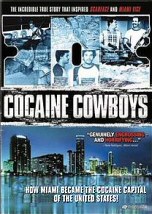
In the 1980s, ruthless Colombian cocaine barons invaded Miami with a brand of violence unseen in this country since Prohibition-era Chicago - and it put the city on the map. The film is the true story of how Miami became the drug, murder and cash capital of the United States, told by the people who made it all happen.
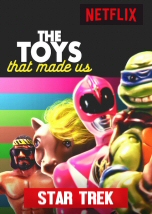
Since the original series went on the air in 1966, the Star Trek franchise has had a history of ups and downs in the toy business - from AMT's faithful scale model kit of the USS Enterprise to Remco's obscure tie-in merchandise, to Mego's best–selling action figure line. Following Mego's bankruptcy in 1983 and a string of flops by Ertl and Galoob, Playmates Toys picked up the toy license in the late 1980s and sparked a resurgence in the franchise's toy sales. From the mid-2000s onwards, companies such as Art Asylum and McFarlane Toys continue to keep the Star Trek toy franchise alive.
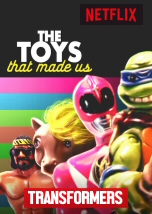
In 1983 Hasbro bought the license of the Diaclone and Micro Change toys from Takara, then commissioned Marvel Comics to come up with a story-line and character names for the toys. The result: Transformers. Despite Tonka releasing the cheaper Gobots line six months earlier, Hasbro's Transformers took the toy market by storm in 1984, raking in US$150 million that year. At the peak of the toy line's popularity, The Transformers: The Movie hit theaters to further capitalize on its success, but the film polarized fans and collectors with the death of Optimus Prime and majority of the original characters. As Hasbro took full control of Transformers from Takara by the late 1980s, sales declined until the toy line was discontinued in 1991. After the failed Generation 2 reboot, Beast Wars rejuvenated the franchise in 1995. In 2007, the live-action Transformers film solidified Transformers' position as Hasbro's flagship toy line.
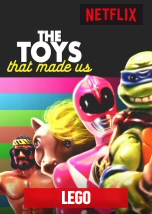
In 1949, after decades of making wooden furniture and toys, Ole Kirk Christiansen's small factory in Billund, Denmark, moved to plastic and created the 'Automatic Binding Bricks', which would later be known as LEGO. When the company patented the tube system in 1958, LEGO became the dominant toy line worldwide throughout the 1960s and 1970s. When other competitors capitalized on the expiration of the company's patents in the 1980s, LEGO faced stiff competition until they reported their first loss in 1998. Poor business decisions with film licenses and the failure of the Jack Stone and Galidor lines brought LEGO to near-bankruptcy until Jørgen Vig Knudstorp took over the company and, by bringing it back to its roots, rejuvenated LEGO's profits. By the time The Lego Movie hit theaters in 2014, LEGO became the largest toy franchise in the world.
The 80s was also an age of innovators and icons, of style and substance. In this chapter, Dylan Jones celebrates some of the stars who created the timeless legacy of the 1980s. From stellar BBC archive performances from the likes of Madonna, Depeche Mode, Sade, Duran Duran, Pet Shop Boys and Tina Turner to iconic MTV-era gems from Billy Idol, Eurythmics, U2, Janet Jackson, Prince and many more. It also features rarely seen archive television footage from the BBC vaults, including Terry Wogan interviewing Grace Jones, Bruce Springsteen on the Old Grey Whistle Test and Adam Ant performing his own stunts in a behind-the-scenes look at the making of the Prince Charming video.

















He discovers a strange but exciting world, where computers were smuggled through the Iron Curtain and serious engineers started developing games. This small country was still under Soviet pressure when a group of people managed to set up one of the first game development studios in the world, and western computer stores started clearing room on their shelves for Hungarian products. These developers really didn't know it was impossible, because they created games including amazing technical feats that even engineers at Commodore thought their machines weren't capable of.