


Last Watched

"Christian"  Sort by

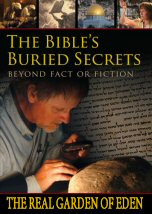
The Real Garden of Eden

   2011    Culture
Can we find the Garden of Eden? Bible scholar Dr Francesca Stavrakopoulou thinks so. In the final episode of her series re-examining conventional readings of the Bible, she argues that the Garden of Eden has nothing to do with the origins of humanity, but is rather a story concealing dramatic events about a particular figure in a particular place, two and half thousand years ago. Marshalling compelling evidence from archaeology, Islam and the Bible text itself, she identifies and visits the exact site of Eden. It's a revolutionary theory which challenges some of the most cherished preconceptions about Eden in both Christianity and western culture.
Series: Bible's Buried Secrets

Fix Our Climate

   2021    Nature
The climate is changing faster than ever, which is why 'fix our climate' is one of the five goals of the Earthshot Prize. Prince William, Sir David Attenborough and Christiana Figueres highlight inspiring and often unexpected solutions to the challenge. In this film, we'll explain the scale of the problem posed by climate change and will introduce you to some amazing people already working on climate crisis. One of these three finalists will win the Earthshot Prize and get the platform and resources they need to scale their ground-breaking work. Nine more solutions for fixing our climate will receive the same support over the course of this decade.
Series: The Earthshot Prize: Repairing Our Planet

Ancient Rome: Constantine

   2006    History
This episode tells the story of how the Emperor Constantine brought Christianity to the western world. In AD 312, Rome was in crisis. The empire had been divided into four parts, each with its own emperor who fought one another. Constantine intervened and united Rome, using military might and a new religion - Christianity.
Series: Ancient Rome

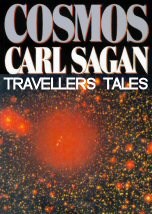
Travellers Tales

   1980    Science
The journeys of the Voyager probes is put in the context of the Netherlands in the seventeenth century, with a centuries-long tradition of sailing ship explorers, and its contemporary thinkers (such as Constantijn Huygens and his son Christian). Their discoveries are compared to the Voyager probes' discoveries among the Jovian and Saturn systems. In Cosmos Update, image processing reconstructs Voyager’s worlds and Voyager’s last portrait of the Solar System as it leaves is shown.
Series: Cosmos

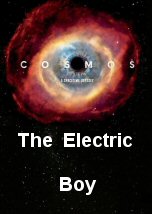
The Electric Boy

   2014    Science
This episode provides an overview of the nature of electromagnetism, as discovered through the work of Michael Faraday. Tyson explains how the idea of another force of nature, similar to gravitational forces, had been postulated by Isaac Newton before. Tyson continues on Faraday, coming from poor beginnings, would end up becoming interested in studying electricity after reading books and seeing lectures by Humphry Davy at the Royal Institution. Davy would hire Faraday after seeing extensive notes he had taken to act as his secretary and lab assistant. After Davy and chemist William Hyde Wollaston unsuccessfully tried to build on Hans Christian Ørsted's discovery of the electromagnetic phenomena to harness the ability to create motion from electricity, Faraday was able to create his own device to create the first electric motor by applying electricity aligned along a magnet. Davy, bitter over Faraday's breakthrough, put Faraday on the task of improving the quality of high-quality optical glass, preventing Faraday from continuing his research. Faraday, undeterred, continued to work in the Royal Institution, and created the Christmas Lectures designed to teach science to children. Following Davy's death, Faraday returned to full time efforts studying electromagnetism, creating the first electrical generator by inserting a magnet in a coil of wires. Tyson continues to note that despite losing some of his mental capacity, Faraday concluded that electricity and magnetism were connected by unseen fields, and postulated that light may also be tied to these forces. Using a sample of the optical glass that Davy had him make, Faraday discovered that an applied magnetic field could affect the polarization of light passing through the glass sample (a dielectric material), leading to what is called the Faraday effect and connecting these three forces. Faraday postulated that these fields existed across the planet, which would later by called Earth's magnetic field generated by the rotating molten iron inner core, as well as the phenomena that caused the planets to rotate around the sun. Faraday's work was initially rejected by the scientific community due to his lack of mathematical support, but James Clerk Maxwell would later come to rework Faraday's theories into the Maxwell's equations that validated Faraday's theories. Their combined efforts created the basis of science that drives the principles of modern communications today.
Series: Cosmos: A Spacetime Odyssey

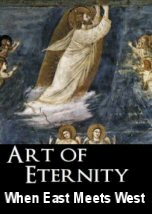
When East Meets West

   2007    Art
Andrew Graham-Dixon examines early Christian art and the reasons for its evolution during the Renaissance. He also reveals just how far modern artists have been influenced by the pre-perspective view of the world.
Series: Art of Eternity
High Score

High Score

2020  Technology
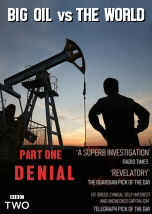
Big Oil vs The World

Big Oil vs The World

2022  Nature
The Crime of the Century

The Crime of the Century

2021  Medicine
Leaving Neverland

Leaving Neverland

2019  Culture
Our Universe

Our Universe

2022  Nature
The Keepers

The Keepers

2017  Culture
The Lost Pirate Kingdom

The Lost Pirate Kingdom

2021  History