The film reveals the secret story behind one of the greatest intellectual feats of World War II, a feat that gave birth to the digital age. In 1943 Bill Tutte, a 24-year-old maths student and a GPO engineer called Tommy Flowers combined to hack into Hitler's personal super code machine - not Enigma but an even tougher system, which he called his 'secrets writer'. Their break turned the Battle of Kursk, powered the D-day landings and orchestrated the end of the conflict in Europe. But it was also to be used during the Cold War - which meant both men's achievements were hushed up and never officially recognised.
The film takes viewers behind the scenes of one of the world’s greatest institutions of learning. The film examines how this legendary establishment has continued to go about its regular activities while adapting to the digital revolution. 'Ex Libris: The New York Public Library' explains how libraries inform and educate in many ways: books, concerts, conferences, classes and much more. This library strives to inspire the study of advanced knowledge and to strengthen the community.
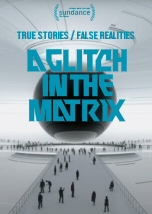
Are we in fact living in a simulation? This is the question postulated, wrestled with, and ultimately argued for in the latest provocation from acclaimed documentary stylist Rodney Ascher (Room 237, The Nightmare) through archival footage, compelling interviews with real people shrouded in digital avatars, and a collection of cases from some of our most iconoclastic figures in contemporary culture.
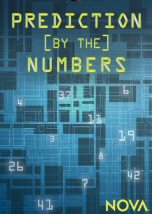
Predictions underlie nearly every aspect of our lives, from sports, politics, and medical decisions to the morning commute. With the explosion of digital technology, the internet, and 'big data,' the science of forecasting is flourishing. But why do some predictions succeed spectacularly while others fail abysmally? And how can we find meaningful patterns amidst chaos and uncertainty? From the glitz of casinos and TV game shows to the life-and-death stakes of storm forecasts and the flaws of opinion polls that can swing an election, 'Prediction by the Numbers' explores stories of statistics in action. Yet advances in machine learning and big data models that increasingly rule our lives are also posing big, disturbing questions. How much should we trust predictions made by algorithms when we don't understand how they arrive at them? And how far ahead can we really forecast?
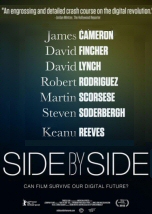
Join Keanu Reeves on a tour of the past and the future of filmmaking. Since the invention of cinema, the standard format for recording moving images has been film. Over the past two decades, a new form of digital filmmaking has emerged, creating a groundbreaking evolution in the medium. The film investigates the history, process and workflow of both digital and photochemical film creation. We will explore it via in-depth interviews with directors, cinematographers, colorists, scientists, engineers and artists such as James Cameron, David Fincher, David Lynch, Martin Scorsese, Steven Soderbergh, and many more
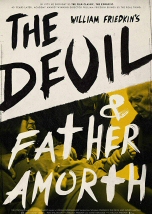
Years after he changed the landscape of filmmaking with The Exorcist, filmaker and writer William Friedkin moves from fiction to fact with this documentary. What began as a brief conversation between Friedkin and Father Gabrielle Amorth - the head Exorcist for the Diocese of Rome for over 30 years - as two professionals who knew of each other's work, soon transformed into an once-in-a-lifetime opportunity, as Amorth agreed Friedkin could film an exorcism ceremony. It would be the ninth exorcism for a painfully afflicted woman, and it would be filmed by Friedkin alone, with no other crew allowed, no light other than the natural light in the room and a small digital camera-and-mic unit that could capture the ritual and its revelations. Combining the startling and singular footage from Cristina's exorcism with interviews from priests and psychologists, neurosurgeons and non-believers, Friedkin guides us on a journey into the twilight world between the boundaries of what we know and what we don't.









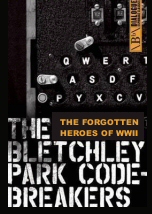



In 1943 Bill Tutte, a 24-year-old maths student and a GPO engineer called Tommy Flowers combined to hack into Hitler's personal super code machine - not Enigma but an even tougher system, which he called his 'secrets writer'. Their break turned the Battle of Kursk, powered the D-day landings and orchestrated the end of the conflict in Europe. But it was also to be used during the Cold War - which meant both men's achievements were hushed up and never officially recognised.