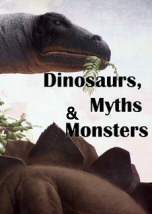
From dinosaurs to mammoths, when our ancient ancestors encountered the fossil bones of extinct prehistoric creatures, what did they think they were? Just like us, ancient peoples were fascinated by the giant bones they found in the ground. Historian Tom Holland goes on a journey of discovery to explore the fascinating ways in which our ancestors sought to explain the remains of dinosaurs and other giant prehistoric creatures, and how bones and fossils have shaped and affected human culture. In Classical Greece, petrified bones were exhibited in temples as the remains of a long-lost race of colossal heroes. Chinese tales of dragons may well have had their origins in the great fossil beds of the Gobi desert. In the Middle Ages, Christians believed that mysterious bones found in rock were the remains of giants drowned in Noah's Flood. Tom encounters a medieval sculpture that is the first known reconstruction of a monster from a fossil, and learns about the Native Americans stories, told for generations, which contained clues that led bone hunters to some of the greatest dinosaur finds of the nineteenth century.
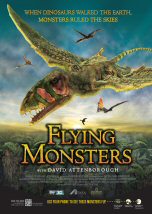
For thousands of years, humans have believed that there were once flying monsters. But did they really exist beyond our nightmares? 220 million years ago dinosaurs were beginning their domination of Earth. But another group of reptiles was about to make an extraordinary leap: pterosaurs were taking control of the skies. The story of how and why these mysterious creatures took to the air is more fantastical than any fiction. In Flying Monsters 3D, David Attenborough the worlds leading naturalist, sets out to uncover the truth about the enigmatic pterosaurs, whose wingspans of up to 40 feet were equal to that of a modern day jet plane. Attenborough works with scientists to understand the incredible story of the evolution of the pterosaurs, a story that unfolds in such stunning locations as New Mexico, the Jurassic Coast of Lyme Regis in Britain, an ancient pterosaur landing site in Southern France and a fossil pit in Germany where near perfect pterosaur specimens have been found. The central question and one of the greatest mysteries in palaeontology is: how and why did pterosaurs fly? How did lizards the size of giraffes defy gravity and soar through prehistoric skies? Driven by the information he finds as he attempts to answer these questions, Attenborough starts to unravel one of sciences more enduring mysteries, discovering that the marvel of pterosaur flight has evolutionary echoes that resonate even today. Flying Monsters 3D is a groundbreaking film that uses cutting-edge 3D technology and CGI to bring the story of giant flying monsters and their prehistoric world to life. Audiences of all ages will be in awe as they enter the world and experience, as never before, REAL Flying Monsters in 3D.
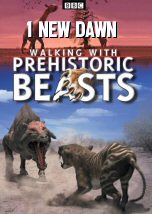
The series takes place after the extinction of the dinosaurs 65 million years ago and recreates animals of the Cenozoic with computer-generated imagery and animatronics. The first episode starts 49 million years ago, when Earth has fully recovered from the dinosaur extinction and is covered in a mysterious forest. This is a time that the world has almost forgotten - Germany was a hot sweaty jungle, birds ruled the earth and preyed on miniature horses and whales walked on land.
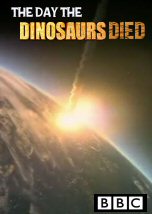
Experts suspect that the dinosaurs were wiped out after a city-sized asteroid smashed into the Gulf of Mexico causing a huge crater. But until now, they haven't had any proof. In a world first, evolutionary biologist Ben Garrod joins a multi-million pound drilling expedition into the exact spot the asteroid hit to get hard evidence of the link. The team overcomes huge obstacles as it attempts to drill 1,500 metres beneath sea level to pull up rock from the Chicxulub crater. Meanwhile, paleopathologist Professor Alice Roberts travels the globe meeting top scientists and gaining exclusive access to a mass fossil graveyard in New Jersey - believed to date from the same time the asteroid hit. Alice also treks by horseback across the remote plains of Patagonia, to see if the effects of the asteroid impact could have wiped out dinosaurs across the world - almost immediately.
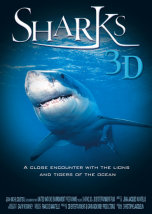
Jean-Michel Cousteau invites you to embark on a breathtaking underwater voyage to discover the ultimate predator: the shark. Experience an astonishing up-close encounter in 3D with the Lions and Tigers of the Ocean. Come face-to-face with a multitude of shark species, including the Great White, Hammerhead, and Whale Shark. Witness them as they really are: not wicked man-eating creatures, but wild, fascinating and endangered animals that have been in existence a million years before dinosaurs roamed the Earth. Join a team of ocean explorers on a round-the-globe expedition documenting the life of the ultimate predator.
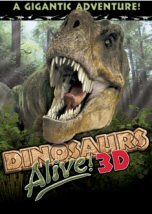
A global adventure of science and discovery--featuring the earliest dinosaurs of the Triassic Period to the monsters of the Cretaceous 'reincarnated' life-sized for the screen. Audiences will journey with some of the world's preeminent palaeontologists as they uncover evidence that the descendents of dinosaurs still walk (or fly) among us. From the exotic, trackless expanses and sand dunes of Mongolia's Gobi Desert to the dramatic sandstone buttes of New Mexico, the film will follow American Museum of Natural History palaeontologists as they explore some of the greatest dinosaur finds in history. Through the magic of scientifically accurate computer-generated animation, these newly discovered creatures, and some familiar favourites, will come alive... in a big way!













In Classical Greece, petrified bones were exhibited in temples as the remains of a long-lost race of colossal heroes. Chinese tales of dragons may well have had their origins in the great fossil beds of the Gobi desert. In the Middle Ages, Christians believed that mysterious bones found in rock were the remains of giants drowned in Noah's Flood.
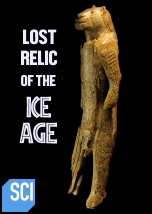
Tom encounters a medieval sculpture that is the first known reconstruction of a monster from a fossil, and learns about the Native Americans stories, told for generations, which contained clues that led bone hunters to some of the greatest dinosaur finds of the nineteenth century.