Can skyscrapers be made safer, more efficient, and livable in our rapidly growing cities? Skyscrapers are gleaming symbols of prestige, and an ingenious way to save space in dense urban areas. But as buildings rise ever higher, what are the risks of these architectural behemoths? Do we truly know how they will hold up in earthquakes, fires and wind? What have--or haven’t—we learned from past tragedies? But even as we devise ways to defend them against potential disasters, can we also make them more livable, interactive, and eco-friendly?
Scientists and engineers fight to save Notre Dame Cathedral after the 2019 fire. When the roof of Notre Dame Cathedral erupted in flames in April of 2019, firefighters battled for nine gruelling hours to save the historic landmark. Still, Paris came alarmingly close to losing more than 800 years of history. Now engineers are in a different race against time: to rebuild the roof and secure the medieval structure of Notre Dame. Underneath the charred scaffolding and vaulted ceilings of the cathedral, scientists study the components of Notre Dame’s iconic structure to puzzle out how best to repair it.
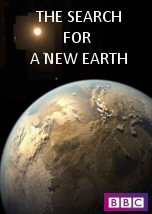
Planet Earth has been home to humankind for over 200,000 years, but with a population of 7.3 billion and counting and limited resources, this planet might not support us forever. Professor Stephen Hawking thinks the human species will have to populate a new planet within 100 years if it is to survive. With climate change, pollution, deforestation, pandemics and population growth, our own planet is becoming increasingly precarious. In this landmark film Professor Hawking, alongside engineer and radio astronomy expert Professor Danielle George and a former student, Christophe Galfard, join forces to find out if, and how, humans can reach for the stars and relocate to different planets. Travelling the globe, they meet top scientists, technologists and engineers who are working to answer our biggest questions: is there another planet out there that we could call home? How will we travel across the vast distances of space to get there? How will we survive the journey? And how will we set up a new human civilization on an alien world? Travelling the globe, they meet top scientists, technologists and engineers who are working to answer our biggest questions: is there another planet out there that we could call home? How will we travel across the vast distances of space to get there? How will we survive the journey? And how will we set up a new human civilization on an alien world? Taking in the latest advances in astronomy, biology and rocket technology from the Atacama Desert to the wilds of the Arctic, viewers will discover a whole world of cutting edge research. This programme shows that Professor Hawking’s ambition isn’t as fantastical as it sounds - and that science fiction is closer to science fact than we ever thought.
The film challenges many of the commonly held assumptions about our water systems and how people think about water. Its goal is to bust the global sense of impending doom by painting an alternative, optimistic water future and mapping out the ways to get there. The filmmakers believe that even one person with enough knowledge can make a difference and inspire a movement. The film tries to provide that knowledge and to envision a day when everybody has access to clean water and sanitation and in our lifetime. Narrated by Liam Neeson, featuring Matt Damon and Jaden Smith, 'Brave Blue World' paints an optimistic picture of how humanity is adopting new technologies and innovations to re-think how water is managed.
Can new emission-free electric planes replace our polluting airliners and revolutionize personal transportation in our cities? The film takes a ride in some quiet, energy-efficient, prototypes that are vying for success as electric flight takes off. The race is on to stop the climate emergency and we're seeing more and more people really paying attention to their carbon footprint. Aviation is a fast-growing offender, but is it too slow to respond. Could rapid progress in electric technology change the equation?
We face one of the greatest challenges in the history of humanity, to eliminate the fuels that have driven progress and technology for over a century, while our thirst for energy only grows. The sun is the biggest source of energy in the solar system. It's like a nuclear reactor in the sky, and it provides endless power. If we can harvest just fractions of this, it can power all our consumption. Innovators are searching for new ways to capture more of the sun’s power, and make it available through the night, everywhere.











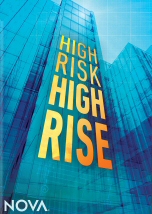








Do we truly know how they will hold up in earthquakes, fires and wind? What have--or haven’t—we learned from past tragedies? But even as we devise ways to defend them against potential disasters, can we also make them more livable, interactive, and eco-friendly?