Can skyscrapers be made safer, more efficient, and livable in our rapidly growing cities? Skyscrapers are gleaming symbols of prestige, and an ingenious way to save space in dense urban areas. But as buildings rise ever higher, what are the risks of these architectural behemoths? Do we truly know how they will hold up in earthquakes, fires and wind? What have--or haven’t—we learned from past tragedies? But even as we devise ways to defend them against potential disasters, can we also make them more livable, interactive, and eco-friendly?
Scientists and engineers fight to save Notre Dame Cathedral after the 2019 fire. When the roof of Notre Dame Cathedral erupted in flames in April of 2019, firefighters battled for nine gruelling hours to save the historic landmark. Still, Paris came alarmingly close to losing more than 800 years of history. Now engineers are in a different race against time: to rebuild the roof and secure the medieval structure of Notre Dame. Underneath the charred scaffolding and vaulted ceilings of the cathedral, scientists study the components of Notre Dame’s iconic structure to puzzle out how best to repair it.
The architectural design of Beijing's ancient complex of palaces and temples enabled it to survive centuries of earthquakes. The Forbidden City is the world’s biggest and most extravagant palace complex ever built. For five centuries, it was the power center of imperial China and survived wars, revolution, fires, and earthquakes. How did the Ming Emperor’s workforce construct its sprawling array of nearly 1,000 buildings and dozens of temples in a little over a decade?
Physicist Dr Helen Czerski journeys to the extremes of the temperature scale, where the everyday laws of physics break down and a new world of scientific possibilities begins. In the first part, Frozen Solid, Helen reveals how cold has shaped the world around us and why frozen doesn't mean what you think it does. She meets scientists pushing temperature to the limits of cold, driving technologies such as superconductors. The second part, A Temperature for Life, explores the narrow band of temperature that has led to life on Earth, how life began where hot meets cold and how every living creature depends on temperature for survival. In the last part, Playing with Fire, Helen Czerski explores the science of heat. She reveals how heat is the hidden energy contained within matter with the power to transform it from state to state.
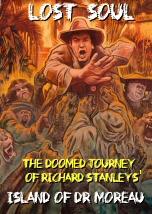
Richard Stanley had a dream of making a screen adaptation of the H.G. Wells classic The Island of Dr. Moreau. In the mid nineties, he finally managed to get the project up and running, but its shooting turned into a battle between art and industry interests that ended with the director being fired from the film. This documentary examines the story of a movie that could have been a masterpiece of fantasy that ended in an epic failure.
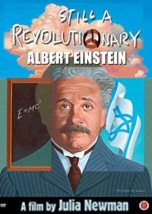
Albert Einstein, the most famous scientist of all time, was a world-renowned celebrity, greeted like a rock star when he appeared in public. An anti-war firebrand, Einstein also spoke out on issues ranging from women's rights and racism to immigration and nuclear arms control. But today, his image has been neutered into that of a charmingly absent-minded genius. He was, in fact, a powerful force for social change and a model for political activism. Using a wealth of rarely-seen archival footage, correspondence, and new and illuminating interviews, filmmaker Julia Newman makes the case that Albert Einstein's example of social and political activism is as important today as are his brilliant, groundbreaking theories.













Do we truly know how they will hold up in earthquakes, fires and wind? What have--or haven’t—we learned from past tragedies? But even as we devise ways to defend them against potential disasters, can we also make them more livable, interactive, and eco-friendly?