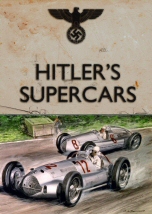
The film tells the story of the ill-fated Nazi Land Speed record attempts. This is a story of engineering excellence, Grand Prix racing, Nazi propaganda, celebrity, and an intense rivalry which would leave a speed record unbroken for 79 years and one of Nazi Germany's best racing drivers dead. During the rise of the Third Reich two German car manufacturers were ordered to build the most high performance vehicles the world had ever seen. What followed was a rivalry that would reap Grand Prix victories, international domination that was a propaganda coup, and provide world fame to its drivers who risked their lives smashing speed records that would stand for 79 years. All under the direct orders of the Fuhrer himself. Bugatti and Alfa Romeo dominated racing before 1934. But the years from 1934 to 1939 were six tumultuous years in which Grand Prix racing was dominated by the German Auto Union, the arranged marriage of Audi, Horch, Wanderer, and DKW, and Mercedes-Benz teams and provided a spectacle of speed, sound and fury never previously attained and never since matched. There are few periods of racing that have excited as much interest, event attendance and sophistication of equipment as the era of the Silver Cars. They were so far ahead of their time that many of their accomplishments were not duplicated until Mercedes went racing again in the early 1950s. There is also something about men who faced the challenges of staying in a cockpit of a highly sophisticated machine capable of 200 mph with no safety systems. They were giants and among them were Italian Tazio Nuvolari and two greatest German pilots of the thirties, Rudolf Caracciola of Mercedes and Auto Union's Bernd Rosemeyer who duelled with faster, more innovative and sleeker machines, developed in wind tunnels. This special documentary charts the rise of Nazi Germany's dominate 'Silver Arrow' Grand Prix and Speed Record cars of the 1930's. Leading motor racing and World War 2 experts James Holland, Richard Williams, Eberhard Reuss and Chris Routledge tell the story of the Nazi funded Auto Union and Mercedes Benz 'National Racing Cars'. Hitler's Supercars interweaves the rise of the Third Reich with the racing exploits it funded and what propaganda messages these racing cars where sending.
We love nature and all its glorious diversity. Some creatures we admire for their deadly beauty, others because they are cute, but for some it's hard to figure out exactly why we like them so much, perhaps it's a quirk. How do you decide nature's weirdest animal? Is it the sloth that hangs upside down and moves so slowly that moss grows in its fur? Is it a sea pen that sits rooted to the seabed in endless darkness and emitting its own glow? Could it be carnivorous snails that leave the ocean to digest dead creatures on the beach, finches that drink blood, or the tarantula that keeps a frog as it's pet. But with nature's endless variety, which is the weirdest? We can't decide. Can you?
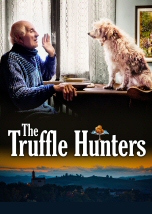
(Click CC for Subtitles) Deep in the forests of Northern Italy resides the prized white Alba truffle. Desired by the wealthiest patrons in the world, it remains a pungent but rarified mystery. It cannot be cultivated or found: the only souls on Earth who know how to dig it up are a tiny circle of canines and their silver-haired human companions-Italian elders with walking sticks and devilish senses of humor-who only scour for the truffle at night so as not to leave any clues for others. Still, this small enclave of hunters induces a feverish buying market that spans the globe. With unprecedented access to the elusive truffle hunters, filmmakers Michael Dweck and Gregory Kershaw follow this maddening cycle from the forest floor to the pristine restaurant plate. With a wily and absurdist flare, The Truffle Hunters captures a precarious ritual constantly threatened by greed and outside influences but still somehow protected by those clever, tight-lipped few who know how to unearth the magic within nature.
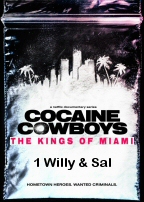
A Six-part Saga on the South Florida traffickers indicted in one of the largest drug cases in U.S. history. Alleged to be the chief U.S. distributors for two of Colombia's biggest cartels, Cuban exiles Augusto 'Willy' Falcon and Salvador 'Sal' Magluta were accused of smuggling over 75 tons of cocaine into the U.S. in the 1980s. The high school friends built a reputed $2 billion empire that made Willy and Sal two of Miami's biggest celebrities. Featuring colourful interviews with those closest to them, their defence team, and the Feds tasked with taking them down, the series paints a vivid portrait of the last of Miami's 'cocaine cowboys.' The first episode shows how in the 1970s and '80s, friends Willy Falcon and Sal Magluta leave humble beginnings behind as they allegedly ascend to the top of Miami's drug trade.
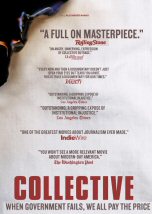
In 2015, a fire at Bucharest's Colectiv club leaves 27 dead and 180 injured. Soon, more burn victims begin dying in hospitals from wounds that were not life-threatening. Then a doctor blows the whistle to a team of investigative journalists. One revelation leads to another as the journalists start to uncover vast health care fraud. When a new health minister is appointed, he offers unprecedented access to his efforts to reform the corrupt system but also to the obstacles he faces. Following journalists, whistle-blowers, burn victims, and government officials, Collective is an uncompromising look at the impact of investigative journalism at its best. Nominated for Best International Film & Documentary in 2020 Academy Awards. (Click CC for subtitles)
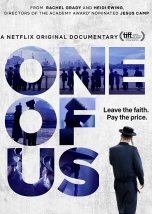
The film explores the opaque world of Hasidic Judaism through a cadre of fascinating characters. Through unique and intimate access over the span of three years, acclaimed observational filmmakers Heidi Ewing and Rachel Grady delve into the lives of three brave individuals who have recently made the decision to leave the insular ultra-orthodox community at the expense of all else, including relationships with their family members and--in one case--their personal safety. With a sensitive and compassionate eye, One of Us chronicles the achingly cinematic journey of people in search of a personal freedom that comes only at a very high cost.







Bugatti and Alfa Romeo dominated racing before 1934. But the years from 1934 to 1939 were six tumultuous years in which Grand Prix racing was dominated by the German Auto Union, the arranged marriage of Audi, Horch, Wanderer, and DKW, and Mercedes-Benz teams and provided a spectacle of speed, sound and fury never previously attained and never since matched. There are few periods of racing that have excited as much interest, event attendance and sophistication of equipment as the era of the Silver Cars. They were so far ahead of their time that many of their accomplishments were not duplicated until Mercedes went racing again in the early 1950s. There is also something about men who faced the challenges of staying in a cockpit of a highly sophisticated machine capable of 200 mph with no safety systems. They were giants and among them were Italian Tazio Nuvolari and two greatest German pilots of the thirties, Rudolf Caracciola of Mercedes and Auto Union's Bernd Rosemeyer who duelled with faster, more innovative and sleeker machines, developed in wind tunnels.
This special documentary charts the rise of Nazi Germany's dominate 'Silver Arrow' Grand Prix and Speed Record cars of the 1930's. Leading motor racing and World War 2 experts James Holland, Richard Williams, Eberhard Reuss and Chris Routledge tell the story of the Nazi funded Auto Union and Mercedes Benz 'National Racing Cars'. Hitler's Supercars interweaves the rise of the Third Reich with the racing exploits it funded and what propaganda messages these racing cars where sending.