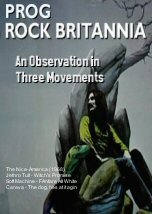
Documentary about progressive music and the generation of bands that were involved, from the international success stories of Yes, Genesis, ELP, King Crimson and Jethro Tull to the trials and tribulations of lesser-known bands such as Caravan and Egg. The film is structured in three parts, charting the birth, rise and decline of a movement famed for complex musical structures, weird time signatures, technical virtuosity and strange, and quintessentially English, literary influences. It looks at the psychedelic pop scene that gave birth to progressive rock in the late 1960s, the golden age of progressive music in the early 1970s, complete with drum solos and gatefold record sleeves, and the over-ambition, commercialisation and eventual fall from grace of this rarefied musical experiment at the hands of punk in 1977. Contributors include Robert Wyatt, Mike Oldfield, Pete Sinfield, Rick Wakeman, Phil Collins, Arthur Brown, Carl Palmer and Ian Anderson.
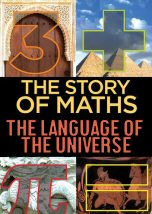
This four-part British television series outlines aspects of the history of mathematics. Written and presented by University of Oxford professor Marcus du Sautoy, it is a co-production between the Open University and the BBC. In the first episode, Marcus du Sautoy in Egypt uncovers use of a decimal system based on ten fingers of the hand and discovers that the way we tell the time is based on the Babylonian Base 60 number system. In Greece, he looks at the contributions of some of the giants of mathematics including Plato, Archimedes and Pythagoras, who is credited with beginning the transformation of mathematics from a counting tool into the analytical subject of today. A controversial figure, Pythagoras’ teachings were considered suspect and his followers seen as social outcasts and a little be strange and not in the norm. There is a legend going around that one of his followers, Hippasus, was drowned when he announced his discovery of irrational numbers. As well as his work on the properties of right angled triangles, Pythagoras developed another important theory after observing musical instruments. He discovered that the intervals between harmonious musical notes are always in whole number intervals.
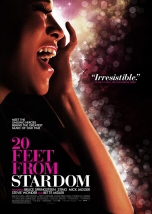
Millions know their voices, but no one knows their names. In his compelling film, award-winning director Morgan Neville shines a spotlight on the untold true story of the backup singers behind some of the greatest musical legends of the 21st century. Triumphant and heartbreaking in equal measure, the documentary is both a tribute to the unsung voices who brought shape and style to popular music and a reflection on the conflicts, sacrifices and rewards of a career spent harmonizing with others. These gifted artists span a range of styles, genres and eras of popular music, but each has a uniquely fascinating and personal story to share of life spent in the shadows of superstardom. Along with rare archival footage and a peerless soundtrack, 20 Feet from Stardom boasts intimate interviews with Bruce Springsteen, Stevie Wonder, Mick Jagger and Sting to name just a few. However, these world-famous figures take a backseat to the diverse array of backup singers whose lives and stories take center stage in the film.
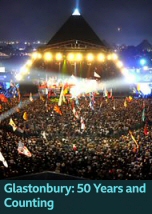
Three years in the making, Francis Whately’s film is a social and musical history of (probably) the world’s greatest music festival, as told by its principal curators, Michael and Emily Eavis, and many of the key artists who’ve appeared there between 1970 and 2019 – Billie Eilish, Thom Yorke, Florence Welch, Dua Lipa, The Levellers, Aswad, Orbital, Fatboy Slim, Linda Lewis, Noel Gallagher, Ed O’Brien, Chris Martin, Stormzy and more. Balancing the driving forces of social conscience and hedonism, Glastonbury has always been both a world apart and a barometer of the state of the nation. Looking at the hippie days, CND, the contribution of the travellers, dance music, Britpop, The Wall, the impact of television and the first black British solo headliner, this film takes viewers backstage and deep into the archive to reveal the forces that have driven this alternative nation between utopia and dystopia, the greatest night of your life and a muddy field in the middle of nowhere. This is not a chronological plod through the festival’s evolution so much as a thematic and story-driven exploration of the peaks and troughs, and the agonies and ecstasies, that have shaped Glastonbury’s 50 years and counting.
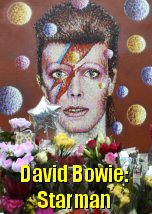
A celebration of the career of the musician, whose death from cancer was announced 11th Jan 2016. Bowie's work was the soundtrack to a generation and influenced countless musicians and this features memorable music videos and performances, as well as tributes from friends and fans around the world". Singer, songwriter, multi-instrumentalist, record producer, painter, and actor. He was a figure in popular music for over five decades, and was considered by critics and other musicians as an innovator, particularly for his work in the 1970s. Bowie's impact was enormous; he changed the nature of rock music, and changed his own approach repeatedly. During his career, he sold an estimated 140 million records worldwide. In the UK, he was awarded nine platinum album certifications, eleven gold and eight silver, and in the US received five platinum and seven gold certifications. He was inducted into the Rock and Roll Hall of Fame in 1996. Bowie stopped concert touring after 2004, and last performed live at a charity event in 2006. In 2013, he returned from a decade-long recording hiatus, remaining musically active until his death from liver cancer three years later.
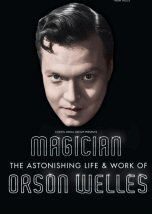
This documentary looks at the remarkable genius of Orson Welles on his centenary - the enigma of his career as a Hollywood star, a Hollywood director (for some a Hollywood failure), and a crucially important independent filmmaker. Orson Welles's life was magical: a musical prodigy at age 10, a director of Shakespeare at 14, a painter at 16, a star of stage and radio at 20, romances with some of the most beautiful women in the world, including Rita Hayworth. His work was similarly extraordinary, most notably Citizen Kane, (considered by many to be the most important movie ever made), created by Welles when he was only 25. In the years following Citizen Kane, Welles's career continued to change as he made film after film (some never finished, many dismissed) and acted in other projects often to earn money in order to keep making his own films. Magician features scenes from almost every existing Welles film, from Hearts of Age, (which he made in a day when he was only 18 years old) to rarely-seen clips from his final unfinished works like The Other Side of the Dream, The Deep, and Don Quixote, as well as his television and commercial work.




It looks at the psychedelic pop scene that gave birth to progressive rock in the late 1960s, the golden age of progressive music in the early 1970s, complete with drum solos and gatefold record sleeves, and the over-ambition, commercialisation and eventual fall from grace of this rarefied musical experiment at the hands of punk in 1977. Contributors include Robert Wyatt, Mike Oldfield, Pete Sinfield, Rick Wakeman, Phil Collins, Arthur Brown, Carl Palmer and Ian Anderson.