Last Watched

"Trial "  Sort by

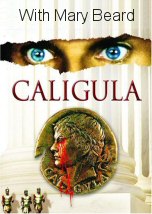
Caligula

   2013    History
Two thousand years ago one of history's most notorious individuals was born. Professor Mary Beard embarks on an investigative journey to explore the life and times of Gaius Julius Caesar Augustus Germanicus - better known to us as Caligula. Caligula has now become known as Rome's most capricious tyrant, and the stories told about him are some of the most extraordinary told about any Roman emperor. He was said to have made his horse a consul, proclaimed himself a living God, and indulged in scandalous orgies - even with his own three sisters - and that's before you mention building vast bridges across land and sea, prostituting senators' wives and killing half the Roman elite seemingly on a whim. All that in just four short years in power before a violent and speedy assassination in a back alley of his own palace at just 28-years-old." But how much of his story is true? Travelling across the Roman world - from Germany and Capri in the bay of Naples to the astonishing luxury of his life in imperial Rome - Mary attempts to peel away the myths. Some stories are difficult to get to the bottom of as they were written by hacks long after his death, but there is plenty of surviving evidence where the 'real' Caligula can be glimpsed. Such as in the extraordinary luxury of his private yachts outside Rome; in the designs he chose for his coins when he became Emperor; in an eye-witness account of Caligula's withering humour written in 41AD; the trial documents covering the mysterious death of his father when he was just seven-years-old; and even in a record of his imperial slaves - from the palace spy to his personal trainer. Piecing together the evidence, Mary puts Caligula back into the context of his times to reveal an astonishing story of murder, intrigue and dynastic family power. Above all, she explains why Caligula has ended up with such a seemingly unredeemable reputation. In the process, she reveals a more intriguing portrait of not just the monster, but the man.
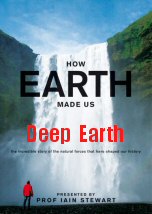
Deep Earth

   2010    Science
Our planet has amazing power, and yet that's rarely mentioned in our history books. This series tells the story of how the Earth has influenced human history, from the dawn of civilisation to the modern industrial age. It reveals how geology, geography and climate have been a far more powerful influence on the human story than has previously been acknowledged. A combination of epic story telling, visually stunning camerawork, extraordinary locations and passionate presenting combine to form a highly original version of human history" In the first episode professor Iain Stewart explores the relationship between the deep Earth and the development of human civilisation. He visits an extraordinary crystal cave in Mexico, drops down a hole in the Iranian desert and crawls through seven-thousand-year-old tunnels in Israel. His exploration reveals that throughout history, our ancestors were strangely drawn to fault lines, areas which connect the surface with the deep interior of the planet. These fault lines gave access to important resources, but also brought with them great danger.
Series: How Earth Made Us

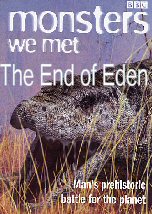
Monster we met: The End of Eden

   2006    Science
New Zealand - 850 years ago New Zealand was the last major land mass to be discovered and colonised by humans. A mere 850 years ago, Polynesian seafarers arrived in a land with no terrestrial mammals. New Zealand was a land of birds, and its avian rulers were giants: huge herbivorous moas were hunted by Haast's eagle - the largest eagle the world has ever seen. But within the space of only 100-400 years, the eagle, all the moas and over 20 other species of birds were gone. Had mankind become the monster?

The Venus Project: Paradise or Oblivion

   2012    Technology
This documentary details the root causes of the systemic value disorders and detrimental symptoms caused by our current established system. This video presentation advocates a new socio-economic system, which is updated to present-day knowledge, featuring the life-long work of Social Engineer, Futurist, Inventor and Industrial Designer Jacque Fresco, which he calls a Resource-Based Economics.

Factories of Death

   2005    History
ln 1942 through an horrific process of trial and error these Nazis created something entirely new in History - killing factories capable of murdering millions. With the increase in killing at Auschwitz and nearby Treblinka, people are showing tremendous courage, like German officer Albert Battel risking his life to save detainees.
Series: Auschwitz The Nazis and the Final Solution

One Voice in the Cosmic Fugue

   1980    Science
Sagan discusses the story of the Heike crab and artificial selection of crabs resembling samurai warriors, as an opening into a larger discussion of evolution through natural selection (and the pitfalls of intelligent design). Among the topics are the development of life on the Cosmic Calendar and the Cambrian explosion; the function of DNA in growth; genetic replication, repairs, and mutation; the common biochemistry of terrestrial organisms; the creation of the molecules of life in the Miller-Urey experiment; and speculation on alien life (such as life in Jupiter's clouds). In the Cosmos Update ten years later, Sagan remarks on RNA also controlling chemical reactions and reproducing itself and the different roles of comets (potentially carrying organic molecules or causing the Cretaceous–Paleogene extinction event).
Series: Cosmos